


Dr. David Domozych, Dana 329B, x-5075, ddomoz, Office Hrs:
M 4-5, W 11-12, W 4-5
Dr. Marc Tetel, Dana 319, x-5080, mtetel, Office Hrs: M 3-4,
W 10-11, F 10-11
Dr. Cathy Domozych, Dana 323, x-5074, cdomozyc, Office Hrs:
Tu W 10-11, Th 12:30-1:30
Dr. Eric Rutledge, Dana 325, x-5089, erutledg
Lecture: T, Th at 11:10 am –12:30 pm in Davis Auditorium
Laboratory : All labs are in Dana 346.
Section 001: T 1-4 pm
Section 002: W 11:15 am-2:15 pm
Section 003: W 2:30-5:30 pm
Section 004: Th 8-11 am
Section 005: Th 1-4 pm
Textbook: Biology by Raven, Johnson, Losos and Singer, 7th Edition, McGraw-Hill, 2005
Course description: A comprehensive introduction to the diversity of life forms and life functions. The course explores topics in organismal biology with special emphasis on animals and plants, reproductive biology, physiology and developmental biology.
The DIVERSITY of
Life |
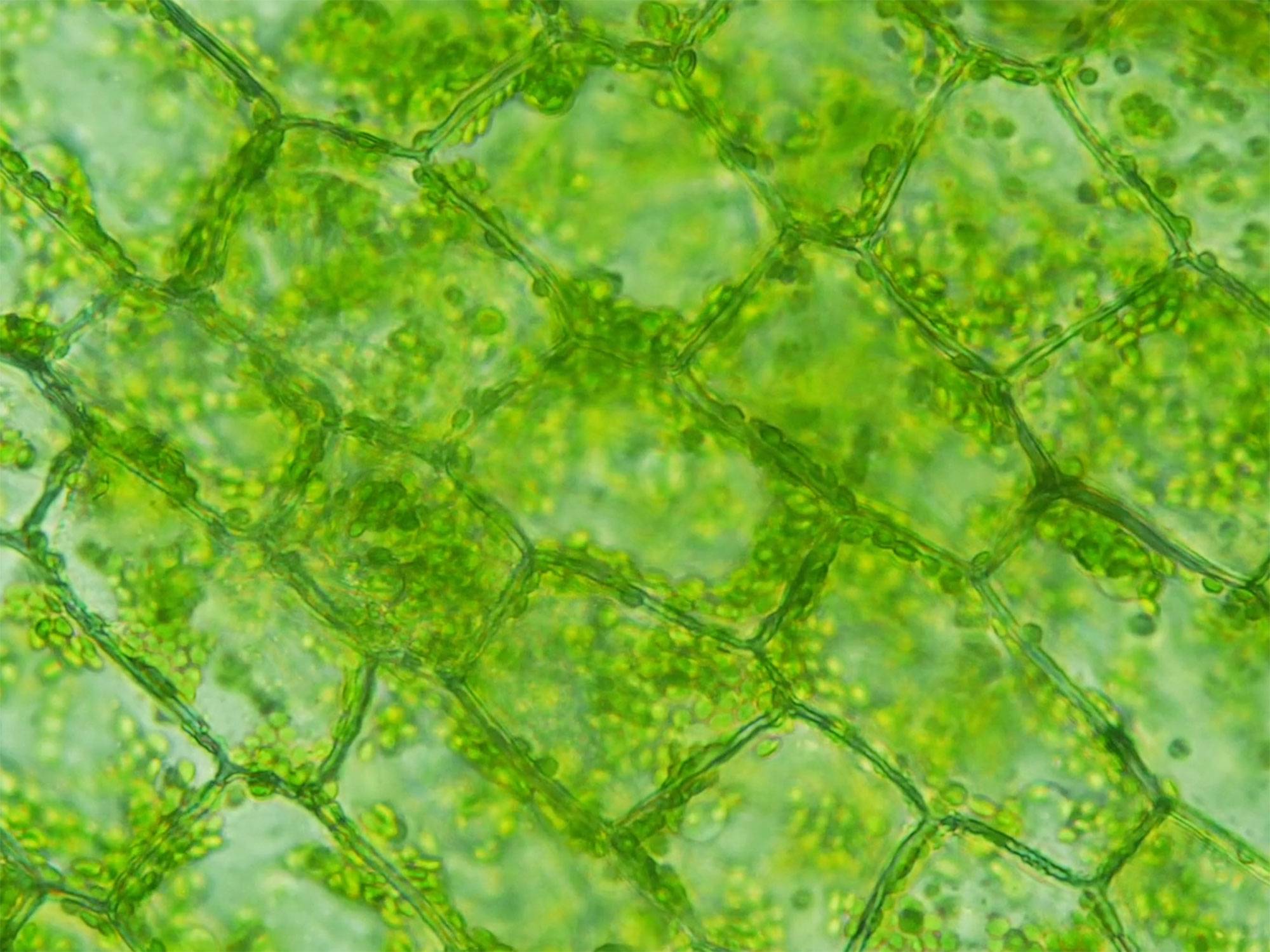
| The diversity of life on our planet is truly immense. Multicellular photosynthetic organisms surrounded by matrices of some of the most complex biopolymers (i.e., plants) form the basis of food chains in terrestrial ecosystems. In aquatic and marine environments, photosynthetic protists, some living in glass cases or within chalk-like scales, perform a similar function. Multicellular, motile and ingesting eukaryotes (i.e., animals) use the products of photosynthetic organisms for growth, development and reproduction. In addition, do not forget the cryptic but vitally-important role of the filamentous, eukaryotic heterotrophs that practice extracellular digestion (i.e., fungi) as well as the oldest of all life forms, the prokaryotes. It is truly amazing to recognize that while all living creatures utilize the same biochemicals and basic metabolic pathways, they can be so different. In addition, we will learn that animals as simple as a worm, share many of the same genes with animals as complex as humans. How did this happen? How did these various mechanisms evolve? How do these different life forms metabolize energy sources? How do they develop and reproduce? How do they interact with each other? |
WELCOME TO BI 106!
LECTURE SYLLABUS
| Plant Biology | |
|
Chapter 28 |
|
Ch 28 |
|
Ch 29 |
|
Ch 41 |
Exam 1 February 15, 2005 175 points |
|
|
Ch 35-37 |
|
Ch 39 |
|
Ch 40 |
|
Ch 30 |
|
Exam 2 March 10, 2005 175 points |
|
| Animal Biology | |
|
Ch 31 |
|
Ch 44: 907-921 Ch 44: 922-937 |
|
Ch 51: 1081-1096 Ch 51: 1097-1102 |
Exam 3 April 12, 2005 175 points
|
|
|
Ch 45: 939-948 Ch 45: 949-966 |
|
Ch 46: 969-972, 983-988 |
|
Ch 47 |
| XV. Mammalian Reproduction | Ch 50: 1061-1063, 1067-1079 |
|
Ch 52: 1105-1109 |
Exam
4 TBA (During Final Exam time) 175 points |
|
Lecture Attendance: Poor attendance is often the cause of poor
grades. Attend all lectures and do not miss any exams (unless sick). Attendance
will be taken every day in lecture by a sign up sheet. Any violation of this
sign-up sheet is a violation of the Skidmore Honor Code. Each student is allowed
three unexcused lecture absences. Any more than three unexcused absences will
result in failing the course. If you need to miss class due to a medical reason,
contact David Domozych or Marc Tetel immediately.
___________________________________________________________________________
Laboratory Schedule
| Lab Session |
Week of |
Topic |
1 |
January 25 |
Protists and introduction to modern microscopy |
2 |
February 1 |
Mosses and Ferns; Begin C-fern experiment |
3 |
February 8 |
Gymnosperms and Angiosperms: pollination |
4 |
February 15 |
The Root- anatomy and physiology |
5 |
February 22 |
The Stem and Leaves- anatomy and physiology |
6 |
March 1 |
Laboratory Practical (100 pts.) & summary of C-fern data |
7 |
March 8 |
The Fungi |
Lab Report 1 is due March 10 at 11:10 am in Lecture
March 15 Spring Break!
8 |
March 22 |
Human Anatomy Lab - General |
9 |
March 29 |
Human Anatomy Lab |
10 |
April 5 |
Introduction to C. elegans Lab |
11 |
April 12 |
Analysis of wt vs. mutant Plates |
12 |
April 19 |
Bioinformatics: Blast Analyses |
|
13 |
April 26 |
C. elegans future directions Peer Review of Introduction for Lab Report 2 Discussion of Lab Report 2 and concepts |
Lab Report 2 is due May 3 at 11:10 am in Lecture
Lab Notebooks: Because most labs require follow-up work and library readings, please maintain a well-ordered and neat notebook. You will be responsible for all lab materials at the time of your lab practical and lab reports.
Lab practical: There is one lab practical in this course (week of March 1) and details of its format will be provided in the first weeks of the class. On the weekend prior to the practical, the lab will be open (at set times TBA) where you will be allowed to review lab materials. However, we cannot guarantee that all of the materials provided in individual labs will be available for the review session. Therefore, before you leave any laboratory session, be sure that you have observed all materials and answered all questions on the lab hand-outs. If you have questions, please ask your laboratory instructor.
Lab Reports
There will be two lab reports during the semester. Lab Report 1 will be on Visualizing
Mendelian Inheritance using C-fern and Lab Report 2 will be on Analysis of C.
elegans mutant. Details concerning these reports will be given to you in
class. Lab Report 1 is worth 50 points and Lab Report 2 is worth 100 points.
Lab reports will be reduced by 5% (of the total possible points) for each day
late.
Format for Lab Reports
The ability to communicate clearly is critical in the
sciences, and clear scientific prose requires substantial effort and attention
to detail. The following outline is excerpted from the Animal Behavior Society's
Instructions for Authors (1998, Anim. Behav. 55: ii-viii). Read these
instructions carefully and then consider the hints that follow.
Lab Report I (50 points) should be in the range of 5-7 double-spaced pages and Lab Report II (100 points) should be in the range of 7-9 double-spaced pages. Both reports should be written in the active voice, and should be thoroughly referenced throughout. Each report should be divided into seven sections and arranged in the following order: title page, abstract, introduction, methods, results, discussion, and literature cited.
Abstract. The Abstract should describe the purpose of the study, outline the major findings, and state the main conclusions. It should be concise, informative, explicit, and intelligible without reference to the text. Try to limit the Abstract to 250 words. Be sure to identify the study organism(s). Do not cite references in the abstract.
Introduction. The Introduction should be brief, not normally exceeding 1-2 double-spaced page. It should explicitly state the goals of the study and place it in a larger conceptual/theoretical context. What is the background information for your study? What is the rationale of your study? Why is it interesting? Please do not simply restate the information contained in the lab handout, although you may use it as a guide.
Methods. The Methods section should be a concise statement of the techniques, equipment and approaches used to do the experiments. This section should be detailed enough to allow future biologists to replicate the study.
Results. The Results section should briefly state the results of the study, referring to tables and figures when appropriate. Do not hand in undigested lists of data or numerous inconsequential figures. Be sure to include descriptive captions for your tables and figures, and label axes, columns, rows, etc. clearly.
Discussion. It is often helpful to begin the Discussion with a summary of the main results. The main purpose of the Discussion, however, is to comment on the significance of the results. This is your opportunity to speculate wildly (but responsibly), to interpret your results, and to describe what (if anything) went wrong or could be improved the next time. Relate your work to previous research (often conducted by other biologists) and to the rationale presented in the Introduction.
References. For references cited in the text, give
full surnames for papers written by only one or two authors (Freeman-Gallant
1998; McQuade & Van Hook 1999). For papers written by three or more authors,
give the surname of the first author only followed by "et al." (Pattison
et al. 1998).
For the Literature cited section, list references alphabetically and then by
date (if you have two references by the same author) according to the following
format:
Orians, G.H. 1969. On the evolution of mating systems in birds and mammals.
American naturalist 103: 589-603.
Smith, H.G. & von Schantz, T. 1993. Extra-pair paternity in the European
starling: the effect of polygyny. Condor 95: 1006-1015.
Seutin, G., White, B.N. & Boag, P.T. 1991. Preservation of blood and tissue
samples for DNA analysis. Canadian Journal of Zoology 69: 82-90.
Trivers, R.L. 1972. Parental investment and sexual selection. In: Sexual
Selection and the Descent of Man: 1871-1971 (Ed. by B. Campbell), pp. 136-179.
Chicago: Aldine.
Use of scientific names:
The scientific binomial (genus and species) of any organism should be underlined
or italicized. The generic name begins with a capital letter, and the species
name begins with a lower case letter (example: Passerculus sandwichensis,
the Savannah sparrow). If the species identity is unknown, the generic name
is followed by the abbreviation sp., which is NOT underlined (example: Parus
sp., for an unknown species of chickadee).
The scientific binomial must be given the first time a species is mentioned
in the Abstract and in the remainder of the paper; otherwise, common names are
sufficient. Note that these rules apply to all species, regardless of the focus
of your report.
A note on plagiarism from Skidmore's Academic Information Guide:
"Plagiarism includes paraphrasing or summarizing without acknowledgment,
submission of another student's work as one's own, the purchase of prepared
research or completed papers or projects, and the unacknowledged used of research
gathered by someone else. Failure to indicate accurately the extent and precise
nature of one's reliance on other sources is also a form a plagiarism."
Ignorance of the law is no excuse! See an instructor
for help if you are uncertain how or when to cite an outside source, including
the laboratory handout, class notes, or information gathered from the Web, your
text, or a fellow student.
Lab Attendance: Clearly, you cannot get hands-on experience if your hands are not in lab. Therefore, attendance in the labs is required. Each missed laboratory, without a valid medical excuse, will result in a 10% reduction in your final laboratory grade. The labs will start promptly at their designated start times - you are expected to be ready to begin at that time. If you are late to lab, there will be a 2% reduction in your final lab grade each day you are late. Eating is not permitted in the labs. On occasion, you will need to conduct work on your lab outside of regular class time.
Course Grading
Exam 1: 175 points
Exam 2: 175 points
Exam 3: 175 points
Exam 4: 175 points
Lab Practical: 100 points
Lab Report 1: 50 points
Anatomy Worksheet 1: 10 points
Anatomy Worksheet 2: 10 points
Worm Worksheet: 30 points
Lab Report 2: 100 points
Total = 1,000 points
This course is worth 1,000 points. Test grades may be curved depending upon the class results. Extra credit questions may be provided on exams in order to aid your scores. Final grades are NEVER curved - so do not wait until the last minute to work on your grade.
To obtain a particular grade below, you must have the following total points:
A+ = 980-1,000 points
A = 979-915
A- = 914-895
B+ = 894- 880
B = 879- 815
B- = 814- 795
C+ = 794 -780
C = 779 -715
C- = 714 -695
D+ = 694 -680
D = 679 -615
D- = 614- 595
F = below 594 points
General Study Strategy
This course requires a considerable amount of work. However, if you keep up
with the work it will be manageable and….enjoyable! We recommend the following
study strategy:
1. Read through the assigned reading before the lecture. This will allow you
to become familiar with the terms and concepts prior to lecture.
2. Take careful notes in class. If you have questions, please ask them in class
and/or during office hours.
3. Within 1-2 days following lecture, re-write your notes and indicate which
areas need clarification. Re-read the assigned reading in more detail than the
first time. Take notes on the reading to supplement your lecture notes. You
will find that this second reading will go much more smoothly and you will get
much more out of it. If there are any areas of your notes that need clarification,
come by our office hours or make an appointment.
4. Begin studying before the night before the test. Begin reviewing your notes and studying for the test at least 5 days before the test. Recognize the areas that are unclear and come to office hours for help. This course will also employ junior and senior Biology majors who will be available to assist you in studying for exams, the lab practical and in other parts of the course. Their schedules will be announced to you in class. Please use this resource if needed.
5. If you have a documented learning disability, please notify the Dean of Students Office within the first two weeks of the course. They will officially contact the BI 106 faculty and provide details of your special needs.
Skidmore Honor Code: It is expected that you will fully abide by the Skidmore Honor Code as described in your Student Handbook and Academic Information Guide. The placement of your name on all assignments and exams will represent your pledge that the Honor Code was upheld.