-
BI
105 Biological Sciences I: Unity and Diversity of Life 4
- An introduction to the
structures and processes common to all of life. The course explores topics
in molecular biology, biochemistry, cell structure and function, transmission
genetics, evolutionary theory and population ecology. The laboratory portion
of the course is inquiry-based and will introduce students to the methods
and theory of modern biology. The course is writing enhanced and partially fulfills the departmental writing requirement. Three hours of lecture, three hours of laboratory
per week. (Fulfills natural sciences requirement.) A. Drake and P. Hilleren
-
- BI
106 Biological Sciences II: Diversity of Life 4
- A comprehensive introduction
to the diversity of life forms and life functions. The course explores topics
in organismal biology with special emphasis on animals and plants, reproductive
biology, physiology and developmental biology. Prerequisite: BI105. The course is writing enhanced and partially fulfills the departmental writing requirement.
(Fulfills natural sciences requirement.)
J. Bonner, D.
Domozych and J. Ness
- BI 240 Environmental
Biology 4
- An examination of the physical
and biotic features of the earth, the role of humans in affecting the planet's
ecology, and the ways ecological systems affect humans. This course provides
the fundamental concepts of environmental biology along with specific examples
from the natural world and human modification. Topics include the basics of
the physical nature of the earth; physiological ecology, including biochemistry
and metabolism of life forms and nutrient cycles; biodiversity; interspecific
relationships; population and community dynamics; ecosystem structure; pollution
and environmental toxicology; resource management; and restoration design.
Laboratory consists of field trips, ecological sampling techniques, ecological
survey of local habitats, phytoremediation, pollution simulation, and examination
of biodiversity. Prerequisite: ES105. Building on BI105 and BI106, the course explores writing conventions specific to the subdiscipline; partially fulfills the departmental writing requirement. This course does not count
toward the biology major. J. Ness
- BI 241 Ecology 4
- A field, laboratory and
lecture course in which interactions among organisms and between organisms
and their environment are explored. Students will observe ecological patterns
and evaluate evidence and arguments for why those patterns exist. Prerequisites:
BI106. Building on BI105 and BI106, the course explores writing conventions specific to the subdiscipline; partially fulfills the departmental writing requirement. M. Raveret Richter
- BI 242 Molecular Biology 4
- The course provides a molecular view of essential features of eukaryotic cell biology. The laboratory portion of the course is project-based and designed to expose students to current methodologies and experimental strategies commonly used in molecular biology research. The overarching goal of the course is for students to gain an understanding of the molecular nature of key fundamental processes in cell biology including i) structure and function of proteins and nucleic acids and how they interact to promote cell function; ii) protein targeting and localization; and iii) eukaryotic cell cycle and regulation of cell growth; iv) cancer biology; and v) cell death. Prerequisites: BI106 and CH105 or CH107H. Building on BI105 and BI106, the course explores writing conventions specific to the subdiscipline; partially fulfills the departmental writing requirement. P.
Hilleren
- BI 243 Plant Biology 4
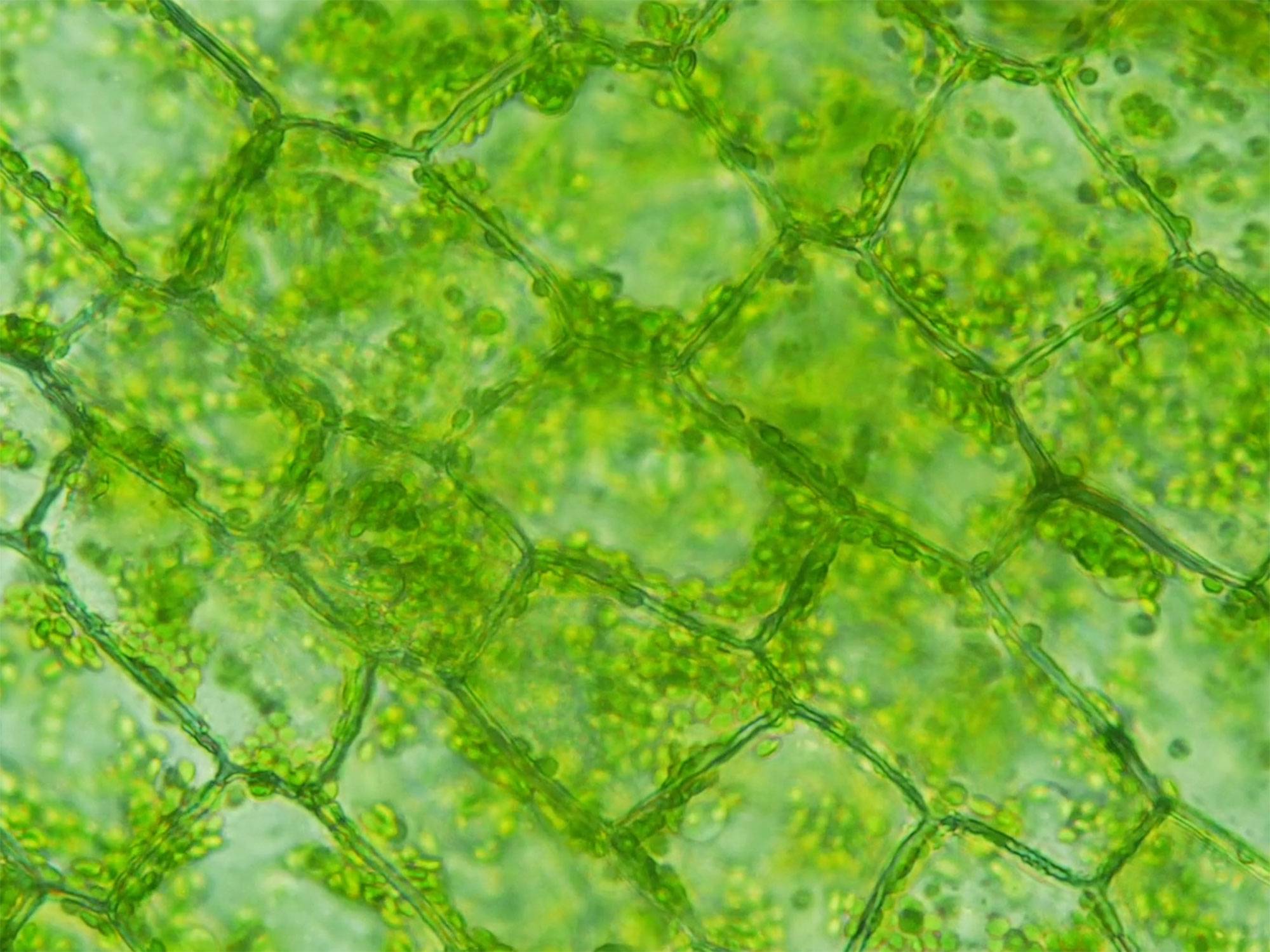
- A comprehensive study of
plants, other photosynthetic eukaryotes and fungi. Lecture topics include:
biochemistry, phytochemistry and phytopharmaceutical applications, cell and
molecular biology, evolutionary biology, developmental biology and life cycles,
primary and secondary physiology and ecology/biogeography. The laboratory
consists of experimental and observational exercises and includes a full day,
Saturday field trip. Prerequisite: BI106. D.
Domozych
- BI 244 Comparative
Vertebrate Physiology 4
- The function and structure
of major systems of vertebrates considered principally from the perspective
of their ability to meet environmental demands. Prerequisites: BI106;
and CH105 or CH107H. Building on BI105 and BI106, the course explores writing conventions specific to the subdiscipline; partially fulfills the departmental writing requirement.
R. Meyers
- BI 245 Principles of Genetics 4
- A study of biological patterns
of heredity explained by genes, their structure, function and transmission
from cell to cell and parent to offspring, and the expression of genetic information.
Topics include an in-depth study of mitosis, meiosis, Mendelian genetics and
extension of Mendelian genetics to complex traits and their analysis in individuals
and populations. Breeding and analysis of fruit flies requires lab work outside of the scheduled lab time. Prerequisites: BI106 or permission of instructor.
Building on BI105 and BI106, the course explores writing conventions specific to the subdiscipline; partially fulfills the departmental writing requirement.
B. Possidente
- BI 246 Microbiology:
Diversity, Disease, and the Environment 4
- A comprehensive introduction
to the biology of three major groups of microbes: bacteria, protists, and
viruses. Microbial diversity will be explored in the context of the structure,
physiology, metabolism, and molecular genetics of various microbial taxa.
We will discuss microbial diseases, non-specific and specific human immune
responses, and general strategies used by microbes to overcome these defenses.
The final section of the course will explore key concepts in microbial ecology.
Emphasis will be placed on the central role of bacteria in geochemical cycles
and symbiotic associations with plants and animals. In the laboratory, students
will isolate bacteria from a variety of environments (wounds, soil, etc.)
and apply standard techniques used in clinical and environmental microbiology
labs to study their physiology and metabolism. Prerequisite: BI106. Building on BI105 and BI106, the course explores writing conventions specific to the subdiscipline; partially fulfills the departmental writing requirement. S. McDevitt
- BI 247 Cell Biology 4
- The course provides a cellular and organismal view of essential features of eukaryotic cell biology. Students will study cellular functions such as protein structure and function, cytoskeletal organization, cell migration, cellular metabolism, and cell signaling. In laboratory, students will gain experience with modern techniques for visualizing cell biological processes, with emphasis on differential interference contrast (DIC) optics, flourescence, and confocal microscopy. Prerequisites: BI106; and CH105 or CH107H. Building on BI105 and BI106, the course explores writing conventions specific to the subdiscipline; partially fulfills the departmental writing requirement. J. Bonner
- BI 251 Topics in Biology 3
- An opportunity to study topics that are not offered on a regular basis. The specific topics will vary each time the course is taught. All courses fulfill the requirements for the biology major as supportive courses. May be repeated for credit, if on a different topic.
BI251- Comparative Vertebrate Physiology Lecture
This is a lecture-only version of BI244. The course provides a systems focused view of the "function and structure of the major systems of vertebrates considered principally from the perspective of their ability to meet environmental demands." The overarching goal of the course is for students to gain an understanding of vertebrate (and representative invertebrate) evolved adaptation strategies including i) cellular and metabolic mechanisms; ii) systems level mechanisms ; iii) select populations level mechanisms and iv) adaptation to extreme environments (high altitude, deep sea, flight demands, etc.) . While the course has no scheduled lab, at least several 'lectures' are planned to be held in whole class participatory lab-like activities and space. Prerequisites: BI 106 and CH 105 or CH 107H or permission of the instructor. R. Meyers
- BI 252 Topics in Biology 4
- An opportunity to study topics that are not offered on a regular basis. This course has a 3-hour laboratory component that complements the lecture. The specific topics will vary each time the course is taught. All courses fulfill the requirements for the biology major as supportive courses. May be repeated for credit, if on a different topic.
- BI 275 Introduction to Biological Research 1
- An introductory exploration of research in the biological sciences. Students plan, design and implement a small research project from the laboratory or field in coordination with a faculty member. This experience will allow students a various stages of their careers to sample research methodologies in particular subdisciplines of biology. Students may only take four BI275 courses in their careers and no more than two in any given semester. If more than one is taken in one semester, each BI275 must be in a different section. Prerequisites: Completion of one 100-level course in biology or requirements set forth in individual sections plus permission of instructor. BI275 does not fulfill the Biology department's writing requirement for the major. The Department
- BI 299 Professional
Internship in Biology 3
- Internship opportunity
for students whose curricular foundations and experience have prepared them
for professional work related to the major field. With faculty sponsorship
and departmental approval, students may extend their educational experience
into such areas as laboratory or field research, or clinical medicine. Does
not count toward the major. Offered Satisfactory/Unsatisfactory only. Prerequisite:
completion of at least one related 200-level course (as determined by the
department).
- BI 302 Behavioral
Ecology 3
- An examination of the relationship
between ecological factors and animal behavior, particularly social behavior.
Students will analyze comparative studies of behavior, employ and critique
economic models of behavior and models of evolutionarily stable strategies,
and explore relationships among resource distribution, kinship, breeding systems
and social evolution. Prerequisites: BI106 or ES105 and any two 200-level
biology courses, except BI299. M.
Raveret Richter
- BI
305 Cardiovascular Physiology 4
- A consideration
of cardiovascular physiology including cellular physiology of the heart, mammalian
cardiovascular dynamics, aspects of comparative cardio-physiology, and human
clinical cardiology. Three hours of lecture, three hours of laboratory per
week. Prerequisites: BI106; and any two 200-level courses in biology except BI299, or permission of instructor.
Offered in alternate years. R.
Meyers
- BI
306 Mammalian Physiology 4
- A study of selected
topics in mammalian physiology including respiratory, renal and neural physiology.
Three hours of lecture, three hours of laboratory per week Prerequisites:
BI106 and BI244, or permission of instructor. For NS students: NS101, BI105, and BI244. Offered in alternate
years. R. Meyers
BI 351 Mammalian Physiology Lecture and Seminar- This is the lecture-only version of BI 306.
- BI 307 Ornithology 4
- Birds as model
organisms for an integrative study of biology. This course explores avian
forms and function, the ecology, evolution, and behavior of birds, and avian
conservation. Three hours of lecture, three hours of field or laboratory work
a week. One Saturday field trip. Prerequisites : BI106 and any two 200-level biology courses except BI299, or ES205 and ES206. C.
Freeman-Gallant
- BI 309 Microbial Genetics 4
- An advanced exploration of the genetic aspects of microbiology. Students will study the genetic characteristics of prokaryotes and how bacterial model organsims contribute to our understanding of fundamental genetic processes in all living cells. Students will also explore applied topics, including the genetics of bioremediation and increasing prevalence of bacterial antibiotic resistance. In the laboratory, students will use modern methods in molecular genetics to explore the use of microorganisms in basic research. Prerequisites: BI106; and CH106 or 107H, and BI242 or BI246. S. McDevitt
- BI 311 Biological Electron
Microscopy 4
- Practical and
theoretical study of the operation and application of electron microscopes
and the preparation of samples for electron microscopy. Topics include: chemical
fixation, cryofixation, cytochemistry, immunolabeling, ultramicrotomy, transmission
electron microscopy, scanning electron microscopy, and electron microscopic
photography. Two hours of lecture, four hours of laboratory per week. Prerequisite:
BI106 and BI244 or BI247. D.
Domozych
- BI 316 Animal Behavior 4
- Behavior is a
product of evolution and a means of animal adaptation. This course considers
the mechanisms, proximate causes, and ultimate origins of behavior. Three
hours of lecture, three hours of laboratory or field work per week. One Saturday
field trip. Prerequisite: BI106 and any two 200-level courses
in biology except BI299, or ES205 and ES206. For NS students: NS101, BI105, and BI244. M.
Raveret Richter
- BI 324 Evolution 4
- A survey of topics
in evolutionary theory: the evidence for evolution, mechanisms of evolutionary
change, species concepts, and speciation. Introduction to the concepts of
variability, adaptation, neutrality, and phylogeny through discussion and
lab work. Three hours of lecture, three hours of lab per week. Prerequisite:
BI106 and any two 200-level courses in biology except BI299, or ES205 and ES206. C.
Freeman-Gallant
- BI 325 Tropical
Ecology 3
- An introduction
to the ecology of tropical regions, with an emphasis on Central and South
American forests. In this course, we will take an ecological approach to investigating
the patterns, processes, and organisms characterizing tropical ecosystems.
We will study the forces that gave rise to tropical biodiversity, and discuss
both the preservation and the destruction of tropical ecosystems. Prerequisites:
BI106 and any two 200-level courses in biology except BI299, or ES205 and ES206. Please refer to the companion course, TX301. M.
Raveret Richter
- BI
327 Conservation Ecology 3
- Focuses upon developing
an understanding of the diversity of life, in an ecological and evolutionary
context, and applying that understanding to critical analyses of issues and
problems in conservation biology. Prerequisites: BI106 and
any two 200-level courses in biology except BI299, or ES205 and ES206. M.
Raveret Richter
- BI
337 Plant Physiology 4
- The behavior,
growth, transport processes, and environmental response of plants. Topics
include membrane dynamics and function, plant cell development and polarity,
solute and water transport, mineral and vitamin nutrition, respiration photosynthesis,
hormone action, photoperiodism, taxes, and stress biology. Two hours of lecture,
four hours of laboratory per week. Prerequisites: BI106 and any two 200-level courses in biology. D.
Domozych
- BI
338 Plant Biotechnology 4
- A modern analysis
of humankind's use of plants and fungi and their derived products. Major subjects
covered include: ethnobotany, plant genetic engineering, plant biochemistry,
techniques of plant production, agricultural practices, horticulture, and
medicinal botany/mycology. Prerequisites: BI 106. D.
Domozych
- BI 339 Plant-Animal Interactions 4
- Exploration of the evolution and ecology of interactions between plants and animals. Topics include mutualism (e.g., pollination, frugivory), antagonism (e.g., herbivory, granivory), indirect effects that cascade across taxa, and mechanisms by which plant-animal interactions affect the susceptibility of both groups to the pathogenic microbes and fungi. Students perform all the steps of active research (research design, data collection, analysis and presentation), as well as read and critique classic and recent studies from the literature. Student research in Skidmore's North Woods and surrounding areas will be emphasized. Three hours of lecture/discussion and one three-hour lab per week. Prerequisites: BI 106 and any two 200-level biology courses except BI299, or ES205 and ES206. J. Ness
-
- BI 342 Frontiers in Molecular Neuroscience
- This course will explore
“hot topics” in Neuroscience. We will discuss how novel approaches
in cell culture, animal and human studies are being used in current molecular
Neuroscience research. In addition to lectures, students will review current
literature from top journals, give group presentations in class and write
a paper. This course will be divided into two sections: 1) topics in Neurogenesis
(neuron birth in the adult brain) and 2) topics in Neurodegeneration (mechanisms
of cell death in disorders such as Alzheimer’s and Parkinson’s
Disease). Students will develop skills in critically reading research papers
and giving presentations. Prerequisite: BI106, BI242 or 247, and one
200-level course in biology except BI299. For NS students: NS101, BI105, and BI242, 244 or 247. J. Bonner
- BI 344 Biological
Clocks 4
- Organisms in all
the major taxonomic groups have internalized geophysical and other periodicities
in the form of endogenous biological mechanism that function as clocks. Theoretical,
molecular, cellular, physiological, behavioral, ecological, and biomedical
aspects of biological clocks will be examined with an emphasis on circadian
clocks. Three hours of lecture, three hours of lab per week. Prerequisites:
BI106 and any two 200-level courses in biology except BI299, or permission of instructor. For NS students: NS101,
BI105, and BI244. B.
Possidente
- BI 351 Topics in
Biology 3
- This course gives students
the opportunity to study topics that are not offered on a regular basis. The
specific topics will vary each time the course is taught. All courses fulfill
the 300-level requirements for the biology major as a supportive course. BI 351E: Fulfills the 300-level supportive course requirement of the ecology, evolution, and behavior concentration. BI 351M: Fulfills the 300-level supportive course requirement of the molecular biology and genetics concentration. Different topics may be repeated for credit. Prerequisite: permission of the department. The Department
- BI 352 Topics
in Biology with Lab 4
- An opportunity to study
advanced topics that are not offered on a regular basis. This 4-credit course has a 3-hour laboratory component that complements the lecture. The specific topics will vary each time the course is taught and prerequisites will vary according to the topic. BI 352E courses fulfill the 300-level supportive course requirement for the ecology, evolution, and behavior concentration. BI 352M courses fulfill the 300-level supportive course requirement for the molecular cell biology and genetics concentration. All BI 352 courses fulfill the 300-level course requirement for the integrative concentration. May be repeated for credit if on a different topic. The Department
- BI 360 Gene Expression
I: DNA Metabolism 3
- An examination of eukaryotic
chromatin structure, maintenance, and function. We will explore the structural
and molecular composition of chromatin, how this macromolecule is assembled,
how it is faithfully maintained, and how its molecular architecture controls
gene expression. Integral to this course will be the study of various modes
of inquiry and research tools utilized by scientists to investigate these
questions. In addition, we will examine how defects in many of these processes
contribute to human diseases. Prerequisites: BI106, BI242 and CH221,
BI245 suggested. P.
Hilleren
- BI 361 Biology
of Viruses 3
- An exploration of the structure,
genetics, and pathogenesis of all types of viruses, from bacterial to mammalian.
Rather than taking an encyclopedic approach, the course begins as an overview
of common themes in the life cycles of all viruses. Building on this foundation,
the course will then draw largely from recent published research to explore
features of the life cycle and pathogenesis of specific viruses. Prerequisites:
BI106; and BI242 or BI246. The Department
- BI 362 Bacterial
Pathogenesis: A Molecular Approach 3
- An exploration of the latest
techniques used to study bacteria-host interactions at the molecular level.
The course delves into common obstacles that disease-causing bacteria must
overcome in order to colonize a human host and the general strategies bacteria
have evolved to overcome these obstacles. Comparisons will be made to symbiotic
bacteria-host interactions and questions such as “how did pathogenic
bacteria evolve?” will be addressed. Grounded in current published research,
the class will also explore, at the molecular level, mechanisms used by specific
pathogens to colonize and damage host tissue. Prerequisites: BI106
and BI246, BI245 recommended. S. McDevitt
- BI 363 RNA Metabolism 3
- An investigation into our
current understanding of the central features of eukaryotic
gene expression, including the synthesis, processing, export, translation,
and turnover of mRNA and the biological machines that carry out these fundamental
processes. When appropriate, we will examine how defects in the processes contribute
to human disease. We will also explore how structural (micro and long non-coding) RNA molecules exert regulatory control over gene expression. Central to our work will be an exploration of the biochemical, molecular and genetic methods and emerging technologies used to study RNA metabolism. Prerequisites: BI106, BI242 and CH221. P.
Hilleren
- BI 368 Advanced Light Microscopy 4
- A study of the theory and practice of advanced light microscopy. This course will introduce students to the theory and practice of advanced light microscopy and its role in biological research. Lecture and laboratory will interact closely and present students with such topics as immunocytochemistry, fluorescent protein construction and transformation, 3-dimensional reconstruction and time lapse imaging. In laboratory, students will have extensive hands-on practice with our fluorescence research microscopes and confocal laser scanning microscopy culminating in digital portfolio. Three hours of lecture and three hours of laboratory each week. Prerequisities: BI106 and one 200-level course in biology, or BI311, or BI338. D. Domozych
- BI
370 Computer Modeling of Biological Systems 4
- An introductory
course in the methods, procedures, uses, and implications of digital computer
modeling of biological processes from the molecular through the population
level of organization, with particular focus on the systems level. Three hours
of lecture, three hours of laboratory per week. Prerequisite: BI106. R.
Meyers
- BI 371 Independent
Study 3
- An opportunity for students to pursue in depth specialized topics not available through regular course offerings. Prerequisite: agreement of a faculty member to serve as tutor, a topic acceptable both to student and tutor, and permission of the Instructor. Biology majors may take either BI 371 or 385 only once to satisfy a 300-level biology course requirement. The Department
- BI 377 / 378 Senior Capstone in Biology 3 (2+1)
- A two-part course consisting of BI 377 (2 credits), to be taken in the fall of the senior year, and BI 378 (1 credit), to be taken in the spring of the senior year. An integration of curricular experiences in the biology major with emphasis on development of students into participating members of the scientific community. Students will independently demonstrate and document their mastery of biological concepts and techniques, and collaborate to communicate research to each other, the department, and the college. Prerequisites: Senior status. The
Department
- BI 385 Research Methods in Biology
- I. Methods in Integrative Biology
E. Methods in Ecology, Evolution and Behavior
M. Methods in Molecular Biology and Genetics
An opportunity for students to engage in laboratory or field research in collaboration with a faculty member. Emphasis is on the development of analytical and technical expertise in biological research. Students meet weekly for one hour of discussion but work independently with their individual faculty mentors in pursuit of their research. Students defend their results in the form of an oral presentation to the Department. S/U only. Prerequisites: agreement by a faculty member to serve as mentor, completion of two 200-level courses in biology except BI299, and permission of the Instructor. Biology majors may take either BI371 or 385 only once to satisfy a 300-level biology course requirement. The Department
- BI 399 Professional
Internship in Biology 3 or 6
- Professional experience
at an advanced level for juniors and seniors with substantial academic experience
in the major field. With faculty sponsorship and departmental approval, students
may extend their educational experience into such areas as laboratory or field
research, or clinical medicine. Does not count toward the major. Offered S/U
only. Prerequisite: completion of at least one related 300-level course
(as determined by the department)
- TX 301 Tropical Field Ecology 2
- This travel seminar and its companion lecture course, Tropical Ecology (BI 325), comprise a classroom- and field-based introduction to the ecology of tropical regions, with an emphasis on Central and South American forests. Students, who must be concurrently enrolled in BI 325, will meet in a discussion section throughout the semester, and will travel to the tropical cloud forest community of Monteverde, Costa Rica, during spring break. TX 301 does not count toward the biology major as a 300-level elective course, nor does it count as a supportive course for ecology, evolution, and behavior concentrators; BI 325 does fulfill these requirements. Prerequisites: BI106 or ES105, and any two 200-level courses in biology. Offered in alternate years. Please refer to the companion course, BI325. M. Raveret Richter and Biology Faculty