Mammalian
Physiology Fall 2008
Respiratory,
Renal & Neural Medical Systems Physiology
Tu/Th
6:30-7:50 Harder 103 (unless Dana 316 TBA)
Wed. 5:30-8:30 Dana 316 or Harder 103
version 9 Dec. 01, 2008
| Date | Topic | Read | Other | More |
| Respiration Systems Physiology | ||||
| Sept 03 W | Course Intro / Sample Lecture-Discussion Format- Bring West to class! | W1 | G 491-4, HO | Problem set |
| Sept 03 W | Structure-Function | W1 | G 491-4 | Intro HUMAN, high altitude |
| Sept 04 Th | Ventilation | W2 | G37(esp. 475-9) | |
| Sept 09 | Diffusion | W3 | G 496-499 | Case-Interstitial Fibrosis |
| Sept 10 | Blood Flow I | W4 | G38 | Static/Dynamic vols/flows |
| Sept 11 | Blood Flow II - edema | G38 | W 47-49 | Edema, G 187-194 |
| Sept 16 | Ventilation/Perfusion 1- hypoventilation/shunt | W5 | G499-501 | |
| Sept 17 | Ventilation/Perfusion 2 | W5 | G499-501 | Reduced MSA |
| Sept 18 | Gas Transport O2 & CO2 | W6, -83 | G40 | |
| Sept 23 | Acid-Base Balance, Tissue Gas Exchange | W6, 83- | G383-9,397,fig30-10 | Acid-base |
| Sept 24 | Mechanics- Statics | W7 | HUMAN- Acid-Base(3) | Human-Anemia |
| Sept 25 | Respiration Control | W8 | G41 | |
| Sept 30 | No class | |||
| Oct 01 W | Respiratory Adaptations 1 - Perinatal Circulations / Congenital Shunts | W9 | G 1042-1048, 274-276 | F&N 239-52, L 137-143 |
| Oct 02 Th | Respiratory Adaptations 2 | W9 | G43,44 | |
| Oct 07 Tu | Pulmonary Pathology I / Evaluation of pulmonary function / Exam 1 distributed | W10 | G42,44 | |
| Oct 08 W | No class | |||
| Oct 09 Th | No class | |||
| Oct 14 Tu | Pulmonary Pathology II | W10 | G42,44 | Problem set |
| Oct 15 W | Exam #1- Case study - written in class / Guided Evaluation | HO | HO+analysis | |
| Renal Systems Physiology / Fluid Balance | ||||
| Oct 16 | Basic Kidney 1- Vascular & nephron ƒ-al anatomy/ Fluid Compartments | G26 | Figure analysis TBA | |
| Oct 21 | Basic Kidney 2- Urine Formation I-Anatomy, Filtration, Blood Flow, Control | G26, 27 | Figure analysis TBA | |
| Oct 22 | 1.Quantitative Renal & 2.Pressure Diuresis Simulation Labs #1 | TBA | HO | |
| Oct 23 | Basic Kidney 3- Urine Formation II-Tubular Processing | G27 | Figure analysis TBA | |
| Oct 24 | Study day | |||
| Oct 28 | ECF Volume & Osmolarity + calculations | G25 |
Figure analysis TBA | Problem set |
| Oct 29 | Regulation of ECF Osmolarity & Na/ Renal & Fluid Balance Simulation Lab #2 | G28,29 | 6 fluid bal. cases | Figure analysis |
| Oct 30 | Long Term Volume & Pressure Regulation | G29,19 | Lecture | |
| Nov 04 | Acid-Base Balance from the renal perspective | G30 | Brief lecture 5 acid-base cases |
phenbarb overdose |
| Nov 05 | Renal Disease, Diuretics & Dialysis- Simulation Lab #3 | G31 | HO | |
| Nov 06 | Potassium regulation, aldosterone- possible hyper/hypokalemia simulation | 365-371 | Figure analysis | |
| Nov 11 | Exam #2- Renal Disease- Analysis of Simulation or Case Data sets- exam handout 11/7 | HO | HO+analysis | Guyton only! |
| Nov 12 | Exam #2- Renal Disease- Analysis of Simulation or Case Data sets | Guyton only! | ||
| Nov 13 | Exam #2- Renal Disease- Analysis of Simulation or Case Data sets - exam due | Guyton only! | ||
| Systems Neurophysiology- Functional Neuroanatomy [RFS= Revised final schedule Version 1 ] | ||||
| Nov 18 | Grand Review of basic neuroanatomy & physiology [-; [ see RFS ] | M&G1-3 | Case TBA | |
| Nov 19 | Spinal Reflexes [ see RFS ] | M&G4 | Case 4 | |
| Nov 20 | Autonomic NS [ see RFS ] | M&G5 | Case 5 | |
| Nov 25 | Pathways: Pain & Temp. [ see RFS ] | M&G6 | Case 6 | |
| Dec 02 | Pathways: Proprioception, Touch & Tactile [ see RFS ] | M&G7 | Case 7 | |
| Dec 03 | Pathways: Motor [ see RFS ] [RFS= Revised final schedule Version 2 ] | M&G8 | Case 8 | |
| Dec 04 | Peripheral Lesions [ see RFS ] | M&G9 | Case 9 | |
| Dec 09 | Cerebral Cortex & Thalamocortical Connections, Vision [ see RFS ] | M&G20,18 | Case 20, Case 18 | |
| Dec 10 W | Final Symposium talks- Harder 103 [ see RFS ] | |||
| Dec 14 Th | Study days begin | see HO | ||
| Dec 15 | Exam#3 - during final exam period- 9:00 AM -12:00 Harder Hall 103 | TBA | ||
About Mammalian Physiology '08
The material below is the sort of thing that becomes obsolete & obvious after progressing about one week into the course but I nevertheless think it worth conveying here in writing.
I would characterize the course as advanced in level, demanding of steady student participation, as likely to depart from 'plan' as we follow our interests and allow them to grow organically and as (of course, I'm biased!) potentially very rewarding.
1) The level of the course is graduate level. This is evident immediately from the 3 texts, each of which is a graduate/medical school-level physiology text. Indeed, as will become obvious to you simply from thumbing though them, each is set up in part with aids to facilitate student study for their second year USMLE "basic science" "medical boards".
The texts are
Manter and Gatz's Essentials of Clinical Neuroanatomy and Physiology- 10th Edition. Sid Gilman and Sarah Winans Newman. F.A. Davis Publishing, 2003. (MG)
Respiratory Physiology- The Essentials- 8th edition. John B. West. Lippincott Williams and Wilkens, 2008. (W)
Textbook of Medical Physiology- 11th edition. Arthur C. Guyton and John E. Hall. Elsevier Saunders Inc., 2006. (G)
As we work through the first 2 classes you will realize that in certain cases one does not underline these readings with colored marker; rather it pays to dip the entire chapter in colored dye. [-;
2) Active student participation is the basic method of "lecture" in this course. With myself as leader each lecture class consists of "volunteer" student presentations of selected focal sub-topics and then class discussion based on that presentation. The items to be prepared for presentation vary with the system under study as follows:
Respiratory Physiology – classes are largely structured around student presentations of an analysis of their "answers" to the USMLE style questions at the end of each chapter.
Renal and Fluid Balance Systems Physiology – classes are largely structured around student "volunteer" analysis and explanation of key chapter data figures.
Neuroanatomy and Neurophysiology – classes are largely based upon student volunteer presentation of the mock clinical case associated with that chapter's topic.
3) Lecture and lab is completely integrated. We may sometimes initiate or complete a lab during a scheduled lecture period and equally, may often spend part of a scheduled lab period working through a lecture/discussion related to it.
4) Lab activity types differ with the system under study
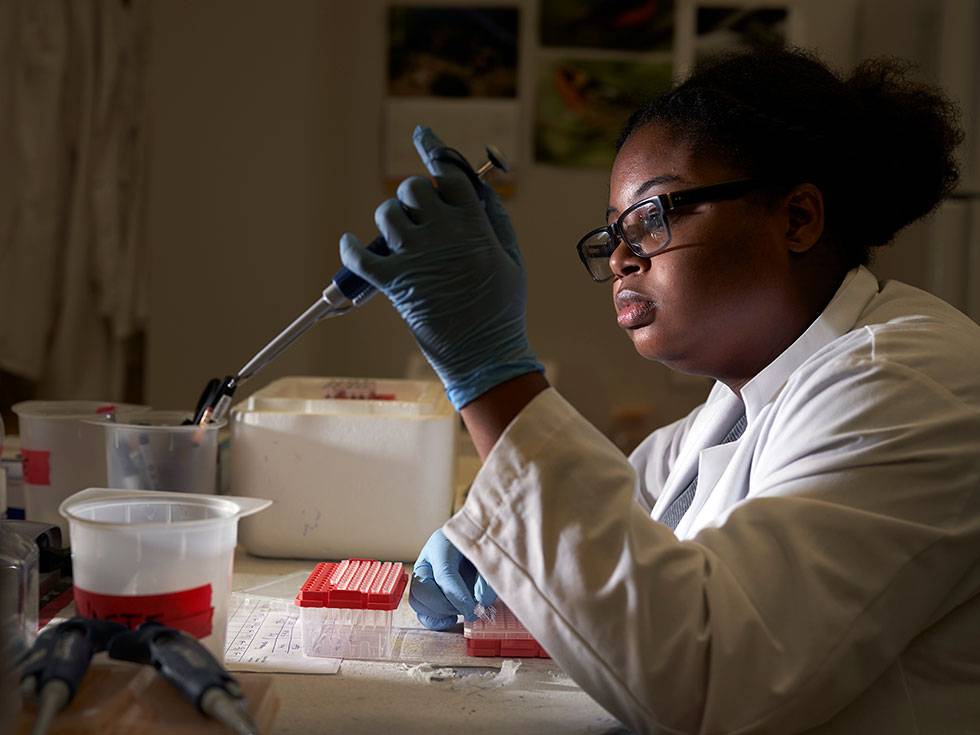
Respiration Physiology is largely done as experiments and measurements on both ourselves (and some years) animals via the familiar Grass-PowerLab data collection/analysis setups. Some work may also done within the web-HUMAN systems physiology simulation.
Renal and Fluid Balance labs are done solely within the web-HUMAN simulation, which possesses exceptional depth in these areas and allows us to explore both normal physiology and a range of pathology.
Neuroanatomy and Neurophysiology are approached largely via clinical case analysis supplemented as appropriate through Grass-PowerLab work in which electrical recordings of excitable tissue activity are utilized.
5) Who is in this course? Who should take this course? In any average year you will find your classmates to come from a variety of physiology backgrounds (Comparative Vertebrate Physiology, Neuroscience 101, Human Anatomy and Physiology, Exercise Science) and to have a variety of majors (Biology- Ecology, Evolution and Behavior, Biology- Integrative Biology, Neuroscience, Exercise Science, Chemistry-Biochemistry Concentration) and future interests (graduate school, field work, medicine, health professions, etc.).
6) The course WILL depart from what is on the schedule as it bends organically to our interests and capabilities. It is my job to keep you updated on changes in schedule and to insure that student "volunteers" for the next class have their assigned topic in time to prepare.
7) Exams- there are 3, as listed. All are problem analysis based and none are of the spit-back-the-facts type. These stress physiological thinking, which is ultimately what I am after teaching in this course.
8) The final paper and its associated symposium are on the course schedule and will be discussed more fully as the course progresses.
9) The fine print on attendance. Finally, as in Comparative, I make the formal statement for legal reasons that 100% attendance is required (no unexcused absences) and that any failure to meet this requirement, at my discretion, could result in failure for the course.
10) Student effort- This can, and in the past has often been, a great course. Much depends, as it always does, on the professor. But in this course, because it is so student-driven, much also depends on each of you committing yourselves to the course.