
Patricia J. Hilleren
![]() |
Associate
Professor of Biology and Lubin Family Professor for Women in Science @ Skidmore since 2003 |
Telephone: (518) 580-8301
Fax: (518) 580-5071
E-mail: phillere@skidmore.edu
|
|
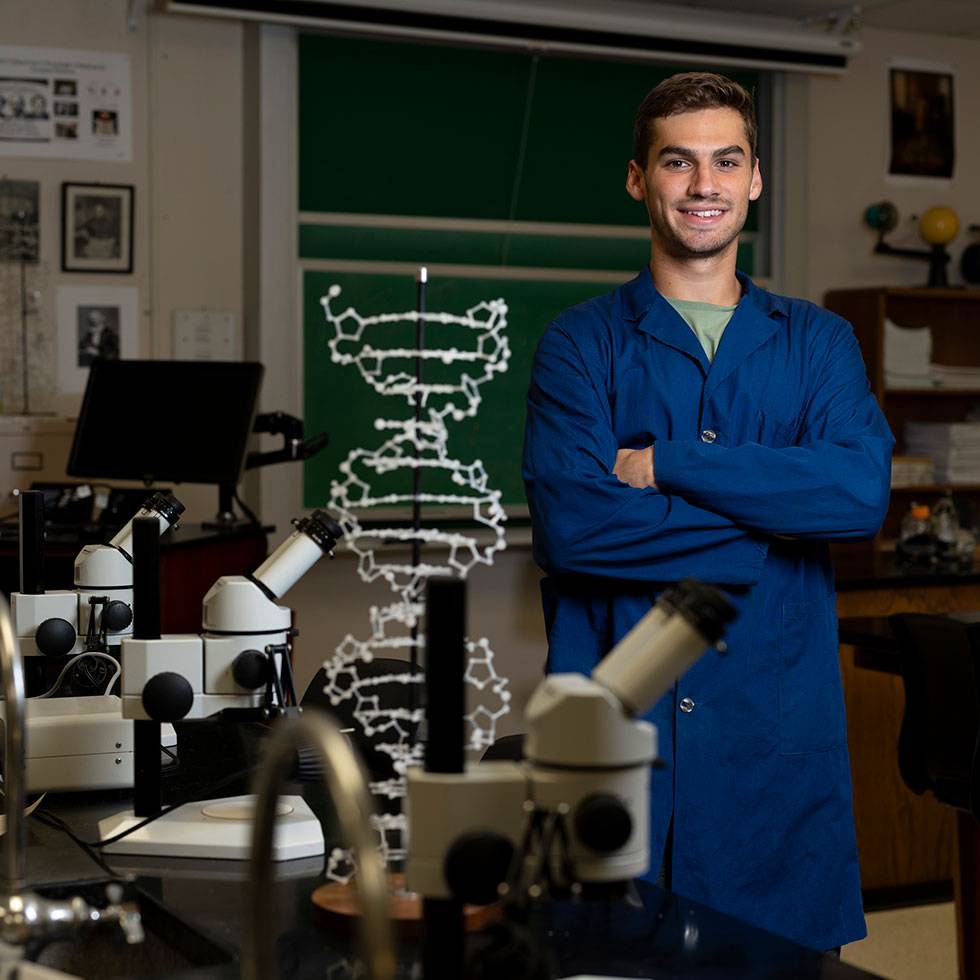
![]() Scott Varney Skidmore College Class of 2008 |
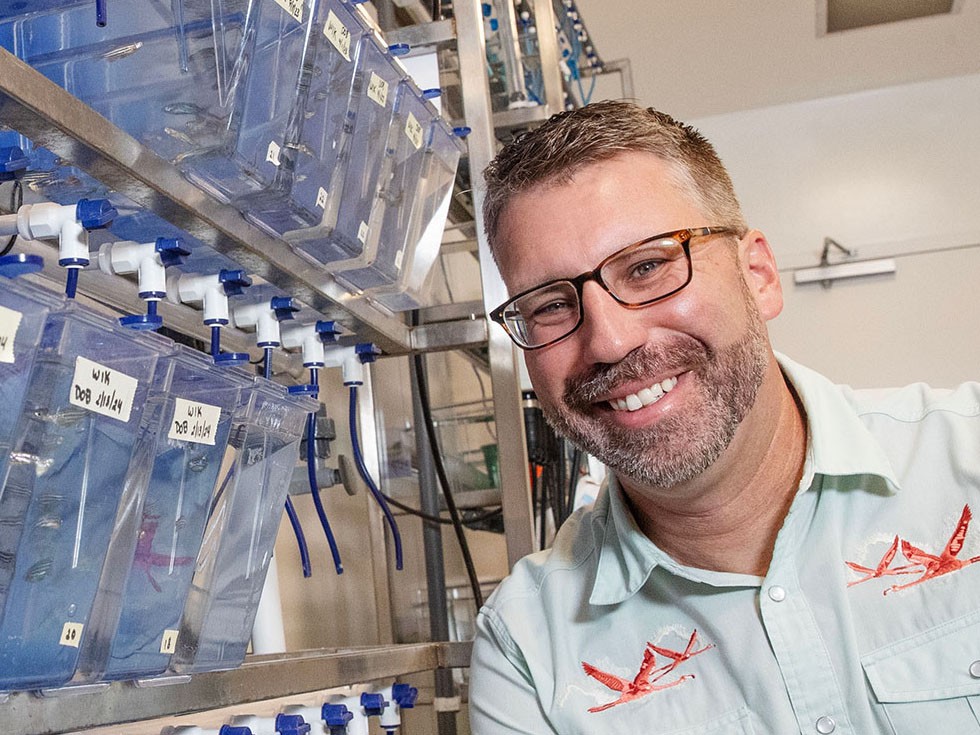
![]() Abbe Labella American University Class of 2010 |
Research Interests:
All
cells share a set of fundamental processes (DNA replication, RNA and protein
synthesis and cell division) that are each subject to quality control. This
ensures that mistakes are recognized and dealt with before they can become a
problem for the cell. Quality control is also important in the pathway of gene
expression. In this pathway, newly transcribed pre-mRNA undergoes a number of
processing steps that together yield a mature mRNA. These processing steps happen
in the nucleus, in some cases, while the newly made pre-mRNA is still in very
close proximity to its corresponding gene. Once processing is complete, the
mRNA is exported from the nucleus into the cytoplasm of the cell where it can
function in protein synthesis. Nuclear pre-mRNA processing steps are very fast
and as a consequence of speed, mistakes can happen that yield defective mRNAs.
If defective mRNAs are allowed to persist and accumulate in the cell, they could
lead to the production of mutant or deleterious forms of proteins.
Fortunately, quality control systems
are in place to recognize and degrade defective mRNAs. The best-characterized
mRNA quality control systems operate in a translation dependent manner that
works in the cytoplasm during protein synthesis. For example, mRNAs that carry
early premature stop codons are detected and rapidly degraded by a pathway termed
nonsense-mediated decay. Alternatively, mRNAs that are defective because they
do not possess a stop codon are also recognized as aberrant and are rapidly
degraded, in this case by the non-stop mediated decay pathway.
In contrast to the well-characterized
cytoplasmic systems, quality control systems that operate during pre-mRNA processing
in the nucleus are poorly understood, at best. Depending upon the nature of
the defect, aberrant pre-mRNAs accumulate within the nucleus, in some cases
at or near their sites of transcription. Why these aberrant RNAs accumulate
near the gene, and how they are eventually removed remain puzzling questions.
Using the budding yeast, Saccharomyces
cerevisiae, my research is aimed at understanding the mechanisms that underlie
nuclear quality control systems that operate to ensure accuracy in gene expression.
Current and future research projects address the following issues: i) how aberrant
RNAs are differentiated from normal mRNAs by the various degradation systems;
ii) the mechanism by which some aberrant RNAs are retained at the site of transcription;
and iii) the consequence to continued gene expression (if any) from the nuclear
accumulation of aberrant RNA.
Publications:
Hilleren, Patricia and Roy Parker. (2003) Cytoplasmic Degradation of Splice Defective pre-mRNA and Intermediates: A Dbr1p-Dependent Quality Control System for pre-mRNA Splicing. Molecular Cell. 12:1453-65.
Hilleren et al., (2001) Quality Control of mRNA 3-end Processing is Linked to the Nuclear Exosome. Nature. 413:438-42.
Hilleren, Patricia and Roy Parker. (2001) Defects in the mRNA Export Factors Rat7p, Gle1p, Mex67p and Rat8p Cause Hyperadenylation During 3'-end Formation of Nascent Transcripts. RNA 7:756-64.
Hilleren, Patricia and Roy Parker. (1999) mRNA Surveillance in Eukaryotes: Kinetic Proofreading of Proper Translation Termination as Assessed by mRNP Domain Organization? RNA 5:711-719
Hilleren, Patricia and Roy Parker. (1999) Mechanisms of mRNA Surveillance in Eukaryotes. Ann. Rev. Genetics. 33:229-60.
Hilleren, Patricia J. Kao, Hung-Ying, and Paul G. Siliciano. (1995) The Amino-terminal Domain of Yeast U1-70K is Necessary and Sufficient for Function. Mol. Cell. Biol. 15:6341-50.
Pomeroy, Clare C. Hilleren, Patricia J. and M. Colin Jordan. (1991) Latent murine Cytomegalovirus DNA in Splenic Stromal Cells of Mice. Jour. Virology 65:-3330-04.
Back to the Faculty and Staff page
Back to the Biology Homepage