|
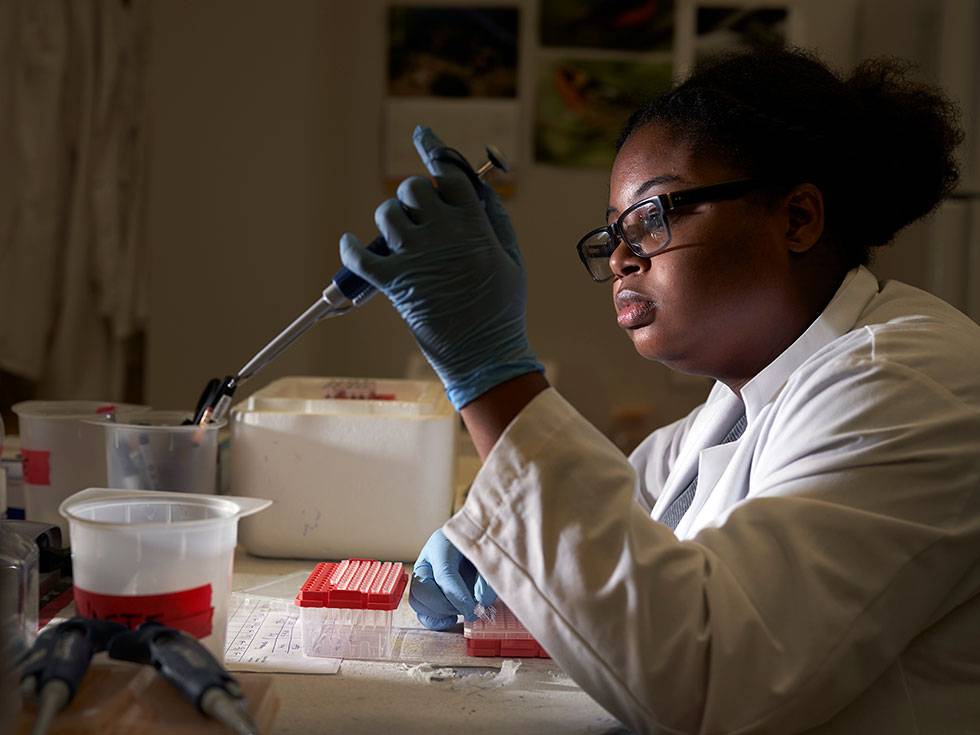
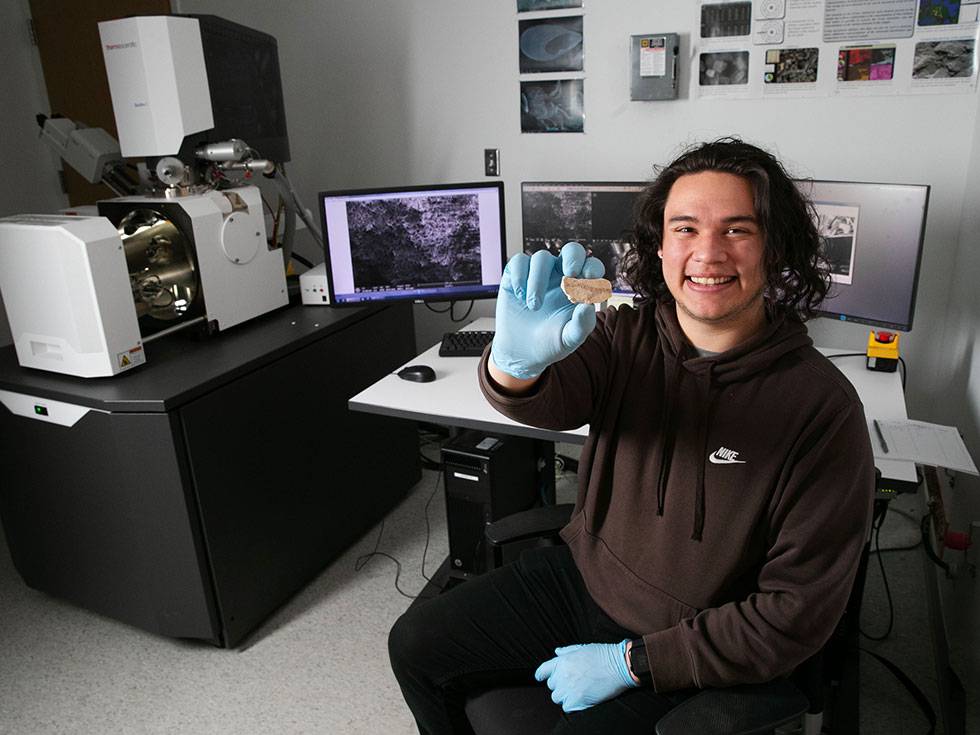
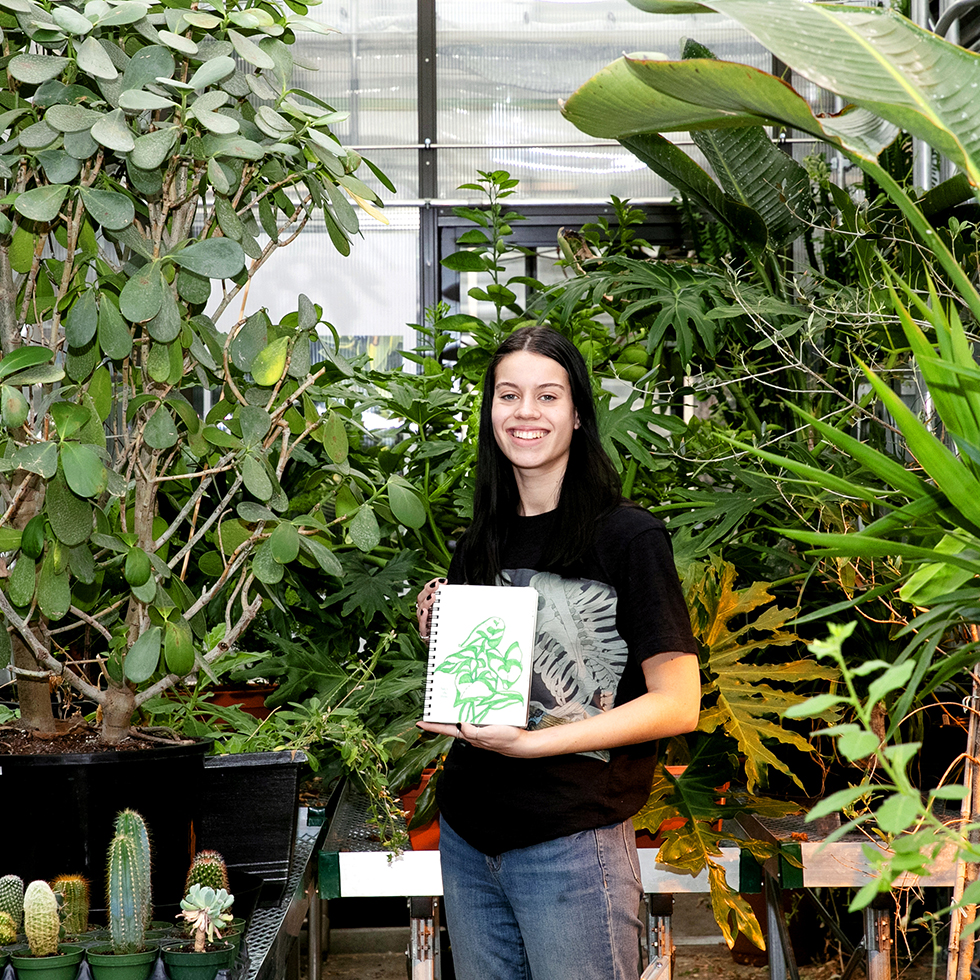
Many students at Skidmore do research
in plant biology. Opportunities exist during the academic year in BI 375
(Research in Biology), BI 371 (Independent Study) and BI 275 (Introduction
to Research). During the summer, students can apply for the Summer Collaborative
Research Program. If accepted, the student works ten full weeks in a particular
project in collaboration with the faculty member. A stipend plus room
and board are provided to the student.
Here is news of some of the recent
projects in plant biology that students have undertaken:
- Rachel Roberts,
class of 2004, recently completed a summer collaborative research program
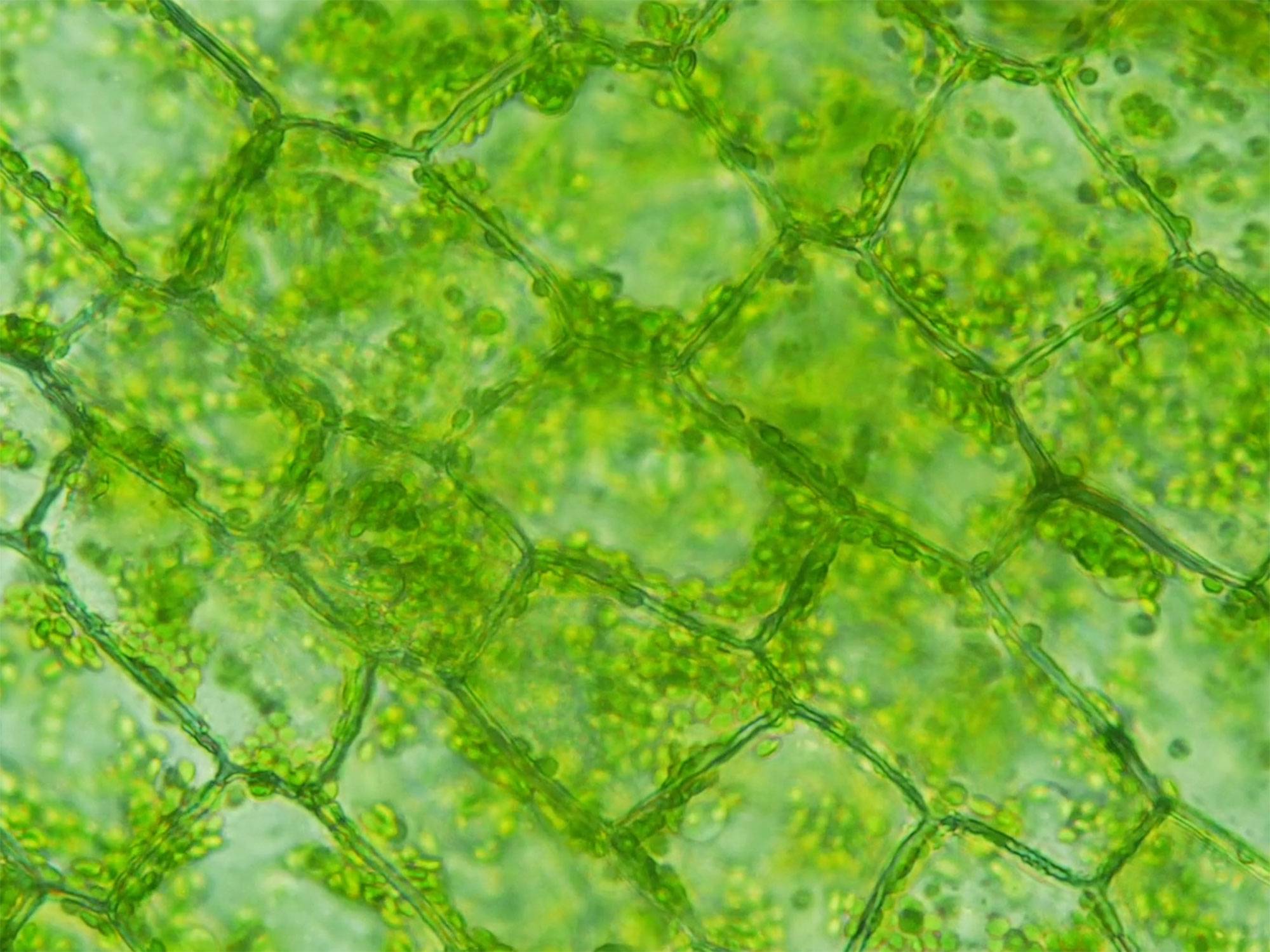
where she studied plasmolysis and protoplast formation in the green
alga. Closterium. Along with fellow student, Becca
Flitter, class of 2002, she will present a paper of her results
at the Northeast Algal Syymposium this April at the University of New
Hampshire.
Two papers of student-faculty collaborative
research have recently been published:
- Composition and synthesis of the pectin and protein
components of the cell wall of Closterium acerosum (Chlorophyta),
by Ariella Baylson,
Brian Stevens and David
Domozych; in Journal of Phycology, vol. 37, 796-809 (2001).
- Calmodulin and its role in the secretory apparatus
of the desmid Closterium, by Jamie Linde,
Laura Morse and David
Domozych; in International Journal of Plant Sciences,
vol. 162, 15-27 (2001).
- Ariella Baylson, class
of 2000, has performed several semesters of research looking at cell
wall proteins and their synthesis in the alga, Closterium. In
addition to extensive biochemical work, Ariella has undertaken sophisticated
immunocytochemical studies to trace the pathway of cell wall proteins
and polysaccharides in the Golgi Apparatus.
**Congratulations to Ariella who is
co-recipient of the Donald Pyle Award of 2000 for excellence in research
in Biology.
__________________________________________________
- Brian Stevens, class of
2000, spent the summer and Fall of 1999 isolating the proteins, profilin,
myosin and actin from the alga, Closterium. In addition to using
electron microscopic techniques, Brian has mastered the technology of
preparative electrophoretic separation of proteins. Brian has used the
BioRad 491 prep cell to isolate a library of proteins which have then
been used for antibody production.
___________________________________________________
If you are interested
in learning about doing research in plant biology, please contact David
Domozych, Dana 382.
|