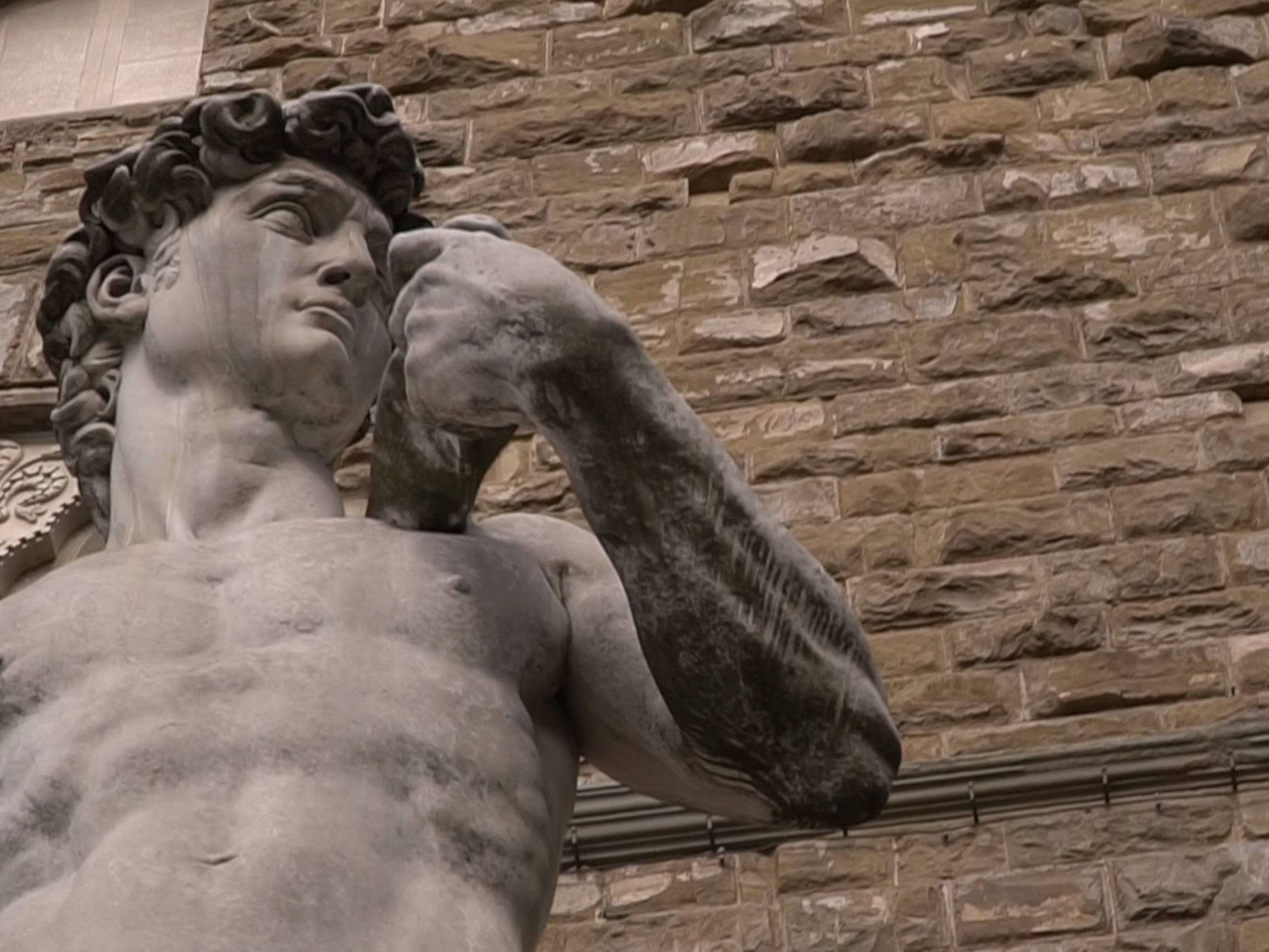
Our interdisciplinary approach brings ancient Greece and Rome to life through cultural study, close reading, and hands-on research. You’ll explore everything from mythology and philosophy to politics and performance, often in the original texts. Work closely with faculty mentors and have the option to participate in archaeological fieldwork across Europe and the Middle East. 

What will you learn?

A gateway course, The Classical World, and survey courses in literature, history, and archaeology will form the foundation of your studies. You’ll take one year of intermediate or advanced Greek or Latin and build skills in textual analysis, critical thinking, and cultural interpretation along the way. Many students also double major or minor to pair classics with fields like political science, theater, studio art, or philosophy. 

Where will you go?

Classical studies students graduate having gained experiences that are interdisciplinary, high-impact, enduring, and resonate well beyond the classroom. Through close encounters with the past, classics graduates are equipped to make their mark on the future.

Career paths  Recent employers Graduate schools 
  • Actor
  • Business owner/entrepreneur
  • Lawyer/legal practitioner
  • Librarian/archivist
  • Marketer
  • Museum/archaeological researcher
  • Teacher
  • Chase Bank
  • Peabody Essex Museum
  • People Magazine
  • Rutgers University Foundation 
  • SEVN-X (Cybersecurity)
  • Spotify
  • The Washington Post
  • Boston University
  • New York University 
  • University of California, Los Angeles
  • University of Kansas
  • University of Massachusetts, Amherst
  • University of Southern California
  • University of Washington

Interesting classes you might take

Classics at Skidmore blends ancient ideas with modern relevance — often beyond the classroom. A few standout courses:

  • Ancient Rhetoric/Modern Politics – How political ads, tweets, and campaign slogans hearken back to ancient oratory.
  • Body and Soul – Explore how the Greeks imagined the divine through art, ritual, and sacred spaces.
  • Classics on Film – Analyze modern portrayals of ancient worlds.
  • Gender and Sexuality in Antiquity – Examine identity and power through ancient sources.
  • Greek and Latin (all levels) – Learn to read the classics in the original languages.
  • Greek and Roman Comedy – Satire, slapstick, and social critique — ancient-style.
  • Identity and Ethnicity in Ancient Greece and Beyond – How ancient constructs of ethnic identity resonate into the present.
  • Mapping and Exploring Rome – Travel-study in Italy while exploring ancient texts and creative writing.
  • Materials, Making, and Meaning – Material culture in granular detail, through microscopy, mineralogy, modeling, and more.
  • Murdering Mothers – A deep look at myth, family, and fate in classical drama.
  • Race and Ethnicity in Ancient Greece – Study the dynamics of race and ethnicity in antiquity.
  • Romans and their Environment – Found a Roman city from the ground up, and keep it running through feast and famine.
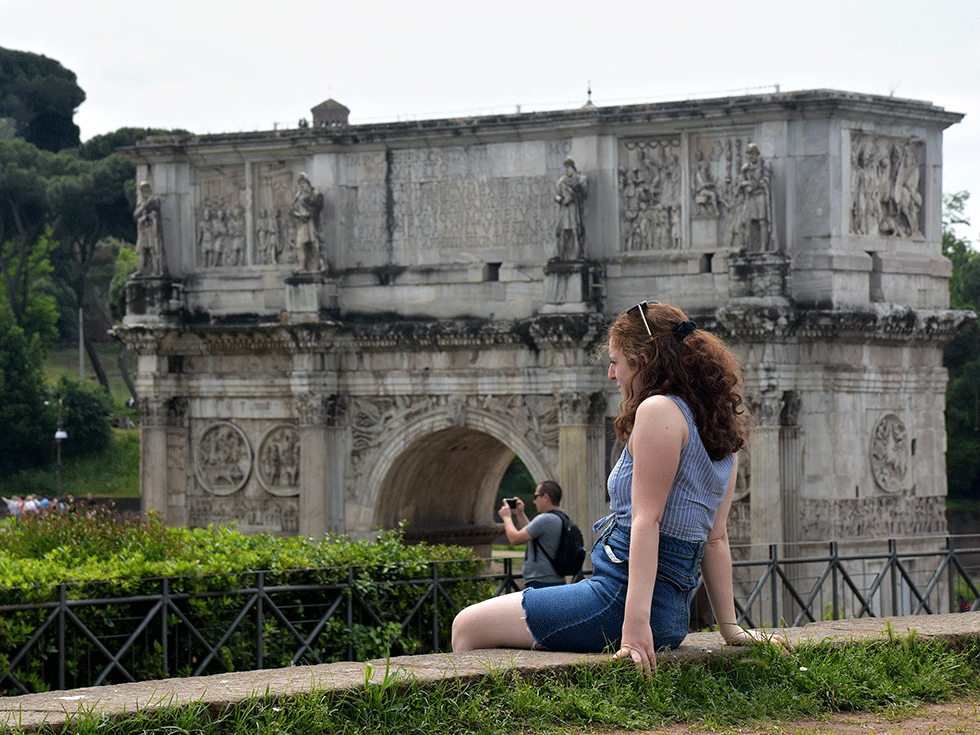
A student sits on a wall overlooking the Arch of Constantine while studying abroad in Rome, Italy.

Study abroad

Classics students have many unique opportunities to take their learning abroad. Study Greek in Greece, art conservation in Rome, or join a travel seminar to the Parthenon — the choice is yours!
Explore classics abroad
Bringing ancient ideas to life

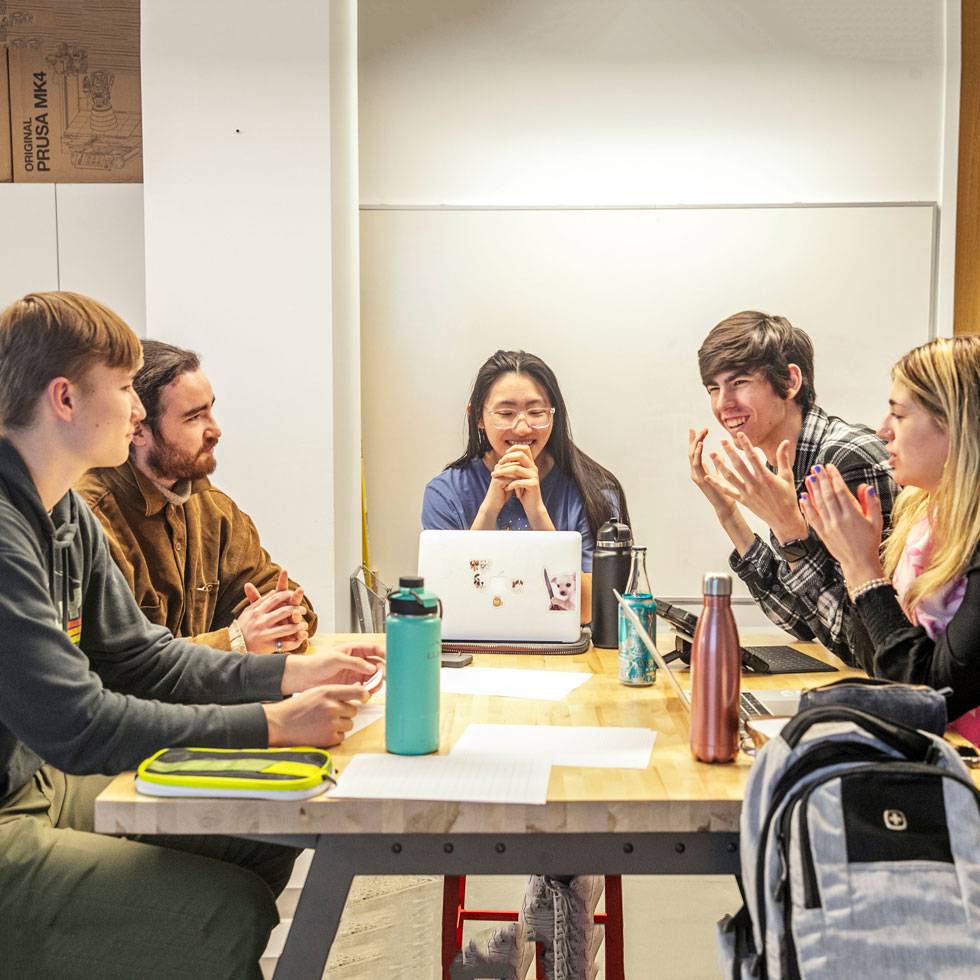
Five students sit around a table with their laptops, joyfully engaging in a classroom discussion.

Constructing ‘Skidrome’

Think classics is for squares? Well, for Assistant Professor Amy Oh and her class, who used Minecraft to roleplay the lives of everyday Roman citizens, it’s all about blocks.
See what they built
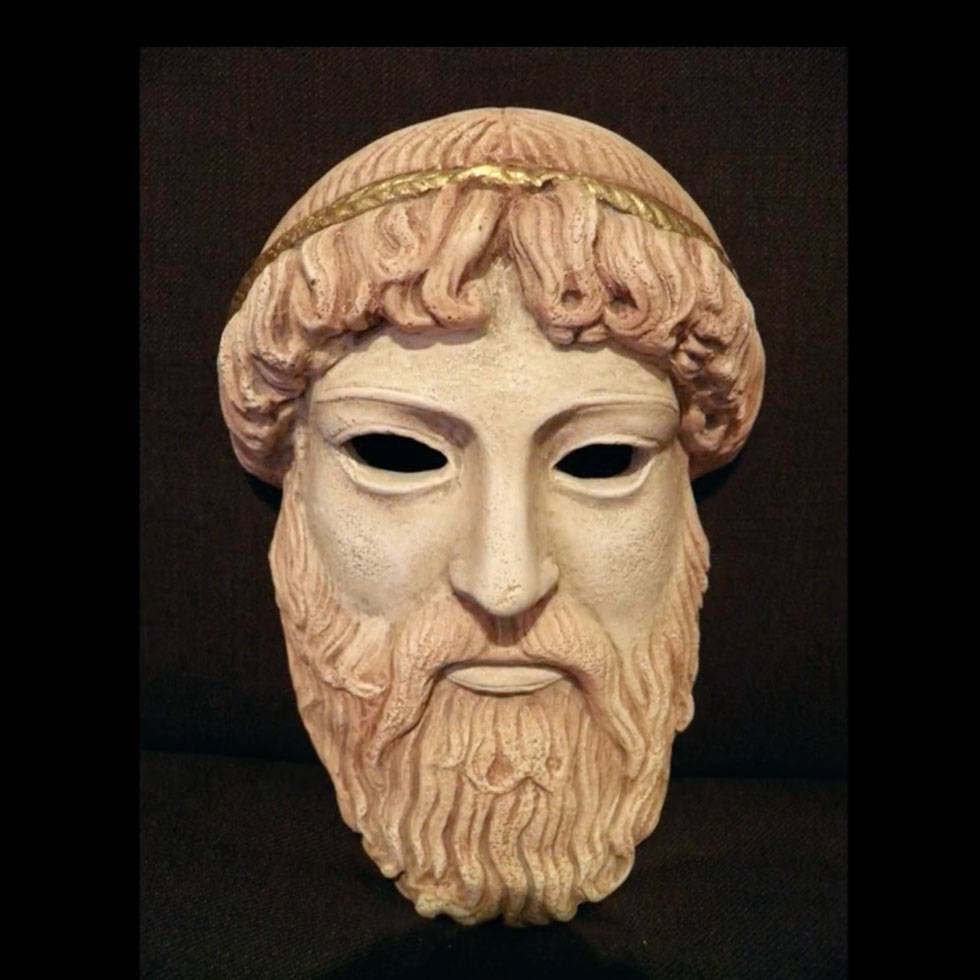
Image of Greek mask

Greek tragedy unmasked

Students have a chance to create their own masks in this hands-on approach to studying Greek tragedies — complete with playwriting, staging, and a culminating performance.
Watch the class in action
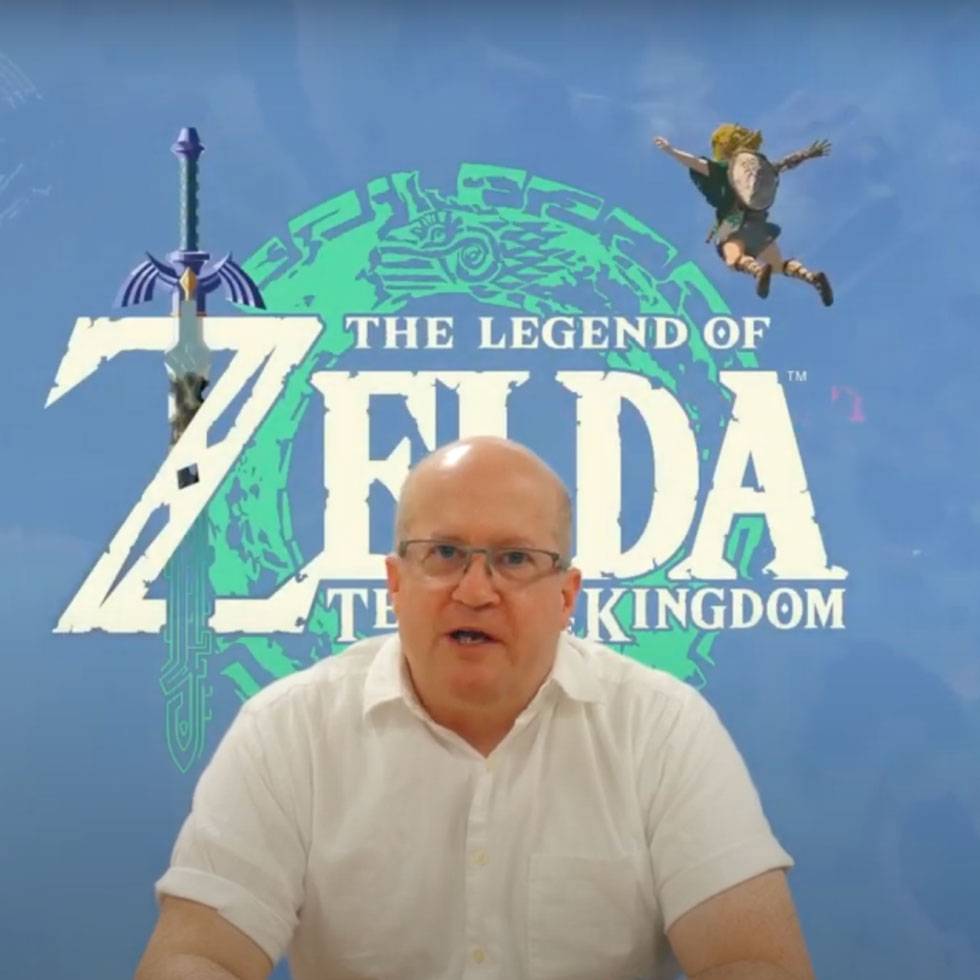
Image of Professor Dan Curley with Zelda screen in the background

Zelda’s ancient origins

Associate Professor of Classics Dan Curley explains why the Legend of Zelda video games continue to fascinate us through an ancient storytelling framework.
Discover how it links
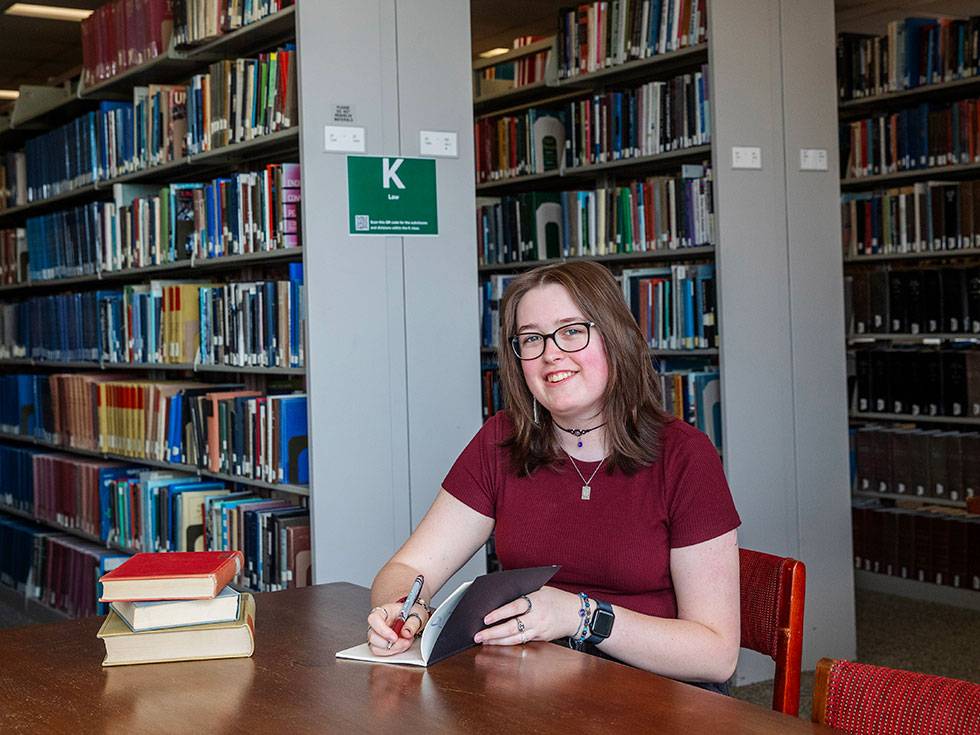
Skidmore College student Mia McCormack, a Greek scholar and peer tutor, works at a desk in the Lucy Scribner Library with book stacks in the background.

Our students

“I was so inspired by how excited all the faculty are about this area of study and teaching their students, and I knew I wanted to be a part of such a welcoming and fun department and seriously dive into this discipline.”
— Mia McCormack ’27
Read Mia’s story
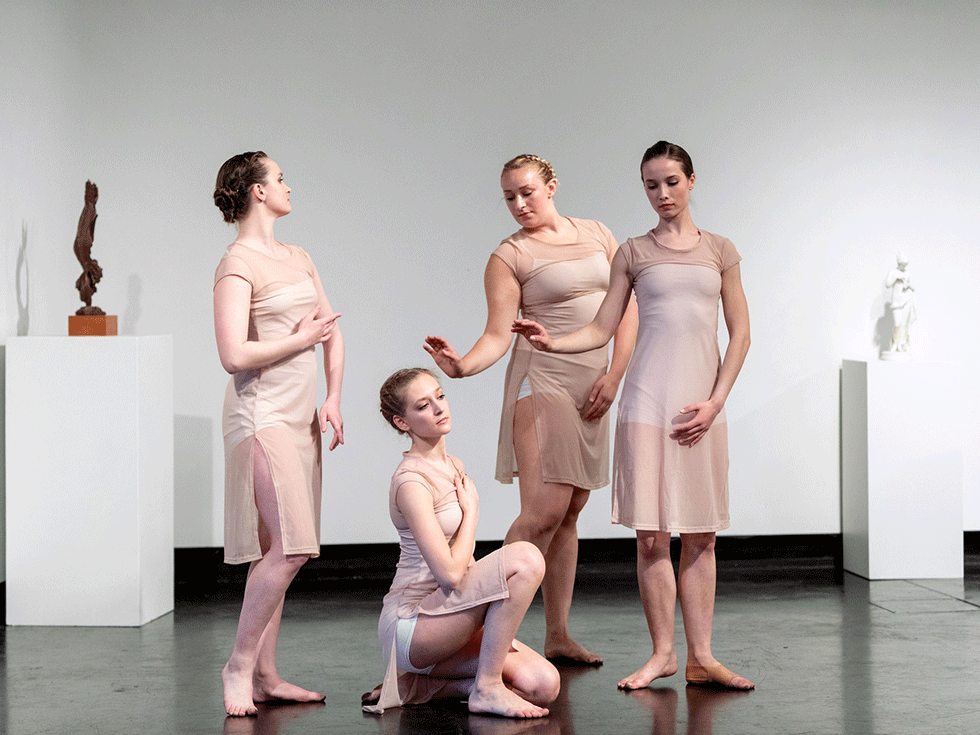
Four student dances perform in a gallery space at the Tang Museum. They are wearing pale pink flowy dresses, and each holds a different pose.

Our alumni

“The environment in the Classics Department really made me think about who I am as a person and how I connect to my community … It wasn’t just the Latin; classics looks at everything — language and religion and politics and art and history. It’s kind of everything in one.”
— Emily Gunter ’19
Read Emily’s story

Annual learning traditions

Homerathon: Homerathon is a classics classic. Celebrate one of the earliest Western poets with a marathon reading of Homer’s extensive literary works. One of our most anticipated annual events, Homerathon draws fans from our department and beyond. 

David H. Porter Classical World Lecture: The David H. Porter Classical World Lecture, named for the College’s fifth president, is a highlight of the spring semester, drawing classical scholars from around the world to share their insights and discoveries with the Skidmore campus.

Parilia: Every year, Skidmore Classics gathers with the departments at Hamilton and Union colleges for a full day of undergraduate research presentations, whether at the speaker’s podium or in poster sessions. This end-of-year event, which has endured for over two decades, fosters camaraderie across classical studies programs in upstate New York, even as it enables students to showcase their best work.

Language study in classics

Studying Greek or Latin connects you directly to the ancient world — and strengthens your reading and thinking skills today. Here's what to know as you get started:

They’re fun, challenging, and give you a deeper understanding of ancient cultures — plus, they sharpen your skills in English.

If you’ve studied Greek or Latin before, contact Professor Dan Curley for placement. A language exam is also available before classes start.

Not required — but if you're considering graduate study or teaching, it's a smart move. You can start one language your first year and the other the next.

Faculty

Curious who brings the ancient world to life at Skidmore? Meet the passionate classics faculty ready to guide your journey from Homer to Herodotus and beyond.
Meet your professors

Contact Classics

Office

Filene Hall, second floor
Phone: 518-580-5460
Fax: 518-580-5099

Department Chair

Dan Curley
Professor
518-580-5463
dcurley@skidmore.edu

Administrative Coordinator

Amelia Clarke
518-580-5091
acclarke@skidmore.edu