People and Projects
Busy hands

In her studio in Woodstock, Vt., Barbara Stroock Kaufman 40 is ever busy making art. Its her source of energy, she says; I just fall apart if Im not doing it.
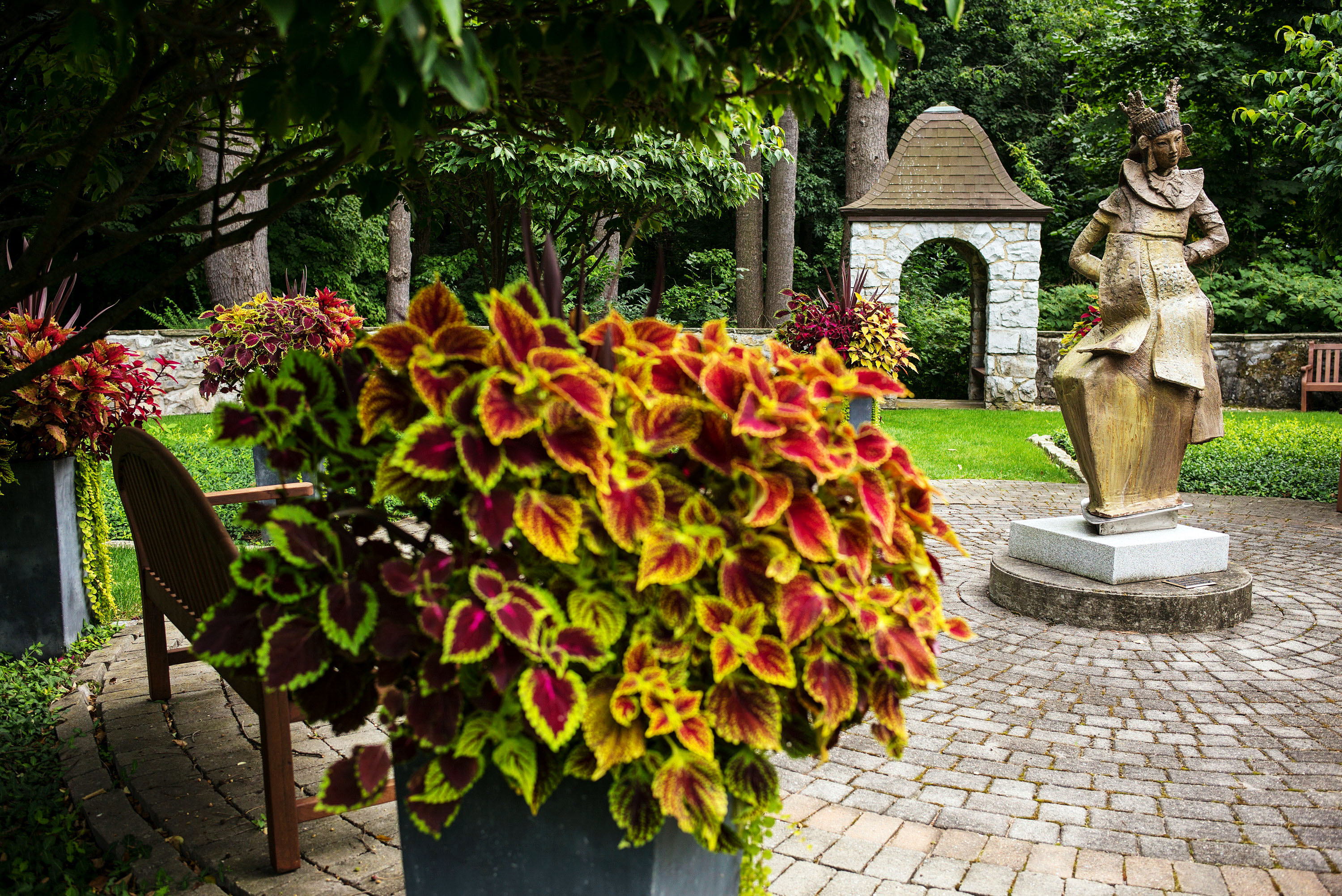
Her sculpturesmany of which live in gardens or function as fountains or bird bathsare so popular that Kaufman sometimes has trouble collecting enough of them for an exhibit. Commissioned works have appeared in gallery shows throughout New England and Canada and have traveled coast to coast; her sculptures have also been on view at the Cincinnati and Philadelphia Museums of Art. Recently granddaughter Stacey Gerrish 87 produced a book titled Zaza (Gerrishs childhood nickname for Kaufman), featuring over 100 photos of the sculptors work (see Books column).
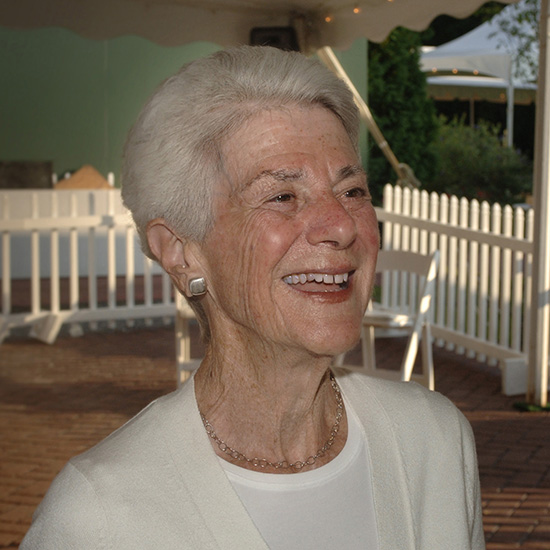
Kaufman, who says shes always been very influenced by the art of India, China, and especially Indonesia, has created a long parade of female forms, Gerrish notesmost of them in graceful, ornamented gowns, some with elaborate hairdos or hats or crowns. (Kaufman herselftall and lean with gray hair swept up in a knot and wrists modeling a host of silver banglesis, arguably, as striking as her sculptures.)
Kaufmans basic training in art came from Harry Wickey, who taught her first to sketch and then to sculpt (he himself went on to become curator of the reknowned Storm King Art Museum). At Skidmore Kaufman studied art history and continued sculptingworking in bronze and plasterbut she left after three years to get married.
She and her husband raised a family and ran an apple orchard in New York State; they later moved to Vermont, where Kaufman began sculpting clay. She also began a long-term collaboration with Tariki, the New Hampshire studio of ceramicist Jack OLeary, who died in the 1980s. Now run by OLearys two sons, Tariki still prepares Kaufmans clay and does the firing and glazing of her finished sculptures. Her work represents the wonderful dance between the human and the natural worlds, suggests Eric OLeary, and brings us richly and rewardingly close to things we do not have to fear. MTS
Intercultural point of view
Linda Hennessey 76 remembers her mom helping au pairs learn about American culture through the YWCA. Now Hennessey helps acculturate international studentsand also share their cultures with Americansin Philadelphia.
A former corporate executive and entrepreneur, Hennessey is VP for programs and development at International House Philadelphia. An independent, nonprofit organization, IHP is home to about 400 students from sixty countries who attend the citys colleges and universities. (Founded in 1910, its one of twenty-two International Houses around the worldin London, Paris, Taipei, New York City, Chicago, and Berkeley, to name a few.) Along with the rich residential experience that comes from sharing space with a wide mix of people, IHP offers advice and training to assist residents in adjusting to, and even taking leadership in, American societyfor example, some students need assurances that here its allowable, and in fact desirable, to question professors and engage in classroom debates.
But the cultural exchange works both ways, says Hennessey: We try to bring the world to the Philadelphia community. IHP presents myriad cultural programs that are open to the public, from films and lectures to holiday celebrations and social events coordinated by the students.
After she majored in history at Skidmore, Hennessey earned a masters in European history at Columbia. She also holds an MBA from City University of New York and a certificate in baking and pastry from the Culinary Institute of America. She was a VP for Cigna insurance and then owner of a chocolate-making company, before joining IHP in 2003.
One of the best rewards of her current work, she says, is experiencing cultural diversity. Ive worked in corporate America, which preaches diversity; but Ive not worked for a really diverse company. Here I live absolutely true diversity, with all its benefits, daily, she explains. We have Indian and Pakistani students living in the same suite, and the only time they fight is when there are soccer games, she laughs. AW, SR

On the fast track
Speed. Cars. Neal Heffron 86 has been into both for most of his life. In high school he won his first timed race driving a Ford Fiesta at Limerock Park in Connecticut. Since then hes raced throughout America and Canada, driving BMWs, a Porsche 911, spec Miataspretty much everything from go-carts to Ferraris.
Its a sport that requires concentration so intense that 250,000 fans (as there were in a support race he ran for the Montreal Grand Prix Formula 1 event) cant be even a momentary distraction. When youre out there driving you cant think of anything else. It clears your mind of any soporiferous thoughts, says Heffron, whose day job is VP of sales for the Cambridge, Mass.-based E.L.I. Incorporated, which sells new and refurbished high-end computer equipment.
Heffron owns a red Ferrari 360 GT and has raced in club and professional races for about ten years. Hes been known to give his winnings to a favorite cause: the Massachusetts Society for the Prevention of Cruelty to Animals. In February he ran a BMW 330CI in the three-hour Grand-Am Cup Street Stock Series, a pre-race for the prestigious Rolex 24 at Daytona.
An endurance racer, he does much of his training in go-carts. He plays Ping-Pong and tennis to practice hand-eye coordination and runs five miles a day. But his endurance has been tested even when hes sitting stock-still. At a race in Florida a few years back, Heffron had been driving for two hours, suited up in NOMEX underwear, a three-layer fireproof suit, and a helmet. The air temp at the track was 110 degrees, and the ambient in the car was 150. I was about to come in for gas, water, and a driver change when a competitors car burst into flames. We were all red-flagged and forced to sit in our cars for forty-five minutes before resuming the race.
Heffron admits to at least a small addiction to speed but says in a race you get velocitized150 feels like 45. Decelerating to highway speeds for a pit stop feels like a crawl. This is not to say hes fearless. What scares me the most, he admits, is wrecking the car and ruining the race for the rest of the team. But, comparatively speaking, driving fastfor himis a safe sport; last year, he says, I broke my shoulder and was laid up for four monthsfrom skiing. MTS
|
Lunch at Mao's

Last winter, when two groups of expat teachers met for lunch at Chairman Maos, a restaurant in the Chinese city of Jishou, Judith Serbe Hunger 63 (who lives in Maine) and Misty Lettieri Haley 68 (near Seattle) were just a tad surprised to discover their common Skidmore past.
The pair was at Jishou University, teaching English as a second language. While consuming very spicy Hunanese veggies and tofu, Hunger reports, the teachers discussed Chinese culture, their students, and the presidential race back home. When the younger set (two-thirds were recent college grads) began swapping info about where they went to school, the over-fifty contingent figured theyd do the same. Besides the Skidmore connection, Haley and Hunger discovered theyd also both served in the Peace CorpsHaley in Thailand, Hunger in Poland.
Beyond their continuing sense of adventure, what brought them to a remote corner of southern China was a desire to experience the Chinese as individuals and the details of daily living not available to the casual traveler, Hunger says. Haleys return to Asia after several decades was a good opportunity to catch up with all the incredible changes there. For Hunger, the plunge into Chinese culture was a challenge, to see how different it could be from living in a foreign but Western-related country.
The Skidmore pair agreed that living in an Eastern culture presents challengessquat toilets, garbage-strewn streets, rats in the alleyways, no coffee/butter/cheese. Less tangible issues have to do with becoming accustomedor inuredto stares, the daily Hello! from schoolchildren, the incessant noise of honking taxis, and syrupy (or, conversely, martial or patriotic) music blared from community loudspeakers. But Haley and Hunger acknowledge that the rewards of teaching make up for these discomforts.
In June Haley and Hunger met for lunch at Maos one last time before returning home to family in their respective corners of the US. MTS
Water cure
When water therapist Mary Hiers Carrillo 83 gets in the pool to give a swimming lesson, her one-on-one approach delivers satisfying results. Two of her most remarkable swimmers are ten-year-old Parker and seventeen-year-old Westy.
Parker is recovering from spinal surgery to remove two discs, which left him paralyzed in the rear end, according to Carrillo. Westy is a bit stiff and often requires an hourlong massage before he gets in the water. But after some gentle coaxing, Carrillos charges tend to limber up enough to enjoy their lessons and show improvement.
Parker is a basset hound. Westy is a golden retriever. And Carrillo, a certified animal care specialist, is owner of Good Dog Aquatic Fitness, a canine hydrotherapy practice that opened a year ago in North Andover, Mass. The 2,000-square-foot garage Carrillo leases with husband Luis (a physical therapist who, among other things, is certified by the Red Cross in pet first aid) accommodates an indoor pool, an agility course, a massage area, andsoon to comean underwater treadmill.
For dogs as for humans, the buoyant environment of hydrotherapy reduces strain on the joints while strengthening muscles and improving overall cardiovascular endurance, Carrillo says. Most of the canines she sees are recuperating from old-agerelated surgeries to fix bum knees, backs, and hips. Some are recovering from trauma, such as a car crash. Good Dog also offers a maintenance program for aging dogs with arthritis, athletic agility dogs, and dogs that have completed rehabilitation but are continuing with hydrotherapy for fun and fitness.
Not all dogs are swimmers, Carrillo points out. Some require a lot of positive reinforcement to lure them in to the pool and cheer them on. They all instinctively have an idea of what to do in the water, but some will let their bottoms sink and swim vertically. The splashing can be a bit much. But she stays nearby to help the dogs, who wear life jackets.
More and more guardians (as Carrillo calls animal-loving humans) are seeking alternative therapies for their four-legged companionsincluding acupuncture, massage, and homeopathy. Its all about improving the dogs quality of life, she says. To see a dog like Parker trotting about on all fours, with a spring in his step, is truly why we are doing this. MTS

Sacred art?
Many artists strive to uncover the sacred in everyday life. For painter Brian Petroski 99 thats not been hard to do. He wakes up every morning in a 119-year-old former Catholic church he shares with fellow artist and architect Travis Kline (and a pet iguana named Frederick, a golden retriever called Gelato, and a baby python).
The 14,000-square-foot Romanesque cathedral, which sits just outside Saratoga Springs in the Revolutionary Warera town of Victory, was the perfect solution for the artists, both of whom had grown frustrated working in cramped apartments. While scouting for suitable studio space last year, Petroski spotted a for-sale sign on the former Notre Dame Visitation Church, which had been closed for almost fifteen years. Both of us thought, Wouldnt that be a great space?
Petroskiinfluenced by the work of Salvador Dali, Jackson Pollack, and Jean-Claude Gaugyhas his lush abstract oil and acrylic images of women and undersea life hanging in a living area at the front of the church. The richly hued, sensuous forms are inspired by time he spent in San Diego and Key West painting, bartending, and snorkeling through coral reefs. (Downhill skiing, another passion, is also represented.)
His studio is in the basement for now, and he uses the churchs cavernous nave to host a dodge-ball league he recently formed (about twenty-five people showed up for the last game). But Petroski and architect Kline are in the process of getting a zoning variance and grant money to transform the spacewith its vaulted ceilings, stained glass windows, and gothic ornamentationinto a multipurpose site for gallery exhibitions, live music events, and community gatherings. There is no venue like this in the area, Petroski says. And the time is right.
The pets, meanwhile, seem content to slither and roam around upstairs, where the choir once sang.
MM
|