Summer 2003
- - - - - - - - - -
Contents
Features
Letters
Observations
Centennial spotlight
On campus
Faculty focus
Arts on view
Sports
Books
Advancement
Class notes |
|
|
|
Kids, dogs, and the transformative power of service
by Kathryn Gallien
Two women wait calmly in the front hall of a high school. At the class break, teenage boys erupt onto the scene, their shouts and raucous singing amplified off the walls in counterpoint with the near-constant beep of a metal detector. Their aggressive energy level is palpable. The women quietly josh with the students as they round up six of them for their next class.
 |
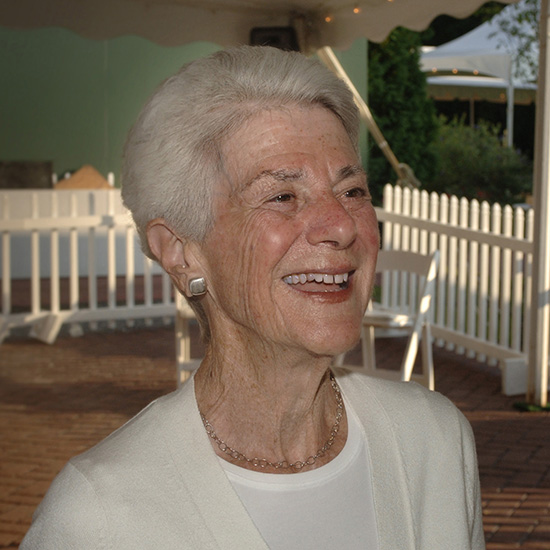
| Barbara McGrew Jenkel 62 trains teens to train dogs |
I feel safe with these boys, comments Barbara McGrew Jenkel 62. Theyd watch my back. She is a full-time volunteer at Childrens Village, a residential treatment center in Dobbs Ferry, N.Y., for at-risk boys from the inner city who have essentially flunked out of the foster-care system. Most stay for about two years, attending schools on site. Jenkel helps lead the canine therapy class, run under contract with East Coast Assistance Dogs, as part of the curriculum, an elective in place of, say, cooking or industrial arts. Jenkel and Lu Picard, executive director of the assistance-dog training program, interview the boys for admission to the class, their intuition and experience often guiding them to select those who are shy, who get bullied, who could use a boost in self-esteem.
Six boys sit in a spacious classroom as Picard outlines the days agenda. The students are calm now; the only noise comes from eager dogs rustling in their crates. When a few of them whine, Orlandoa quiet boy with a natural trainers touchgently shushes them.
Jenkel explains, The boys do all the training, preparing the dogs to assist the physically disabled clients who will adopt and rely on them. When they arrive for a two-week training session with their new canine companions, the boys are proud to turn the dogs over to the clients. During this time, the students continue as trainers, but each works with a new dog, which helps them begin to separate from their four-legged friends.
While instructors or guests speak to the class, the students keep their dogs quiet at their feet, occasionally meting out a crisp collar correction immediately followed by praise and hugs. As each pair is called upon to demonstrate their work, the other boys quietly groom their dogs. When these boys are around wonderful dogs, they learn about unconditional love, says Jenkel. They learn to be patient; they learn not to get frustrated. She knows that for some, the positive effects may carry them far, even to college. And she also knows that some may return to troubled lives, perhaps in a gang or an unfit family. Im not naïvebut this is an hour and a half of peace for them. They dont fight here. They get a taste of normal.
Robert leashes Rico and slides himself into a wheelchair, looping his wrists under plastic restraints. Together they approach a refrigerator, where Rico easily follows commands to open the door, take out a water bottle, and put it on a nearby table. Then Robert is asked to have the dog remain standing at the table, front paws on its edge, while he wheels all the way around and back. Rico cant quite get it right: He jumps up onto the table, then he jumps down and tries to follow the boy. Each time, Robert calmly starts over, showing no frustration. They finally accomplish the task, and the class moves on to other pairsJasper pulls a towel from a drier and drags a laundry bin to his trainer; Denver opens and holds a door so his boy can go through in a wheelchair. All the while, Robert quietly nuzzles Rico, telling him, I never gave up on you.
 |
| Robert, Barbara, and Victor rally around their mentor, Sky. |
Jenkel has long been a dog person, and there was a time when she thought she wanted to be a veterinarian. But girls growing up in the Midwest didnt do that, she says. When she came to Skidmorealong with a dozen other students from New Trier High School in Winnetka, Ill.she majored in American studies. Skidmore was an incredible experience for me, she says. Liberal arts empowered me for life.
Some forty years later, on a reunion questionnaire, Jenkel noted that being a parent, wife, grandparent, and volunteer were her lifes greatest achievements. Son Brad attended Colgate like his dad, Paul; Cynthia went to Skidmore, where she met husband Jeffrey Treuhaft 91, with whom she has four children. As for volunteering, says Jenkel, My parents instilled it in me that I ought to give back. And so, when she stepped down from administrative work at a local high school a few years ago, she began looking for a way to make a significant volunteer contribution. I had worked at a teenage homeless shelter, but only one day a week, and I took my dog Chelsea on visits to an old peoples home, she says. But I needed more.
When she learned of the new dog-therapy program at Childrens Village, Jenkel was happy to commit to four days a week year-round. In some ways, as a volunteer you take the job responsibility more seriously, she notes. Its clear that Jenkel is Picards right hand and, as Jenkel admits, the biggest dog- and kid-lover there. Her responsibilities range from teacher to chief pooper-scooper, and her perks include owning Skys the Limit, a magnificent matriarch of a golden retriever who has bred thirty-six dogs, and countless grand- and great-grandpups, for East Coast Assistance Dogs.
The best thing about Barbara, says Picard, is that shes consistent, and thats very important to the boys. Adds Jenkel, The boys cant believe I do this as a volunteer. But really, volunteering is selfishvery selfish. Oh, maybe Ive made a difference in these boys. I know theyve made a difference in me. She recounts heartwarming boy-and-his-dog stories: a big tough guy moving through the mall in a wheelchair, companion dog at his side, seeing how differently he is perceivedand appreciating the frustrations of a life perhaps more difficult than his own; boys with properly identified service dogs nevertheless being denied elevator access and learning to respond with persistence and dignity.
I get so much back from this program, says Jenkel. I came because I love dogs. I stay because of the boys. u
Dog-lover Kathryn Gallien sat up and begged for this Scope assignment. |
|