Winter
2004
- - - - - - - - - -
Contents
Features
Letters
Books
Who, What, When
Centennial spotlight
On campus
Faculty focus
Arts on view
Sports
Advancement Class notes | |
|
|
Bilingual doc straight-talks Chinatowns children
by Susan Rosenberg
 |
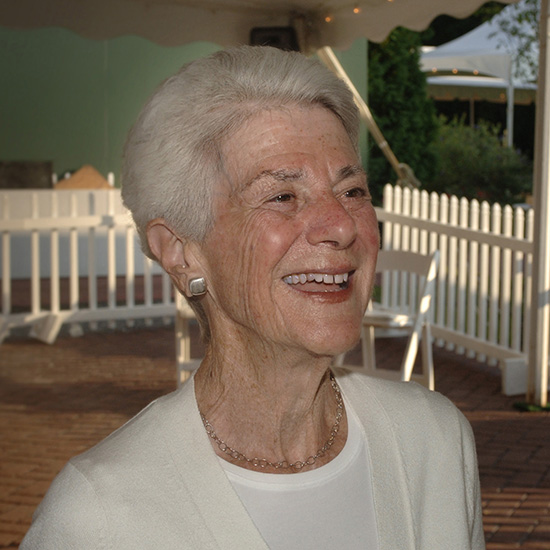
Elaine Choy '71 always urges her patients to resist too many burgers and fries |
Anyone
who is in medicine is an obsessive-compulsive,” declared Elaine
Choy Lee ’71 back when she was a pediatrics intern. As a young
doctor feeling the weight of life-or-death responsibility, she was
describing the intensity of “a person with high standards
who wants to be the best.”
Yet Lee is anything but a single-minded slave to routine; in fact
her life story is full of unexpected, maverick, mold-breaking choices.
Her father, a Chinese sailor, jumped ship in America; he was deported
twice, but after serving in World War II he was granted citizenship
and brought his Chinese wife and children to the US. The couple
settled, and had three more children, in New York City’s Chinatown,
where he worked in restaurants and she made clothes in a sweatshop.
He’d had basic education and later learned English; she’d
been denied any schooling as a child and remained illiterate. Young
Elaine did so well at the local public school that she earned a
transfer to prestigious Bronx Science (traveling an hour by subway
each morning and afternoon), and then used a Regents Scholarship
to attend Skidmore, a safe-sounding all-women’s college not
too far from home.
“Skidmore encouraged me to explore,” she says, “so
right away I took philosophy. It was very different from the science
focus I’d had in high school.” She adds, thanks to “Warren
Hockenos—probably my favorite professor in the whole world—I
was totally fascinated.” Graduating with an atypical BA in
philosophy and biology, she still faced all-too-typical limitations
on careers for women at that time, so she pursued a master’s
in education at New York University. She went back to Chinatown
as a science teacher in an alternative high school but recalls,
“I couldn’t get to teaching any real science, because
the kids had so much trouble with basic English and basic math.
I burned out really fast.”
Barely missing a beat, she decided out of the blue to become a doctor.
“I was a really good teacher,” she says, and perhaps
that talent melded with her scientific skills to lead her into pediatrics.
She earned her MD at Dartmouth and completed an internship at Columbia
(where she and a colleague were the subjects of the 1981 book The
Interns). Again she returned to her home neighborhood, where she
has kept the same offices for some twenty years. “I’m
beginning now to see the babies of patients I first met when they
were newborns,” she says. “Getting to watch babies grow
up, being part of that long-term development, is so rewarding.”
Another draw is “the amazing ability of children to heal,
even from life-threatening illness or injury. And that’s especially
great because they can have another seventy or eighty years ahead
of them.”
Upstairs
and down the hall in an unassuming South Broadway apartment building,
Lee’s office is largely given over to a hard-used, toy-filled
waiting room. Not just books and puzzles, either: working, ridable
rocking horses. Overlooking the play area is a small reception desk,
staffed primarily by…other children.
 |
| Lee show a poison-information card in Chinese and English |
They’re
local high-school students whom Lee has hired to help run her mom-and-pop
practice. (The other central player is husband Chuck, a multiply-certified
nurse practitioner who also serves as office manager.) “We train
them to answer the phone, weigh patients, fill out forms,” says
Lee. “They work after school and on Sundays—our busiest
day, since it’s the only day that some working parents have
time for a doctor’s visit. We try to keep the students from
tenth through twelfth grade, so they gain more experience each year.
Some have gone into nursing or other medical careers, and we have
two in med school now. We like the young people coming and going—we
all benefit.”
The assistants are certainly poised, polite, and competent. That
may be the result of the Lees’ training. But there is one
prerequisite they must arrive with: fluency in both English and
Chinese. “A lot of my patients speak perfect English but really
like it that we speak Chinese too,” says Lee. “They
feel more comfortable, we understand some of the traditions, and
we can communicate with the grandmas. I’ve always been proud
of my heritage, so I love getting to speak Cantonese, my first language.”
Having a bilingual practice—and clearly a touch of the driven
intensity she cited as an intern—means that Lee’s single
examining room contains row upon row of shelves labeled alphabetically
by topic and stacked with informational handouts in both English
and Chinese.“I send patients home with millions of papers,”
she admits with a smile. The references and reminders “can
save them time and phone calls later.” Other educational material
is posted all over the walls, including a lovely display, hand-drawn
by the quietly multitalented Chuck, of infants as they learn to
smile, grasp, sit up, and crawl.
Lee says, “I focus a lot on well-child care and development.”
For example, “I’m on a crusade to vaccinate newborns
against hepatitis B. Liver cancer later in life can often be traced
back to hepatitis B, and there’s a high incidence of liver
cancer in the Cantonese population I see.” Concerned about
obesity and poor nutrition, she warns patients about “sitting
at the computer and eating chips. But I know it’s hard: parents
are often away at work for long hours, and kids around here don’t
exactly have backyards to play in.” And she watches for emotional
trouble, perhaps from the lingering trauma of the 9/11 attacks at
the nearby World Trade Center, where “some of my patients
lost a parent, and some had to run for their lives,” or perhaps
from adjustment problems when “children raised by grandparents
in China are plucked from that home and brought to the US to join
parents they hardly know.”
When not doctoring (Saturday is the only day the office is closed),
Lee and her husband, the parents of two college boys, go out running
and walking, and not just for fun. After running half the 2002 New
York City marathon as a guide to a disabled entrant, she promptly
signed up for the full 2003 marathon herselfand began serious training.
I'm pretty old. she laughs, so I won't be breaking
any records; my goal is to finish. (In fact, she didin just
under six hours.)
Even
the family dog is a bit unconventional: it's a shiba inu, a sleek,
foxy breed from Aisa. It's our first and last dog, Lee
quips, because this one is so wonderful that no other dog
could ever compare. She might well stand firm on that ... or
she might not. Either way, don't be suprised if she adopts a pet
tarantula, iguana, or a miniature horse.
Sue
Rosenberg visited Elaine Lee's Office in November.
|
|