


Concert to feature unveiling of Graf Fortepiano


Bezuidenhout performing
Skidmore will unveil an original Conrad Graf Fortepiano in a concert scheduled for 3 p.m. Sunday, Sept. 18, in Arthur Zankel Music Center. A pre-concert talk by Edward E. Swenson will begin at 2 p.m. and the recital by internationally celebrated pianist Kristian Bezuidenhout will begin at 3 p.m.
Admission is reserved seating: $12 adults, $7 senior citizens, and $3 for Skidmore faculty, staff, and students. Tickets may be purchased onlineor at the Zankel box office. Call 580-5321 for more information.
The program includes Mozart's Sonata in F major, K. 332 and Sonata in B flat major, K. 333. These selections will be performed on a fortepiano built by Richard Hester, after a late 1790s original instrument by G. Anton Walter of Vienna. Following intermission, Bezuidenhout will perform Schubert's Four Impromptus, Op. 90, D. 899 on the Conrad Graf original Fortepiano. The instrument, on long-term loan to Skidmore, has been in the care of the family of Brooke Allen for nearly 200 years. Built approximately in 1825, the fortepiano is similar to ones used by Beethoven, Schubert, and Clara and Robert Schumann.
This particular instrument has been throughout its life in the care of the Allen family, and arrived in the U.S. from Italy several years ago. The fortepiano was essentially restored by Marco De Lellis of Queens and recently was further brought toward performance readiness by Hester, of Coeymans Hollow, N.Y.
Hester noted that structurally, "This all-wood, approximately 300-pound instrument is virtually fully original." He described some of key issues surrounding restoration. "Renewal of the playing mechanism focuses on small essential textiles, leathers, and strings or wire components. Conservation by this approach means to retain all parts and fragments of original materials but strives to blend necessary new bits with original materials to present the sound of the era as honestly as possible."
Background on artists, fortepiano
Kristian Bezuidenhoutwas born in South Africa in 1979. He began his studies in Australia, completed them at the Eastman School of Music in Rochester, N.Y., and now lives in London. After initial studies as a modern pianist with Rebecca Penneys, he explored early keyboards, studying harpsichord with Arthur Haas, fortepiano with Malcolm Bilson, and continuo playing and performance practice with Paul O'Dette. Bezuidenhout is a guest professor at the Schola Cantorum in Basel and at the Eastman School; in 2007 he was awarded the Erwin Bodky Prize and the Deutschlandfunk F rderpreis. He is artistic advisor for the Constellation Center in Cambridge, Mass.
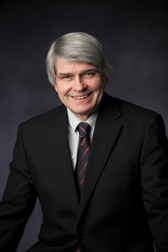
Edward E. Swenson
Edward E. Swenson,emeritus professor of music at Ithaca College, is a fortepiano builder and worldwide expert on Graf pianos. Swenson studied at the Oberlin Conservatory of Music and at the Akademie Mozarteum in Salzburg, where he earned advanced degrees in performance and musicology. His latest restoration, Graf fortepiano Op. 1389, was completed for his own use last year. Swenson has written extensively for professional journals and encyclopedias on the history, conservation, maintenance, and restoration of historic keyboard instruments.
Conrad Grafwas the foremost fortepiano builder in Vienna during the early 19 th century. A master of his trade, he was at once a successful businessman, a patron of the arts, a collector of contemporary paintings, and one of the most intriguing figures of Biedermeier, Vienna. Born in 1782 in Riedlingen, Germany, a small town on the Danube, Graf was the son of a local tanner. After training as a cabinetmaker, he traveled to Vienna where he worked with the piano builder Jakob Schelkle. After Schelkle's death in 1804, Graf married his widow, taking over the shop and making instruments under his own name.
Graf's reputation as the greatest piano maker in Vienna was established quickly.The prestigious Allgemeine musikalische Zeitung in Leipzig reported in 1820: "Graf, a tireless artist, currently manufactures the most excellent pianofortes; they do not find an equal in beauty, consistency, strength and fullness of tone, and the solidity of their construction insures their durability. The leading virtuosos in the Imperial city make use of his instruments at their public performances."
In 1824 Graf received a title as the fortepiano purveyor to the Viennese court. In 1835 he was awarded a gold medal for fortepiano construction at the Industrial Exhibition in Vienna. Many famous pianists and composers, including Beethoven, Czerny, Schubert, Clara and Robert Schumann, Mendelssohn, Chopin, and Liszt either owned Graf pianos or preferred to use them in their Viennese performances. During his 37-year career, Graf built approximately 3,000 fortepianos. Today only 120 of his instruments are known to survive. Graf retired, wealthy and famous, in 1841. He died in Vienna 10 years later on March 18, 1851.