
|
|
|
|
|
|
Skidmore Home About Scope Editor's Mailbox Feedback Back Issues |
|
|
|
|
|
Features Observations Campus Scene Alumni News Who, What, When Class Notes Saratoga Sidebar Creative Thought at Work |
observations
President's Perspective
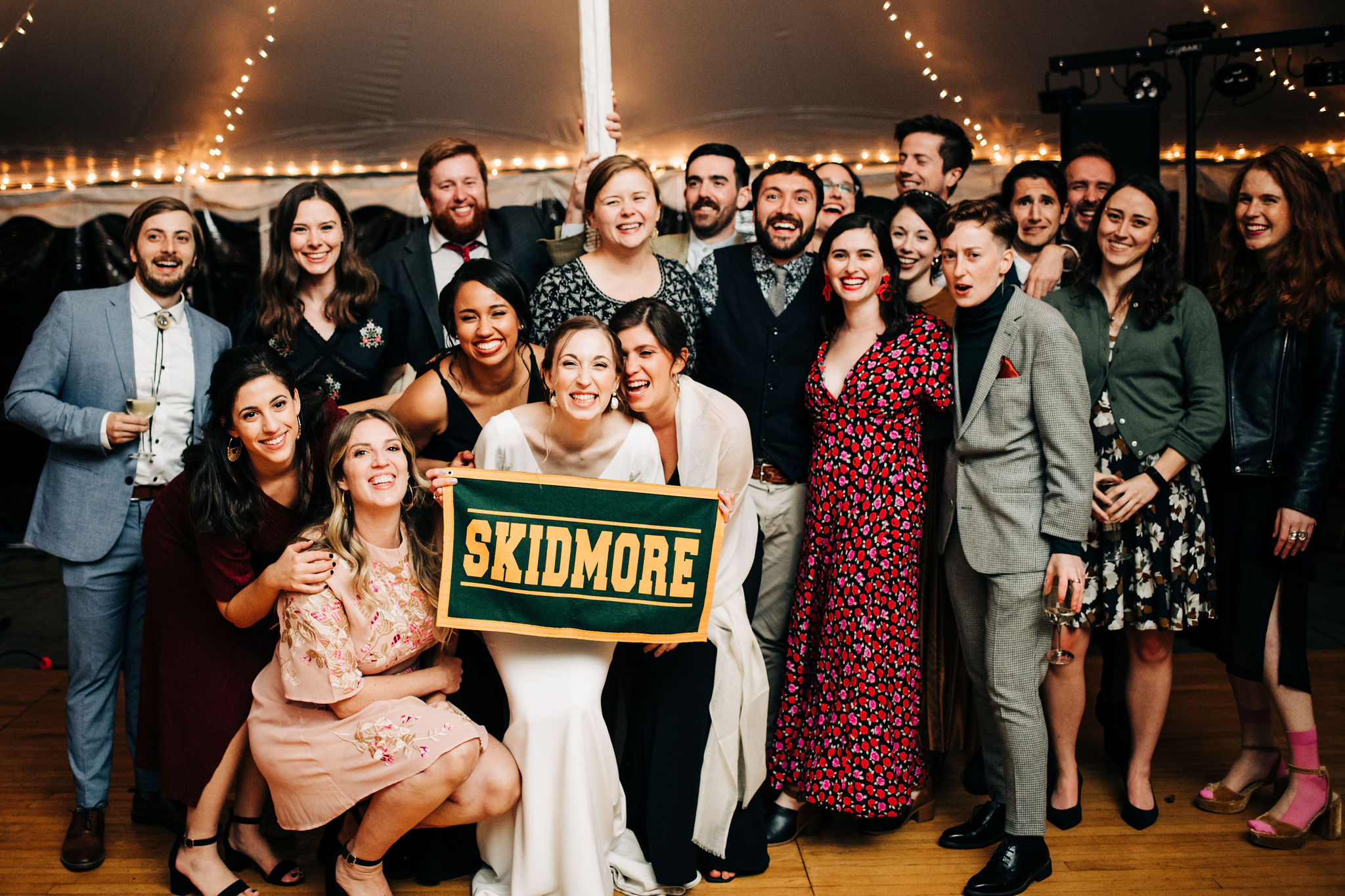
At the heart of the Skidmore community we find values and relationships, not transactions. In the previous issue of Scope, we focused on the cognitive and developmental values central to a Skidmore education. In this issue, we turn our attention to the powerful relationships that develop during a student’s years on campus and endure beyond graduation. These relationships involve classmates, members of the faculty and staff, other alumni, trustees, and even townspeople. In many cases, they begin modestly—a chance meeting over a meal, a brief discussion after a lecture—and then blossom into the deep and meaningful interactions that represent one defining outcome of a Skidmore education. The cornerstone of most significant relationships is time—time to develop, time to grow, and time to mature. They seldom happen instantaneously. They can’t be rushed. Moreover, that time needs to be both structured and serendipitous, building upon conscious choices and spontaneous gestures. Much of our faculty and staff time with students is formalized: in class, lab, or studio sessions, in practices or rehearsals. But much is not. Conversations happen anywhere: in the hallway following class, in the dining hall, or after a team’s season. Either way, finding time for our professors, coaches, and staff members to work, collaborate, or simply be with our students consumes much of our thinking, planning, and (especially) hiring. In the latter instance, we work extremely hard to recruit new faculty members, for example, who not only are dedicated to their academic fields but also are committed to working within a learning community where regular and extended interactions with students are not just encouraged but expected. For most any college, and certainly for Skidmore, the challenge is how to pay for all that time—both in terms of the salaries of the individuals involved as well as the opportunity costs: time spent doing one thing is lost for any other purpose. Asking faculty members to devote considerable time and attention to any one of their students is, from a certain perspective, terribly “inefficient.” And there certainly are cases where a large lecture class, which (in some ways) represents a more “efficient” teaching model, is a better use of both faculty and student time. On the other hand, personal faculty time—and lots of it—is precisely what our families expect when they send their sons and daughters to Skidmore. More importantly, we
still believe that the intentional use of such high-quality instructional time is absolutely essential to fostering the active engagement, deep learning, and transformative personal growth we have in mind for all our students. Providing our professors with opportunities to engage in these types of relationships (which means having an appropriate student-to-faculty ratio, many small classes, and possibilities for collaborating on independent study and research) remains a major driver of the cost
In both cases, we are asking, above all, how we can continue to enhance both the actual and the perceived value of a Skidmore education while working even more effectively to control costs and ensure access. I have been strongly encouraged both by the appreciation we have heard for Skidmore’s central “value proposition” and by the collegiality and creative thought that have been manifest throughout these conversations. They have generated many promising suggestions that we certainly will take into account in future planning. |
||||
| © 2010 Skidmore College |