


Environmental Studies Program to host Lois Gibbs Sept. 19


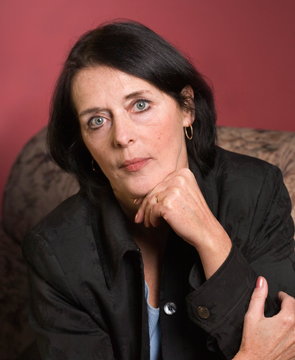
Lois Gibbs
Environmental trailblazer Lois Gibbs will discuss "What's all the fracking fuss? Environmental health and justice issues in New York, from Love Canal to Hydrofracking," when she visits Skidmore College Monday, Sept. 19. Her talk, the keynote address of the college's Environmental Studies Program, begins at 7 p.m. in Gannett Auditorium, Palamountain Hall. Admission is free and open to the public.
Directly after the lecture, the annual Environmental Studies Welcome Reception will take place. The receptionfeatures ES faculty, staff and students; local environmental organizations, such asSaratoga P.L.A.N., Hudson Crossing Park, Environmental Advocates of N.Y., Wilton Wildlife Preserve and Park, American Farmland Trust, and the Dormitory Authority of the State of New York;internship opportunities; campus greening opportunities; and research opportunities.
Gibbs, executive director of the Center for Health, Environment and Justice, will discuss how hydrofracking is being promoted as an answer to the energy and climate change crisis, and the issues surrounding hydrofracking, including the use of vast amounts of water in the process and the disposal of tainted water, as well as the increased level of greenhouse gas emissions associated with the release of natural gas, along with the potential contamination of soil and air.
Known as the "mother of the Superfund," Gibbs was a 27-year-old mother of two in the spring of 1978 when she learned that her son's elementary school was built near the Love Canal, a 20,000-ton toxic chemical dump in Niagara Falls, N.Y. She believed this was the reason for her son's continuing health issues and petitioned the board of education for a school transfer. The board refused her request on the grounds that it would set a bad precedent. Gibbs's appeals to school, city, and state representatives were unsuccessful.
She started a petition drive among her neighbors, asking them to support a request
to close the school. In visiting people throughout the community, she discovered multiple
illnesses. "The entire neighborhood was sick," she wrote in an essay published in
1998 in Orion Afield, by the Orion Society. "Men, women, and children suffered from many conditions - cancer,
miscarriages, stillbirths, birth defects, and urinary tract diseases."
The petition drive raised awareness and media attention, and prompted the state Department
of Health to do environmental testing in the homes closest to the Love Canal. By August
1978 findings indicated that high levels of unsafe chemicals were discovered in 239
of the nearly 900 homes in the neighborhood, and a state of emergency was declared.
Gibbs, now president of the Love Canal Homeowners Association, lobbied state and federal
officials for relief for all residents in the community.
In October 1980, President Jimmy Carter released an emergency declaration authorizing funding to allow 833 families - all who wanted to move - to be permanently relocated. That same year, Congress enacted the Comprehensive Environmental Response, Compensation, and Liability Act, more commonly known as the Superfund legislation. The law authorizes the federal Environmental Protection Agency to identify parties responsible for environmental contamination and compel them to pay for the clean up of contaminated sites. When such identification is not possible, the EPA is empowered to use a special trust fund established by the legislation for environmental clean up.
Gibbs, a stay-at-home mother with a high school education, had become a politically astute community organizer and human rights advocate. She has remained at the front of the environmental movement through her work as founding director of the Center for Health, Environment and Justice, which promotes environmental justice through grassroots work with more than 8,000 community groups across the nation.
She has received a number of honors for her work, including the 1990 Goldman Environmental Prize, the 1998 Heinz Award for Environmental Awareness, and the 1999 John Gardner Leadership Award from the Independent Sector.
Skidmore's Environmental Studies Programintegrates the natural sciences, social sciences, humanities, and the arts to help studentsdevelop a deepunderstanding of environmental problems and solutions.