


Music in jihadist Mali


One of the most important forms of communication in Mali, music was forcibly silenced in 2012 when Islamic extremists captured a large area of the country and instituted harsh sharia law. But rather than lay down their instruments, Mali's musicians fought back. Johanna Schwartz's They Will Have to Kill Us First documents their struggles to keep music alive. It was first screened in the U.K. last fall and was declared "essential viewing" and "a gripping, powerful documentary" by reviewers. After its New York City premiere, it was called "miraculously hopeful" by a New York Times critic.
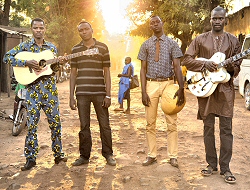
Still from They Will Have to Kill Us First
The film will be shown Thursday, April 7, at 7 p.m. in Davis Auditorium, Palamountain
Hall, with a Q-and-A with the filmmaker to follow. The event is free and open to the
public.
When Schwartz heard news of the takeover, she says, "I couldn't imagine a world without
music, especially in a place where music was so vital to everyday life. I began to
plan my trip to Mali." She met with a popular singer known as the "nightingale of
the north," who had fled the extremists and was hiding out in the nation's south.
Schwartz found the singer and other musicians to be "a living contradiction. Strong
yet afraid. Solid yet vulnerable. I knew then that this story could reach the world"
in a personal, moving way.
A longtime producer for the BBC in London, Schwartz is happy to be returning to Skidmore.
This is her first feature-length documentary. Her writing, producing, and directing
of it led to her naming as among the 100 people to watch in 2016 by Foreign Policy magazine.
This event is cosponsored by Skidmore's Project VIS, Moore Documentary Studies Collaborative,
World Languages and Literatures Department, and Music Department.