Faculty
Gregory M. Pfitzer
Professor and Chair of American Studies 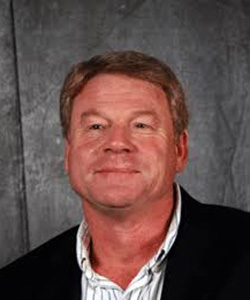
Office: Tisch Learning Center 330
Phone: 518-580-5020
Email: gpfitzer@skidmore.edu
Born in Pittsburgh, Pennsylvania, Pfitzer grew up primarily on the outskirts of Cincinnati,
Ohio. He attended Colby College in Waterville, Maine, where he earned a Bachelor of
Arts degree in American studies and history. He received an M.A. degree in history
and a Ph.D. in the history of American civilization from Harvard. After brief teaching
stints at Colby and Knox College in Galesburg, Illinois, he arrived on the Skidmore
campus in 1989 and is in his fourth decade of service to the college.
Pfitzer is the chair of the American Studies Department and teaches a wide variety
of courses, including The Wizard of Oz, The Civil War in American Memory, Myth and
Symbol in America, Methods and Approaches in American Studies, Mark Twain's America,
Hudson River Culture, Popular History, The 1960s, and Senior Seminar. In 2004, Pfitzer
was honored with Skidmore's Ralph A. Ciancio Award for Excellence in Teaching, and in 2014, he delivered
the Edwin Moseley Lecture recognizing achievement in scholarship.
Pfitzer's primary intellectual interest is popular historical writing. He has written
six books on the subject, including "Samuel Eliot Morison's Historical World" (Northeastern
University Press, 1991); "Picturing the Past: Illustrated Histories and the American Historical Imagination,
1840-1920" (Smithsonian Institution Press, 2002); "Popular History and the Literary Marketplace,
1840-1920" (University of Massachusetts Press, 2008); "History Repeating Itself: The
Republication of Children's Historical Literature and the Christian Right" (University
of Massachusetts Press, 2014); "Fame is Not Just for the Fellas: Female Renown and
the Childhood of Famous Americans" (University of Massachusetts Press, 2022); and
"From Boys to Men: The Boy Problem and the Childhood of Famous Americans" (forthcoming,
University of Massachusetts Press, 2024.
Pfitzer has published a number of journal articles on literary figures Thoreau, Melville, Hawthorne, Henry James, Charles Francis Adams Jr., and Mark Twain, as well as on the painter Winslow Homer. He is also the author of a piece on science fiction literature titled "The Only Good Alien is a Dead Alien: The Metaphysics of Indian-Hating on the High Frontier." More recently, he collaborated on an online exhibit, "CLIO: Visualizing History," about the production histories of two mid-nineteenth century pictorial history projects.