When ink speaks: Lauren Attwell ’26 explores tattoo art and identity at the Tang
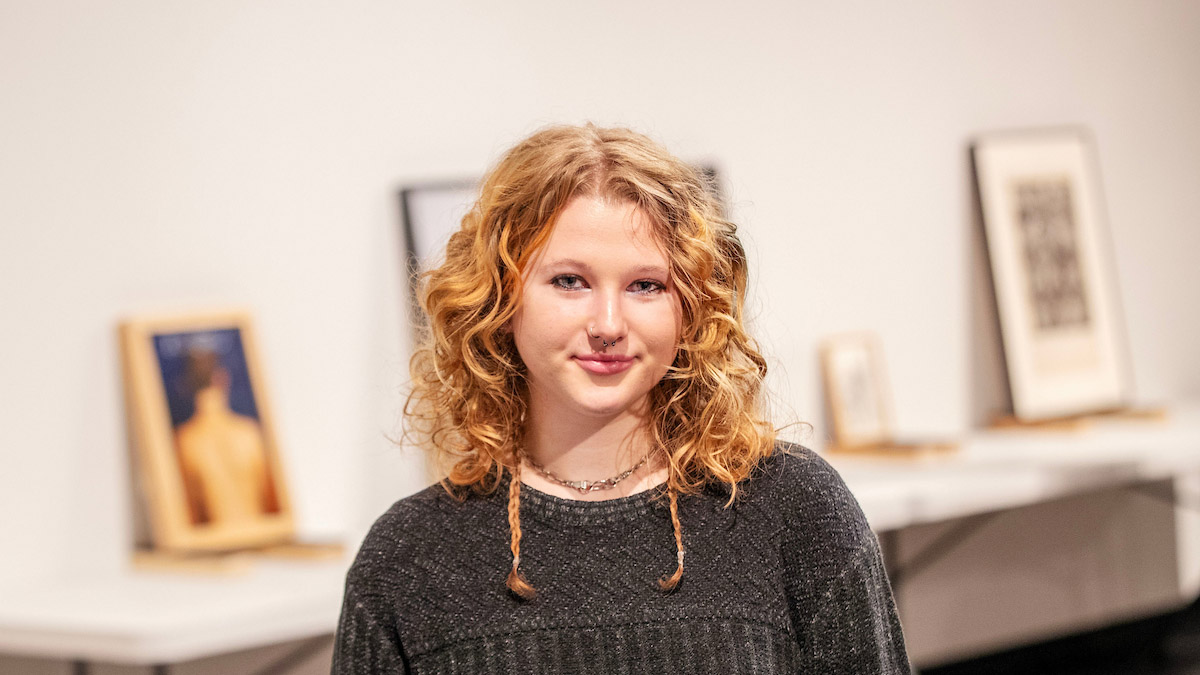
Tattoos have often marked people as outsiders. Recently, at the Tang Teaching Museum, they marked something else: community.
Art history and anthropology double major Lauren Attwell ’26 brought together members of the Skidmore and broader communities to share the stories behind their ink — including foxes, flails, and willow trees.
The gathering was part of Lauren’s online exhibition “Inked: Stigma, Otherness, and Art,” which explores bodily agency and self-expression through tattooing.
The event marked a milestone in Lauren's long-standing relationship with the Tang: She briefly was involved the Tang's Student Advisory Council, worked as a museum guide, and was the Carole Marchand ’57 Endowed Intern for 2024–25.
Over the past year, Lauren worked closely with the Tang’s curatorial department, applying her interdisciplinary studies to cultural heritage preservation. She wrote labels for several exhibitions and, in collaboration with the John B. Moore Documentary Studies Collaborative (MDOCS) at Skidmore, cataloged an archive of ephemera related to the nonprofit organization Black Dimensions in Art. The organization celebrated its 50th anniversary through the Tang exhibition “Up to Us: Black Dimensions in Art, 1975–Tomorrow.”
For the capstone project of her internship, Lauren was given full creative freedom to explore her personal and scholarly interest in tattooing.
On her left arm is her first tattoo: a sun she got at 18, matching her mom.
“Tattoos are a way to decorate yourself and physically display your individuality,” she said.
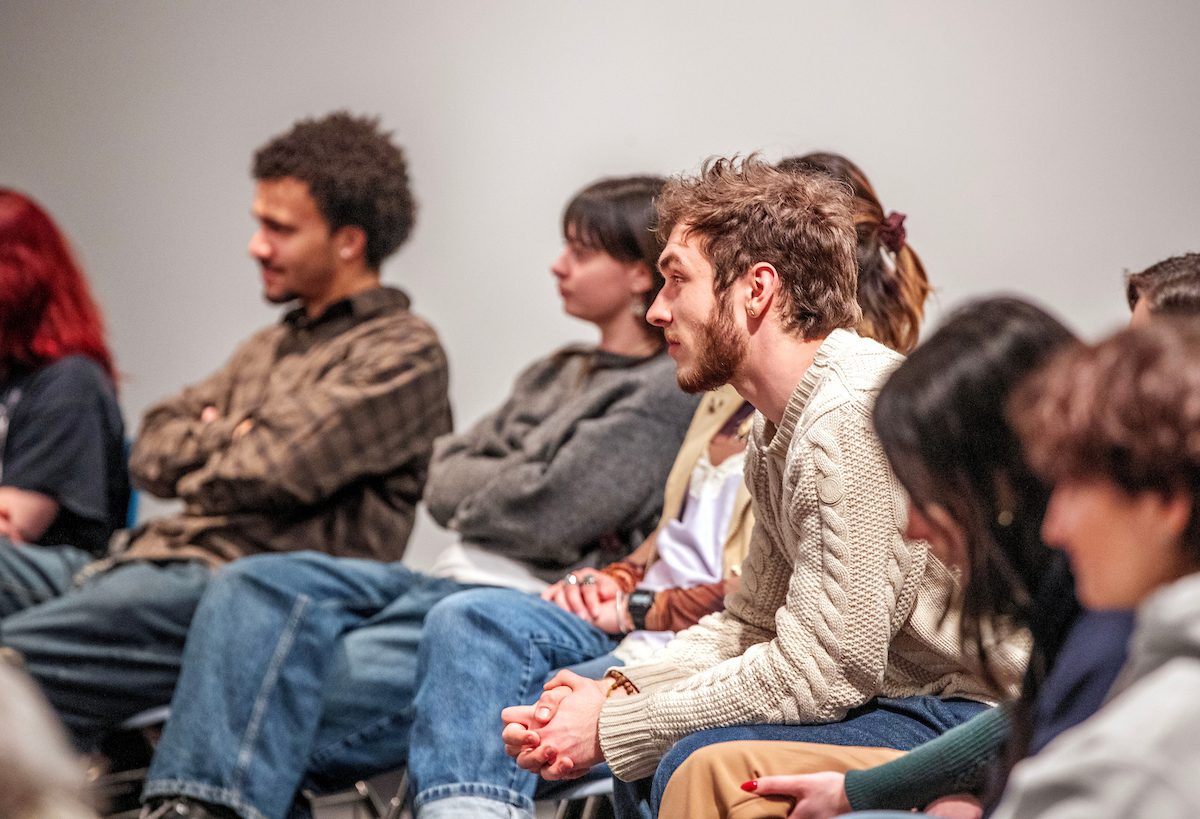
Students at "Inkscapes: Tattoo Storytelling," a Feb. 5, 2026, event organized by Lauren Attwell ’26 in conjunction with the exhibition “Inked: Stigma, Otherness, and Art” at the Tang Teaching Museum.
More recently, Lauren got a tattoo inspired by the Lascaux cave paintings after studying abroad in Dublin. Moved by the universality of artistic expression across history, she booked a tattoo appointment. She chose an artist who hand-pokes designs, explaining that the connection between her skin and the ink feels more poignant through that process.
Drawn to the history of tattooing as a tool for both belonging and exclusion, Lauren organized an exhibition that highlights the power of “chosen otherness,” where marking one’s body becomes an expression of identity so deep that it transforms individual difference into collective belonging.
One piece featured in the exhibition is Catherine Opie’s “Dyke” (1993), a photograph of a tattooed back bearing the word “dyke.” The work recontextualizes and reclaims a homophobic slur as a celebration of queer identity.
"Tattoos are a bold statement of a public identity,” Lauren said.. “The person is saying, ‘Look at what I put on my body. Look at what I want to present to you.’”
Whereas her online exhibition explored cultural otherness and bodily agency through tattooing, the February event, "Inkscapes: Tattoo Storytelling," that she organized at the Tang, invited community members to share personal tattoo stories as they considered how this form of self-expression can transform the body into a canvas.
“I’ve always been interested in tattoo history and appreciating that ‘blue-collar’ art form in an institution like a museum,” Lauren said. “The community part of the event came from wanting to bring people together as an embodiment of the art form.”
Here are a few personal reflections that participants shared at the event:
Willow Forbes ’26
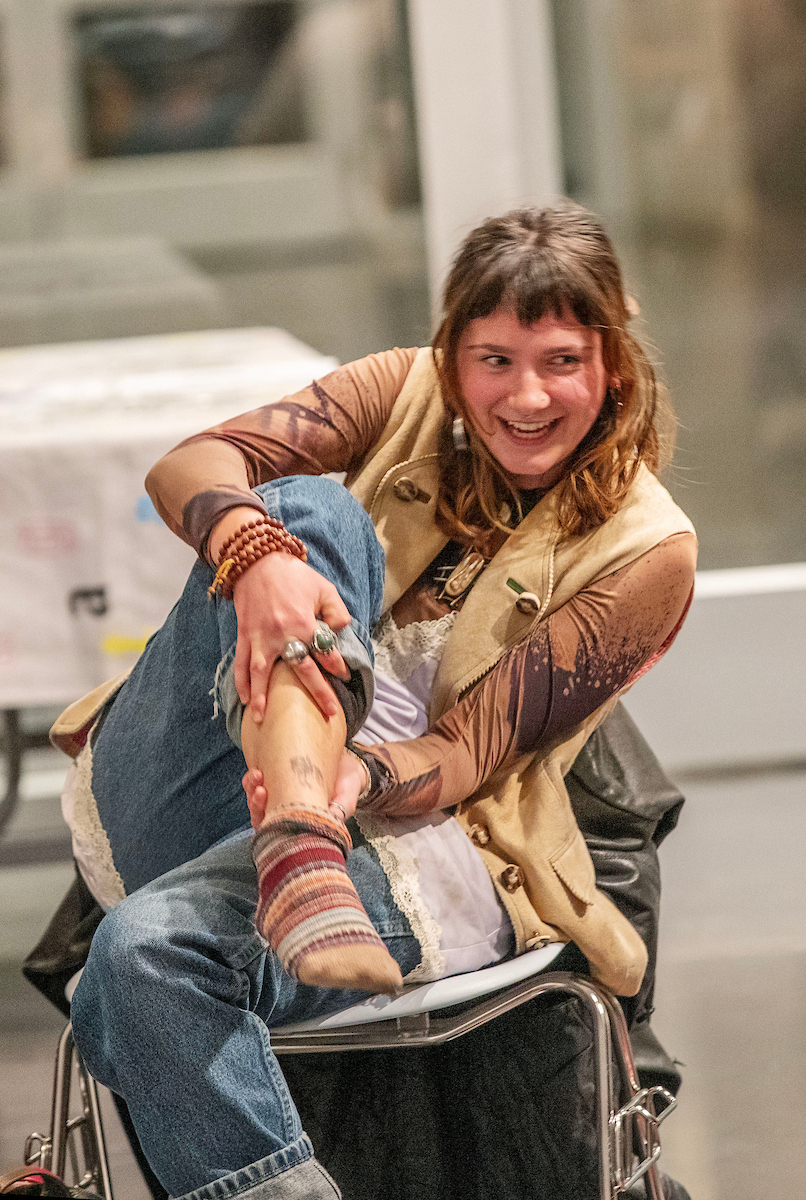
“I was inspired by the time I spent in a Buddhist monastery in South Korea two years ago. I came to realize how important it is for me to slow down by being outside in nature and inside myself — the two are similar in many ways,” said Willow Forbes ’26, whose tattoo shows a willow tree. “The tattoo was my first free-handed piece, which terrified me, but I ended up loving it. That element of freedom, artistry, and trusting the process only adds to the meaning of the ink.”
Georgia Varon ’26
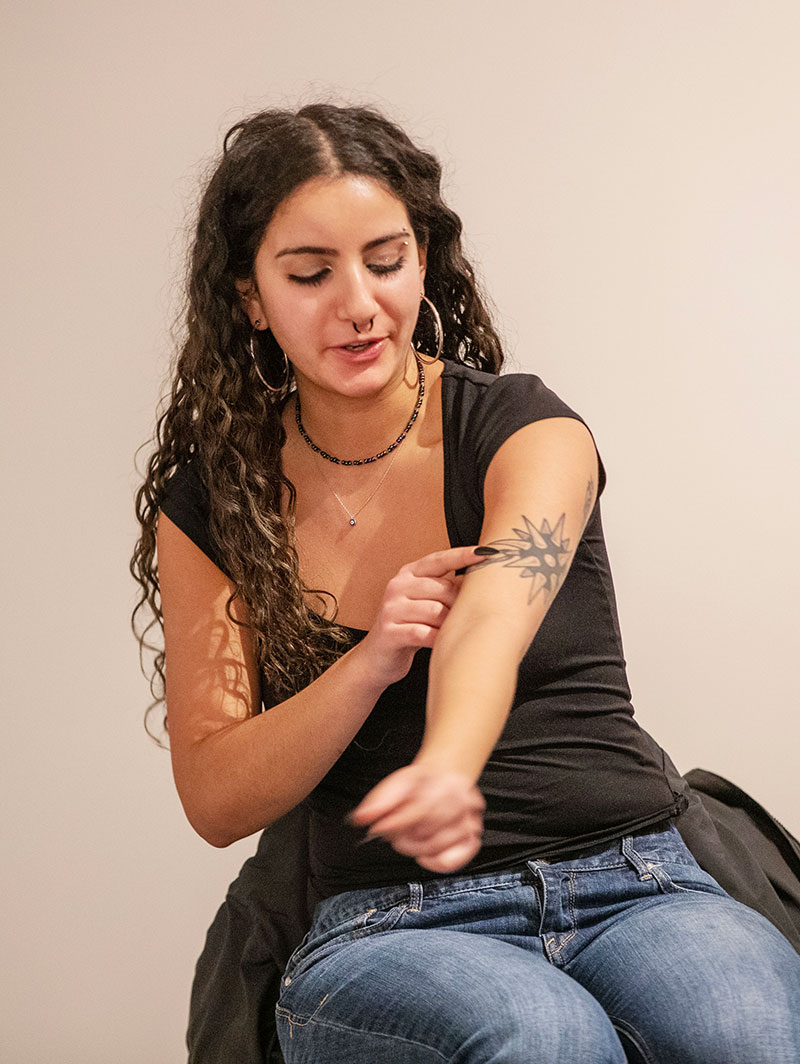
Wrapped around Georgia Varon ’26’s left arm is a flail, a medieval weapon with a spiked head attached by a chain. She didn’t notice a broken link until she walked out of the shop, and she left it that way for years. When she finally returned to fix it, the artist laughed and even took a photo, stunned that she had carried a slightly incomplete weapon for so long.
Théo Zita ’26
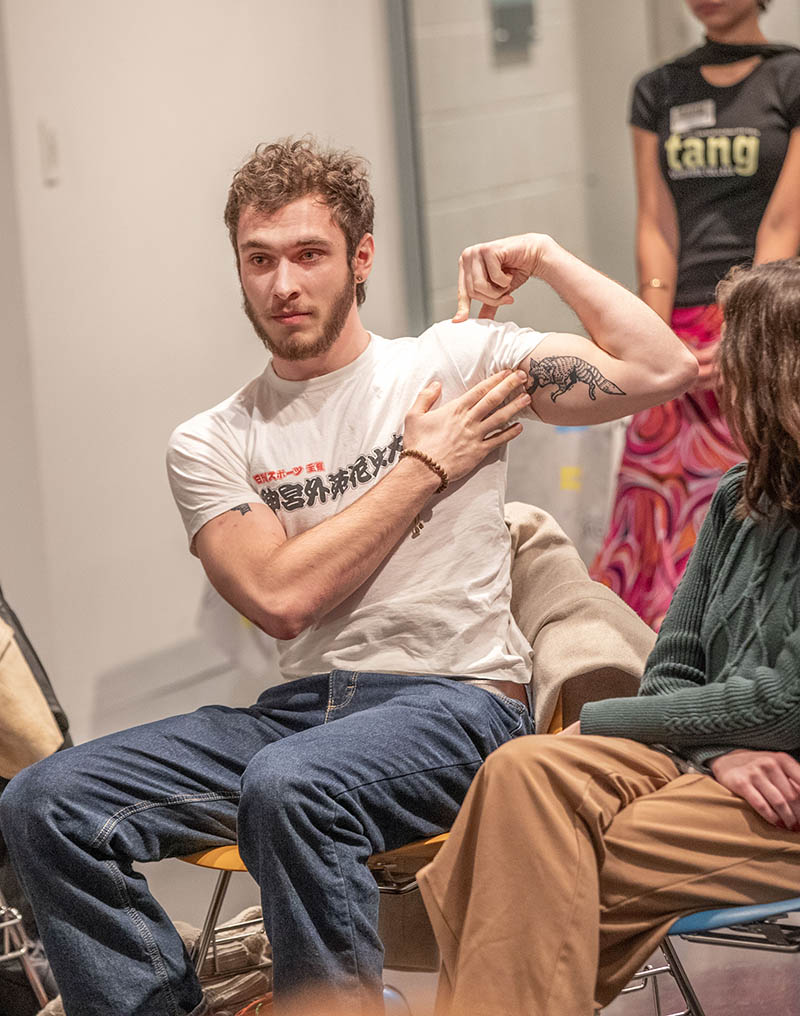
“My fox captures my shadow — those parts of myself that I've struggled to accept and that wild, untamable necessity to be alive,” said Théo Zita ’26. “Each day I notice his tail peeking out from my T-shirt, reminding me of the creativity and diligence of survival, of freedom.”
Daisy Byer-Tuohey ’28
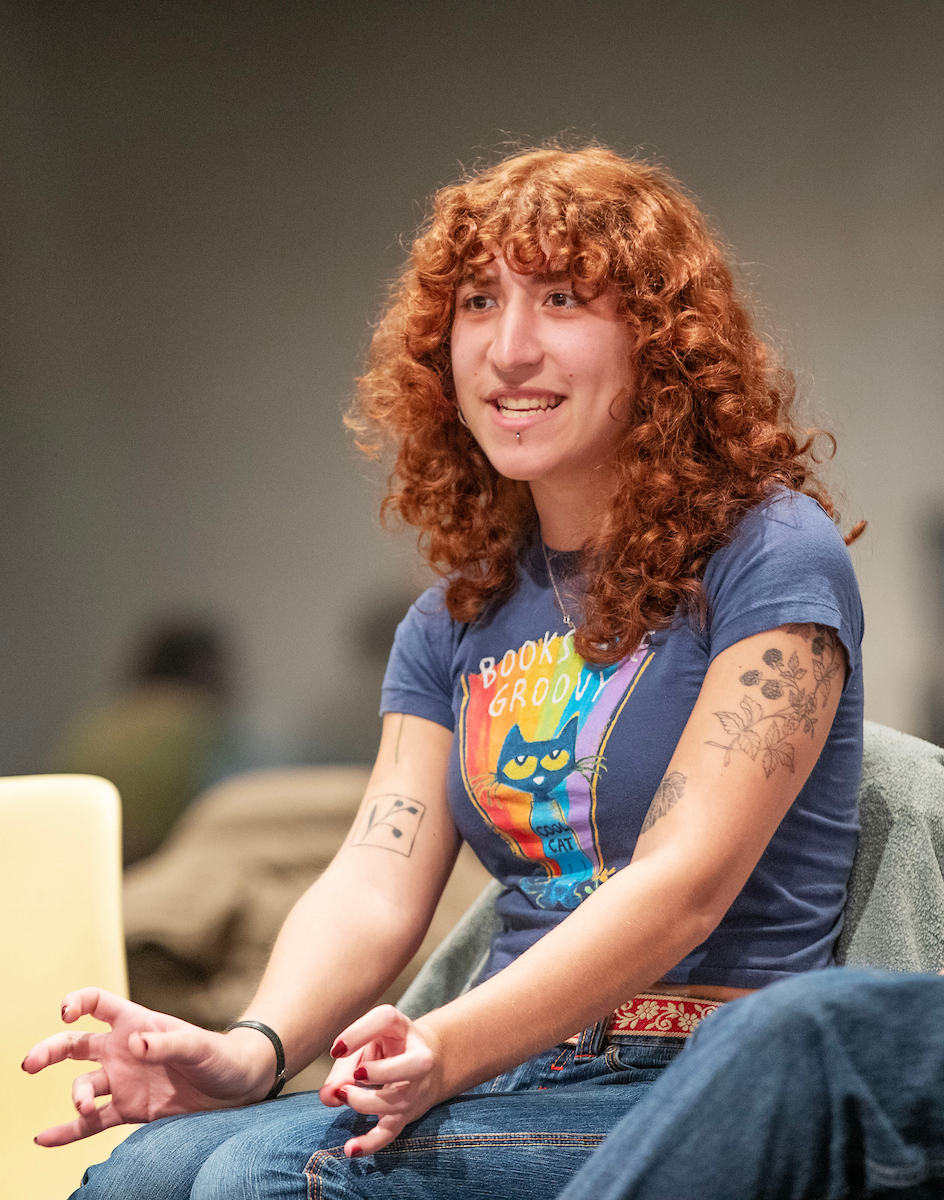
“Not only was my candelabra tattoo designed by my cousin and tattooed at her punk-themed wedding, but it was also my first-ever tattoo,” said Daisy Byer-Tuohey ’28. “I like to think that it represents my spontaneity, along with the bond that I share with my twin, who got the same candelabra tattoo to match mine.”
Norah Cullers ’26
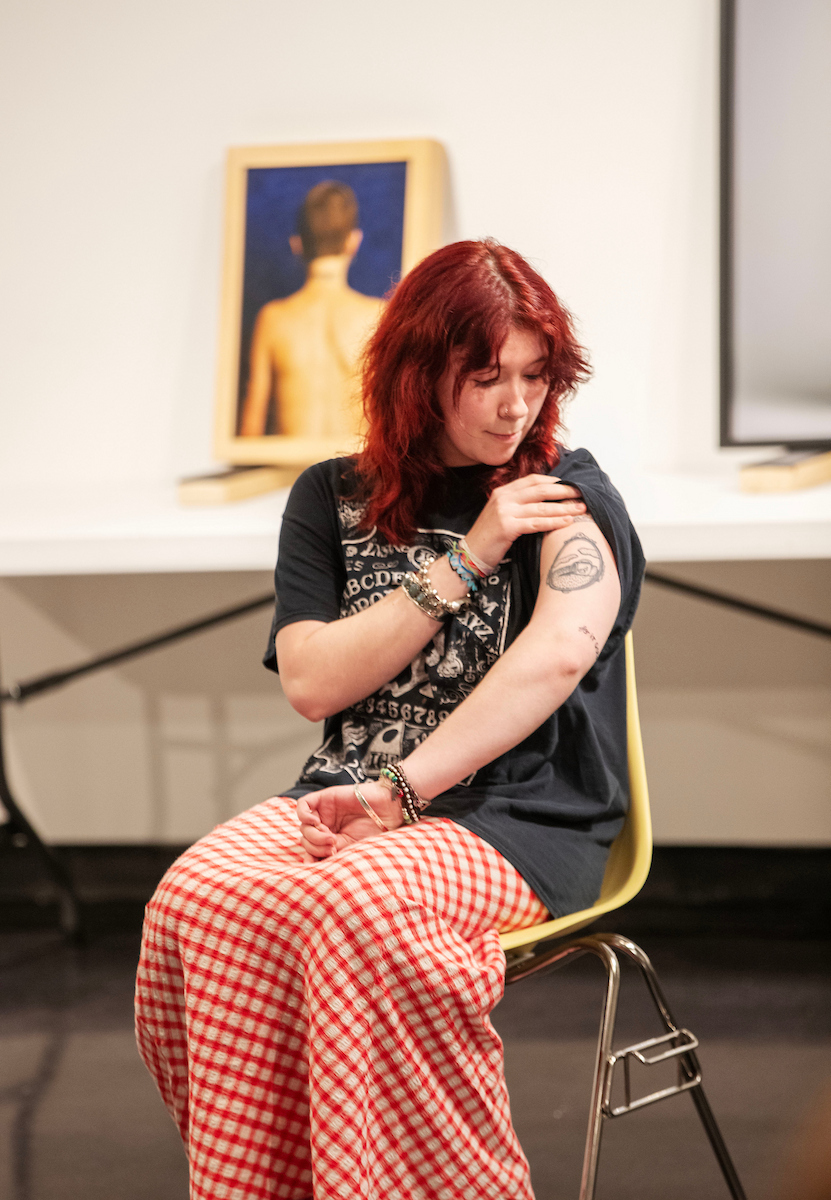
Norah Cullers ’26’s tattoo is inspired by the TV show “Adventure Time.” She drew the design herself but told the artist to take creative liberty (and recalls some initial panic, when he did). The tattoo represents the idea that just because something is gone does not mean it was not important in your life.
Lauren’s exhibition, “Inked: Stigma, Otherness, and Art,” is available online. She encourages community members to upload their own tattoo stories to the exhibition’s community page.