Skidmore College - Homepage

You will learn to cultivate connections between people and stories, question systems of power and justice, and inspire and equip others to support Black lives in the 21st century. And you can do this irrespective of what your own racial or ethnic background may be because Black studies is for everyone. 

Only 18 credits to complete the minor

Our program builds bridges between dozens of disciplines and places all students at the center of the learning experience, emphasizing meaningful dialogue in a challenging yet safe intellectual environment. With so many options to choose from, you can easily integrate course offerings into your existing academic major. 

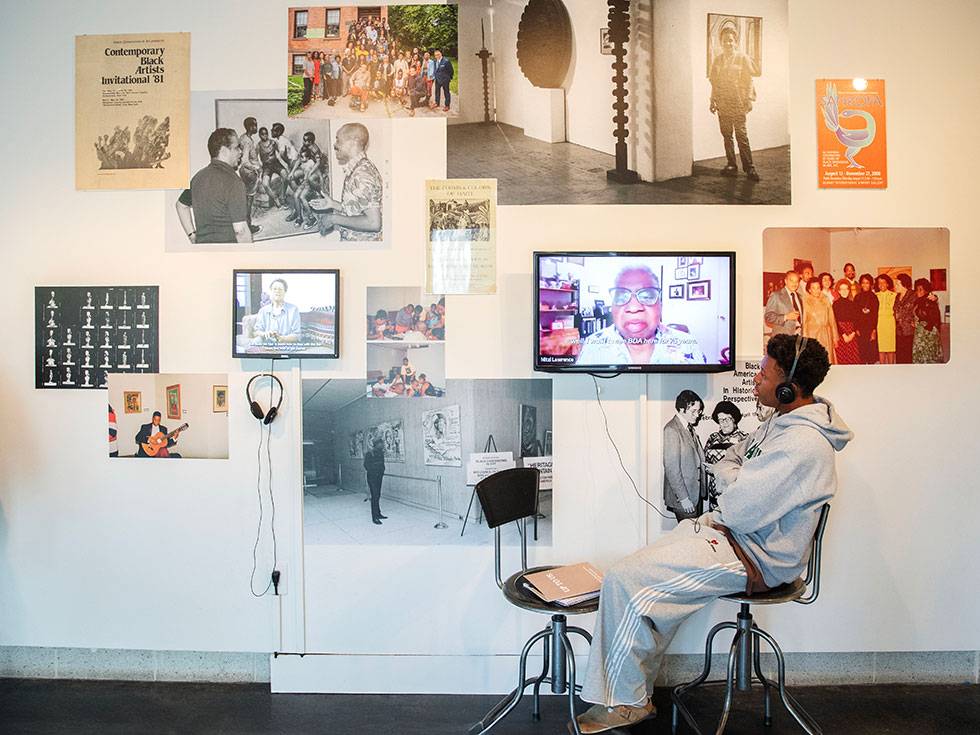
A student sits in a chair wearing headphones, listening to a video that is part of an art exhibit at the Tang Teacher Museum and Art Gallery. Not only is there a tv with a video paying, but also a gallery wall of different images.

Where will you go?

Prepare yourself to live in an increasingly diverse and global society. Black studies minors have gone on to careers in conflict resolution, education, human rights, media, nonprofit and advocacy work, the performing and visual arts, public policy, and more  working for employers from NPR to Goldman Sachs. 
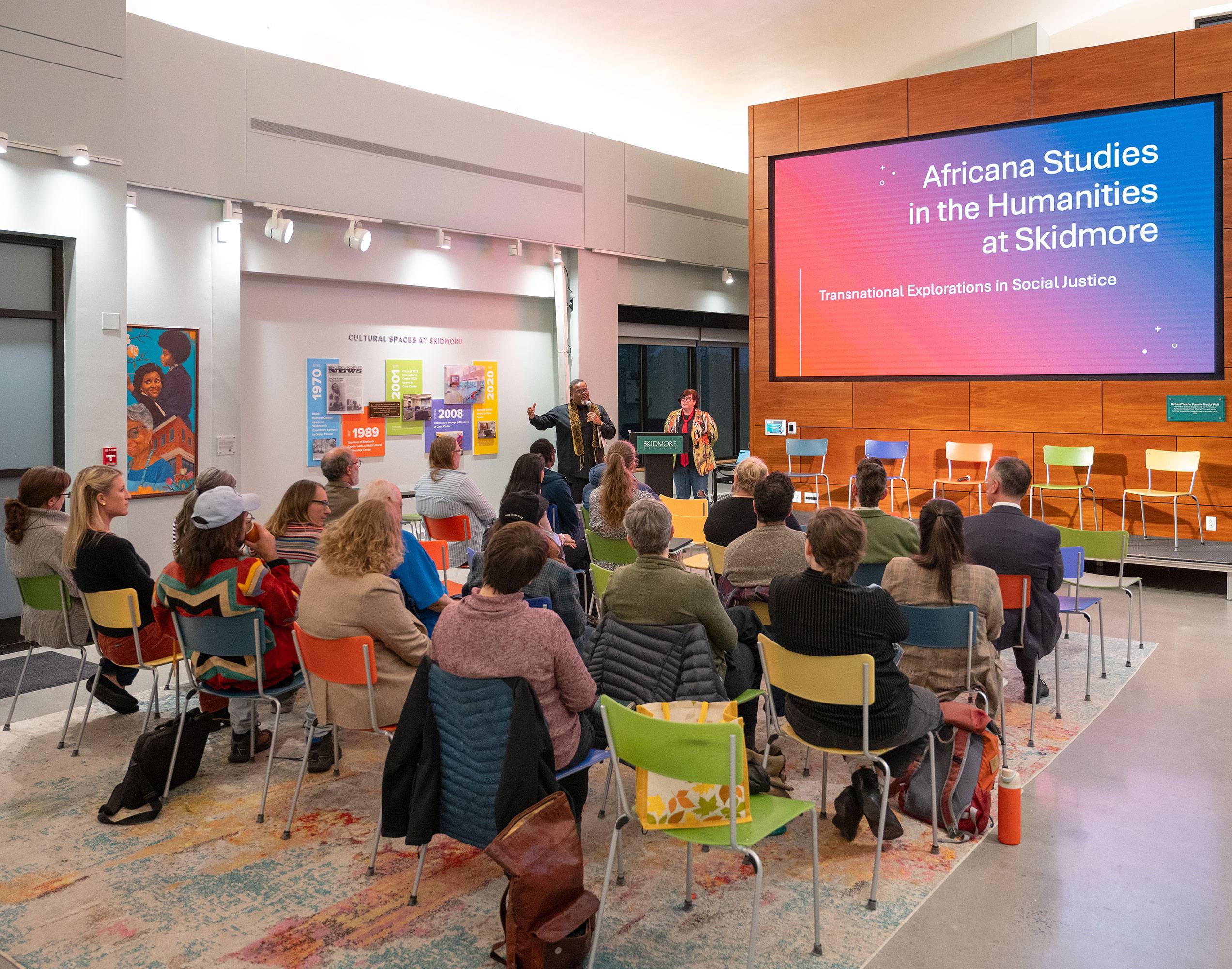
An audience sits in colorful chairs listening to two presenters at the front of the room. The background includes a powerpoint slide that reads "Africana Studies in the Humanities at Skidmore", and fades from orange to blue.

World-class lectures and community building

From panels and film screenings to club events and career fairs, the Black Studies Program regularly sponsors and co-sponsors gatherings that bring attention to issues that affect Black communities, highlight the work of its members, and encourage professional and organizational networking. 
Learn more
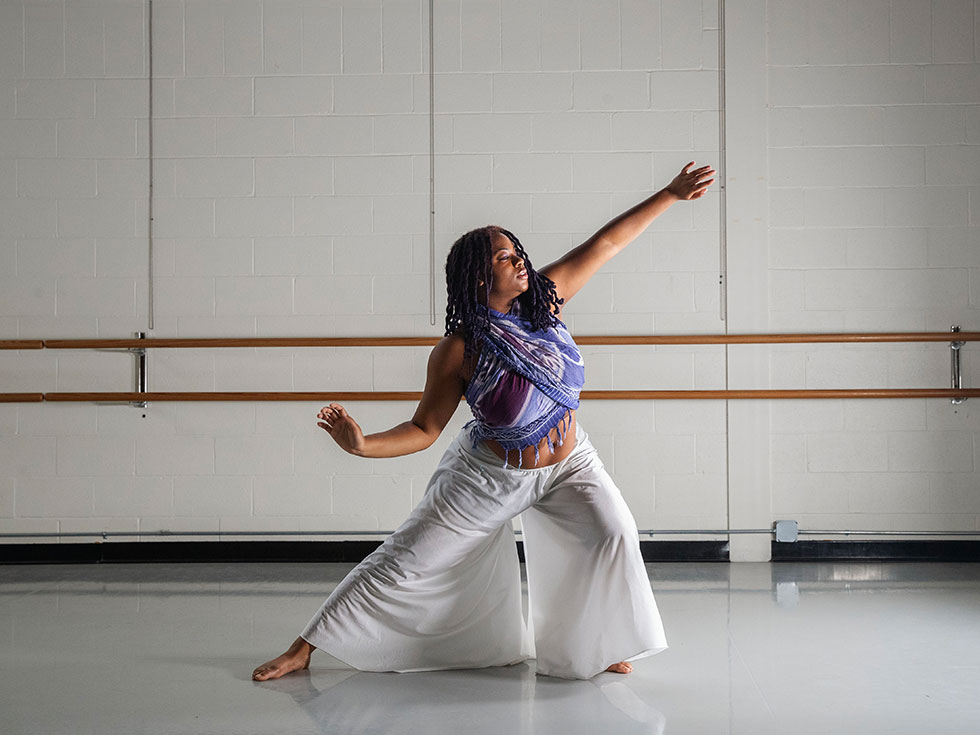
A dancer poses in a dance studio, one arm extended overhead and the other lowered, wearing a patterned blue-purple wrap top and light-colored pants, with ballet barres and a softly lit wall in the background.

Social justice in motion

While studying dance and Black studies, Aminah Hopewell 26 has shaped her education around a powerful goal: blending art and activism. 
Learn more

Alumni reflections

Three former Black studies students describe what stood out.
Tiana Robinson headshot

Tiana Robinson ’22

“This program captures the essence of Black culture, life, heritage, and history. It provides an open-minded, heartfelt timeline of what it means, and meant before our era, to be Black.”
William Carter headshot

William Carter ’23

“I love the person that I grew into during my time in the program. It provided a welcoming environment for me to explore my own identities in relation to Blackness and pushed me to lean into my unique perspective.”
Maya Gmach headshot

Maya Gmach ’22

“Black studies opens dialogue in the classroom about different ways to understand Black history and culture. It does this in a way that makes space for love, criticism, and honesty.”
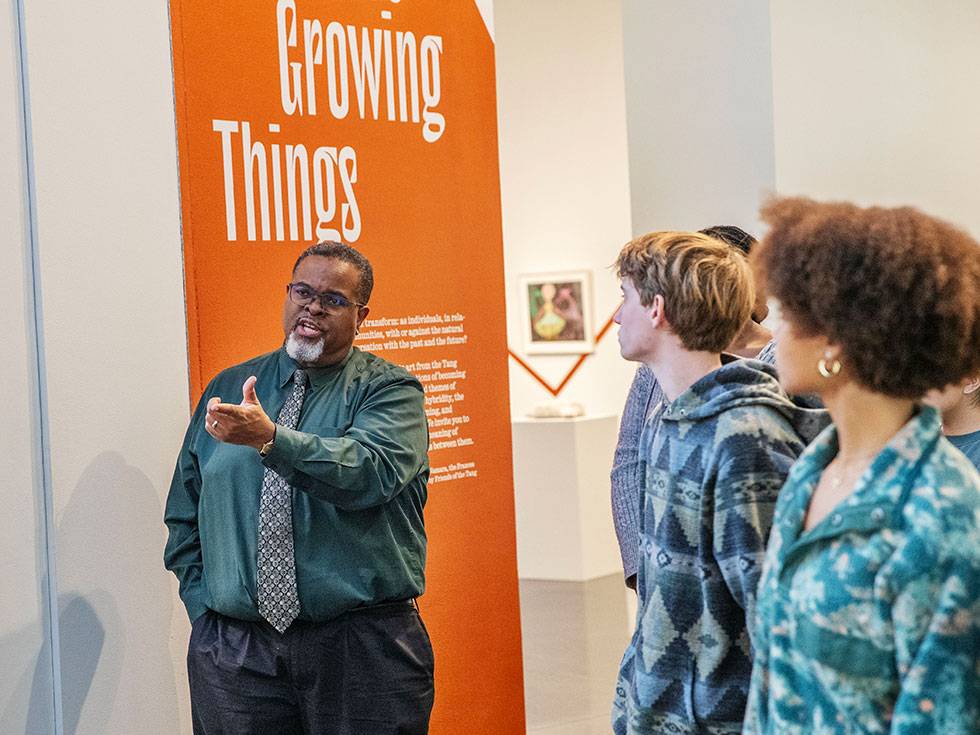
Professor Winston Grady-Willis stands while holding out a hand to gesture towards a subject he and students are examining in an exhibit in the Tang Teaching Museum and Art Gallery. He is wearng a green button down shirt with a tie, and there is an orange poster behind him with white text that reads "Growing Things"

Study material culture

Professor Winston Grady-Willis, director of the Black Studies Program, enjoys bringing classes to Skidmore’s Tang Teaching Museum to engage with collections. A scholar who has written about the Black Panther Party, Grady-Willis spoke with Naima Nigh ’23 about the importance of ephemera. 
Read the interview

Frequently Asked Questions

Curious about minoring in Black studies at Skidmore? Here’s what future students often ask.

The thinkers and creators featured in the opening images offer a glimpse of the voices you’ll engage with in Black studies.

  • Sankofa bird: The Sankofa bird is an Akan symbol from Ghana, depicting a bird with its feet facing forward and head turned backward, often with an egg in its mouth. Representing the proverb "It is not taboo to go back and fetch what you forgot," it signifies learning from the past to build a better future.
  • Anna Julia Cooper (1858 - 1964)
  • Angela Davis (1944 - present)
  • Chinua Achebe (1930-2013)
  • Harriet Tubman (1822 - 1913)
  • Malcolm X (1925 - 1965)
  • Mary McLeod Bethune (1875 - 1955)
  • Walter Rodney (1942-1980)
  • W.E.B. Du Bois (1868 - 1963)

You’ll take courses that explore Black history, culture, politics, and creative expression across disciplines. Below is a sample list of Black studies courses you may take to shape your path through the program.

  • IG 275: A Black Woman Speaks
  • EN 129: Intro to African American Literature
  • PL 245: Hip-Hop, Politics, and Protest
  • AH 151: Ways of Seeing: The Arts of Africa
  • ES 223: Environmental Justice
  • AM 264: African American Experience
  • DA 322: African Caribbean Dance II
  • AN 252: Food Politics in Sub-Saharan Africa

Faculty

Award-winning. Creative. Thoughtful and supportive.
Meet your professors

Black Studies Contact

Office

Tisch Learning Center 327 
518-580-5014

Admininstration

Program Director Winston Grady-Willis 
Professor of Black Studies 
wgradywi@skidmore.edu 
  
Administrative Assistant Beth Miller 
bmiller@skidmore.edu