Young adult fiction is all grown up
Young adult (YA) fiction tends to get a bad rap. Plenty of adults turn their noses up at the genre as “for kids.” And I remember doing the same in high school.
But my perspective shifted while taking Professor Mason Stokes’ Queer Fictions course in the English Department at Skidmore College. He included on his syllabus Gabby Rivera’s brilliant coming-of-age tale, “Juliet Takes a Breath,” a thought-provoking novel that doesn’t shy away from complicated conversations on queerness, feminism, and race — despite where it may be shelved in the bookstore.
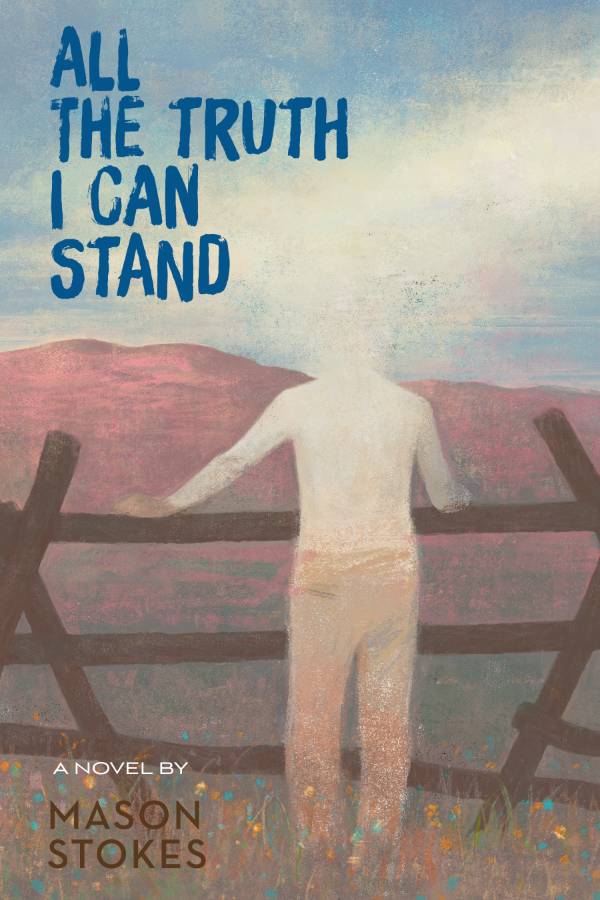
In 2024, Stokes released his own teenage tale of self-discovery, though with a historical twist: Stokes’ first YA novel, “All the Truth I Can Stand” (Calkins Creek), is based on the tragic story of Matthew Shepard, a gay college student whose 1998 murder sparked a national wave of advocacy that led to — among other things — the Matthew Shepard and James Byrd Jr. Hate Crimes Prevention Act.
 However, the image that Stokes paints of Shepard, reimagined under the literary guise
of “Shane,” is at odds in many ways with Shepard’s legacy. Borrowing from accounts
included in Stephen Jimenez’s controversial “A Book of Matt,” Stokes tells a story
that, while no less tragic, requires a more elaborate understanding of Shane as a
character — and, by extension, Shepard. Legacy, Stokes argues, has a way of obscuring
the humanity of a person.
However, the image that Stokes paints of Shepard, reimagined under the literary guise
of “Shane,” is at odds in many ways with Shepard’s legacy. Borrowing from accounts
included in Stephen Jimenez’s controversial “A Book of Matt,” Stokes tells a story
that, while no less tragic, requires a more elaborate understanding of Shane as a
character — and, by extension, Shepard. Legacy, Stokes argues, has a way of obscuring
the humanity of a person.
The question he poses to his readers is this: Which is more important, preserving the memory of Shane as a hero or that of Shane as a person? The book doesn’t offer an easy answer.
“I’m aware that this particular novel is difficult material. It’s not necessarily a sort of Pride float,” Stokes tells me. “But I also think young adults are ready and eager for that sort of difficulty ... They know that the world is messy and hard and complicated.”
Despite the novel’s positive reviews (including a starred review in Publishers Weekly), Stokes acknowledges that older readers — particularly those who lived through and remember Shepard’s murder — might feel frustration with the book, recalling his own discomfort while reading “A Book of Matt.” He says he felt protective of Shepard during his writing process, and 17-year-old Ash, Stokes’ main character and Shane’s love interest, grapples with similar internal conflicts.
“I’m sort of moved by the criticism,” explains Stokes, who dedicated the book to Shepard. “Someone has invested time and energy in caring and being upset. That matters to me, too.”
He hopes to inspire in readers, young and old, a more nuanced understanding of Matthew Shepard the person — not the myth. Acknowledging Shepard’s complexity does not cheapen his legacy, Stokes argues, it humanizes it.
“I’m just wondering if there’s a line somewhere. This much truth is fine. But too much is a problem,” Brian, a professor in Stokes’ novel, tells Ash. “Is there a point where you’d say, ‘No thanks, I have all the truth I can stand?’”
But, like the boundaries of YA itself, those lines are in constant flux — if they were ever there to begin with.
A version of this article originally appeared in the fall 2025 issue of Skidmore College's Scope magazine.