The art of bringing people together
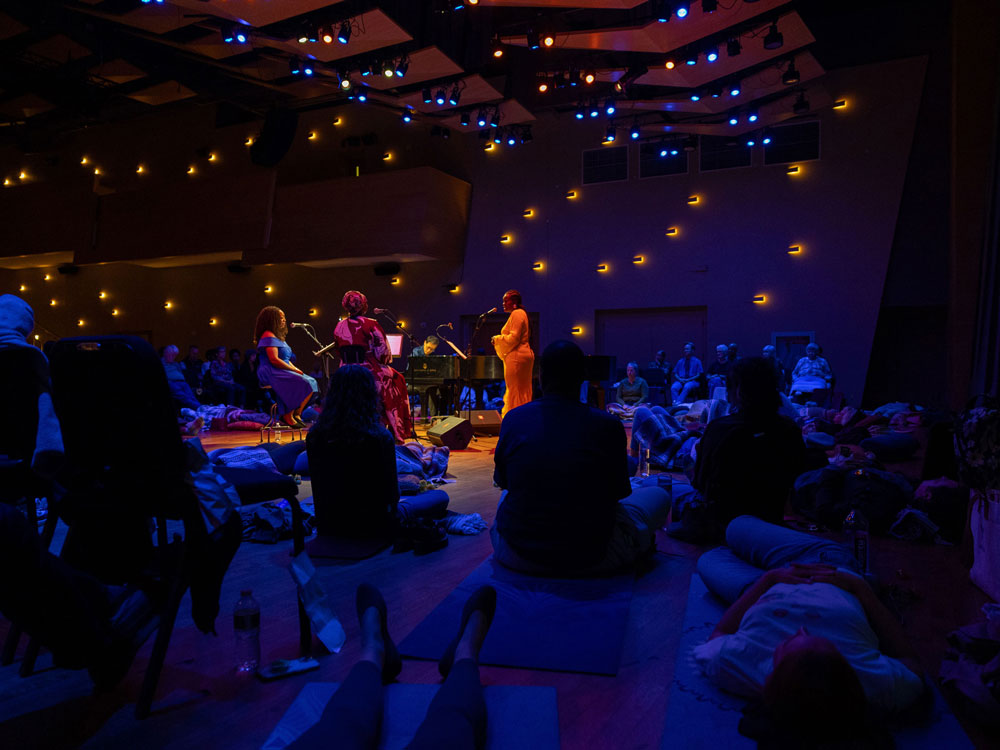
The stage of Arthur Zankel Music Center at Skidmore College didn’t look much like a traditional concert hall.
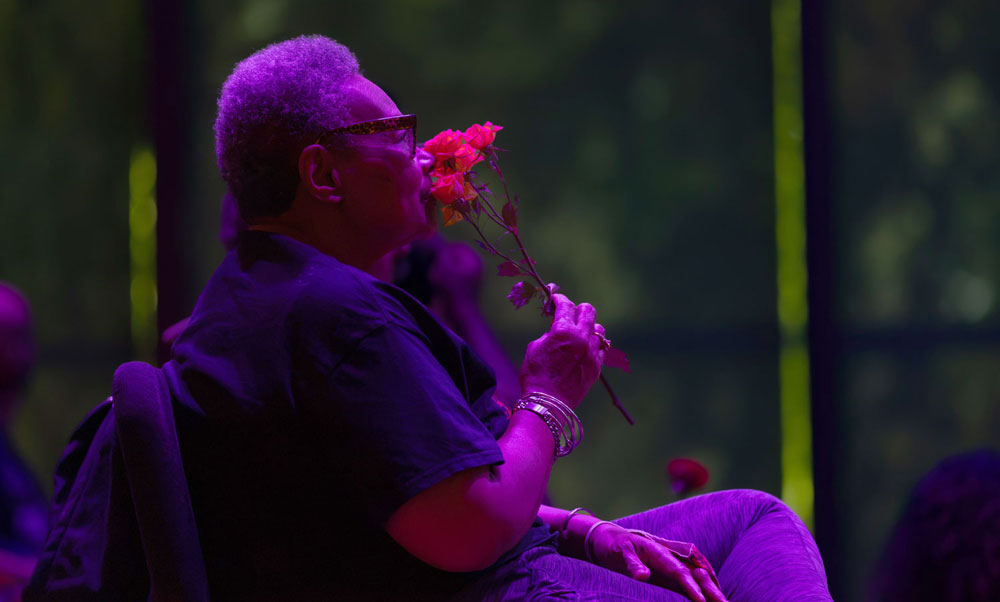
Chairs, cushions, mats, and blankets formed a circle on the stage of Helen Filene Ladd Concert Hall. Audience members reclined on the floor or sat close together as violet and blue light washed over the room.
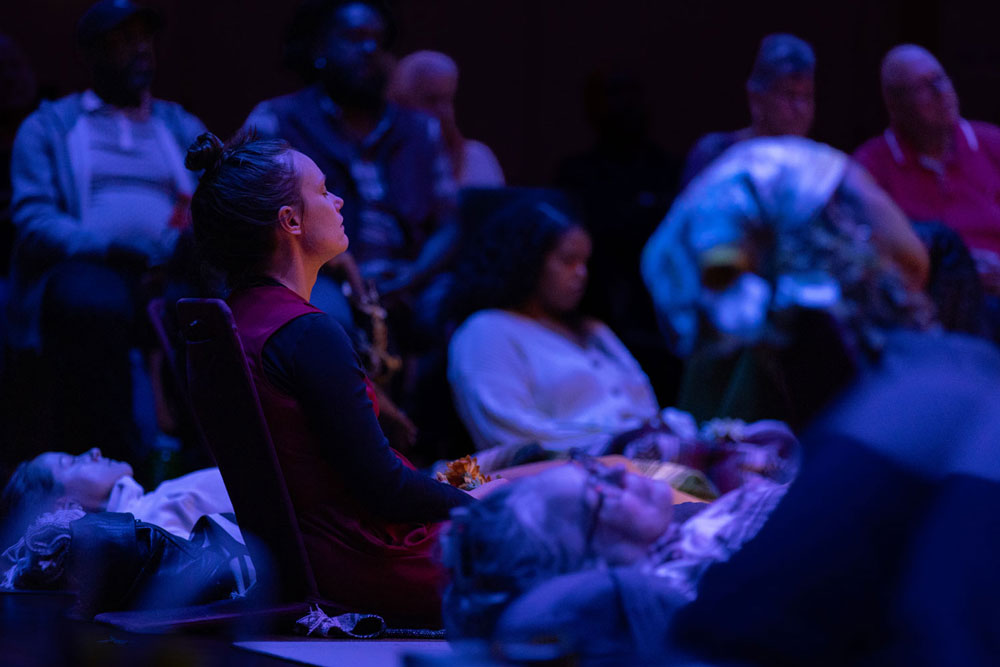
At the center stood Somi, the Grammy-nominated and NAACP Image Award-winning vocalist, composer, writer, and performer. Her voice and the musicians’ sound vibrated through the space as Skidmore theater artist and educator Teisha Duncan guided listeners through moments of reflection, breathing, and meditation.
The performance offered a different way to experience live music. It also reflected a larger question guiding Zankel Music Center’s work: Who is a college concert hall for?
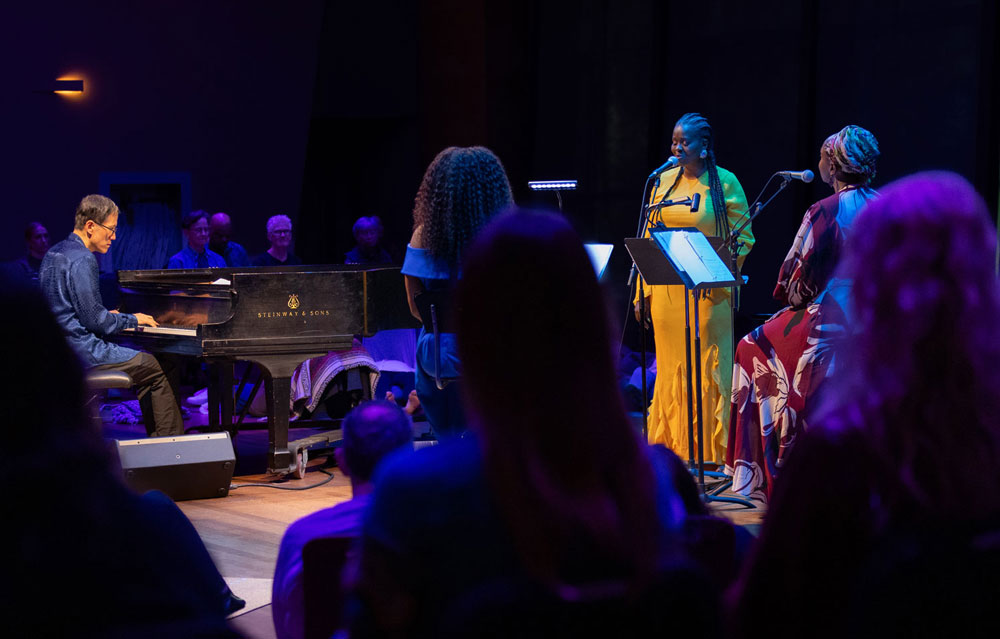
Home to Skidmore’s Department of Music, Zankel is where students learn, rehearse, perform, and work alongside visiting artists. It is also becoming an increasingly important cultural destination for Saratoga Springs and the Capital Region — a place to encounter celebrated performers, new work, unfamiliar traditions, and one another.
Music, connection, and well-being
“Saying that music belongs to everyone means doing more than putting tickets on sale,” Zankel Director Zhenelle LeBel says. “It means thinking carefully about who is in the room, who might not ordinarily imagine that the room is for them, and what kind of experience we are inviting them into.”
Somi’s performance launched Skidmore’s Well-Being Concerts, presented by Zankel in partnership with Skidmore Health and Wellness and Carnegie Hall’s Weill Music Institute. Skidmore is one of 25 organizations around the world bringing Carnegie Hall’s model to their communities.
To reach people who might especially value time for reflection and connection, Zankel partnered with Saratoga Hospital, Wellspring, the Saratoga County District Attorney’s Office, and Yoga Mandali.
Through those relationships, the Center invited healthcare workers, caregivers, survivors of violence, people affected by the justice system, people in recovery, and others to experience the music in an intimate, welcoming setting.
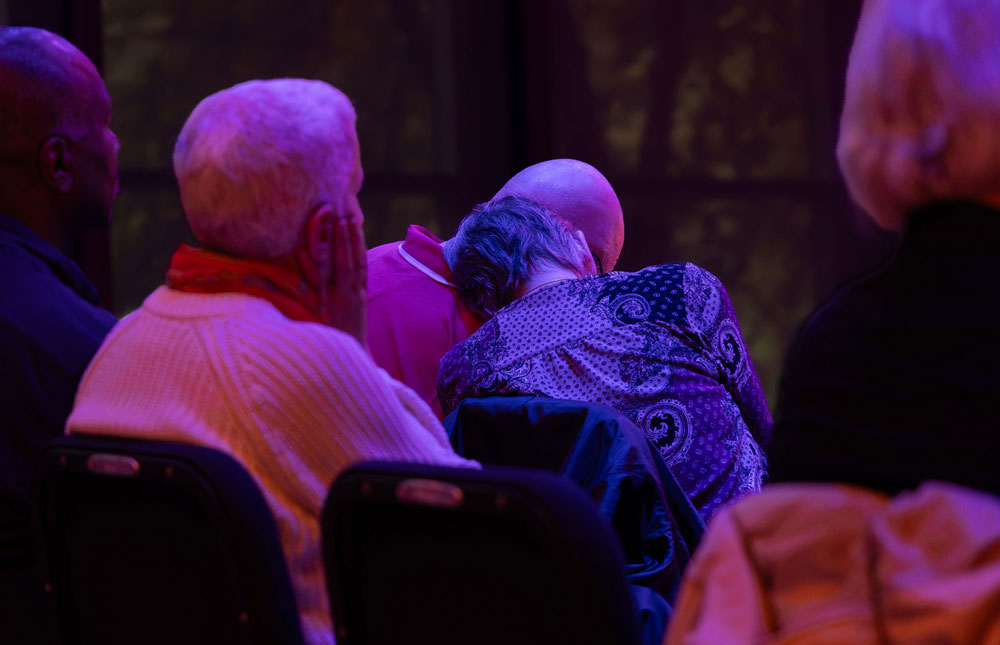
For Saratoga Hospital President and CEO Jill VanKuren, the invitation recognized the demands placed on people who care for others.
“Caring for our healthcare workers means creating opportunities for them to pause, recharge, and feel supported,” she says.
Wellspring, which provides free and confidential services to people affected by relationship and sexual abuse, saw another kind of possibility.
“Healing happens when we are safe, creative, and connected,” says Wellspring CEO Maggie Fronk. “When we enter brave spaces like this, we are entering an arena of hope for ourselves and our community.”
Residencies and creative collaborations
For college students, the Center is a classroom, rehearsal room, recording studio, workplace, and stage. They perform with visiting artists and gain experience in sound, lighting, recording, livestreaming, stage management, marketing, ticketing, and audience services.
Artist residencies extend that learning by giving students and community members opportunities to make — and experience — something together.
A recent yearlong collaboration with Brooklyn-based artist Melanie Charles and her Make Jazz Trill Again (MJTA) collective did just that. The project moved off campus for a Mega Jam at Saratoga Springs’ historic Frederick Allen Elks Lodge No. 609, bringing visiting artists together with Skidmore students and Capital Region musicians for an evening of improvisation that drew a packed house and raised funds for the lodge.
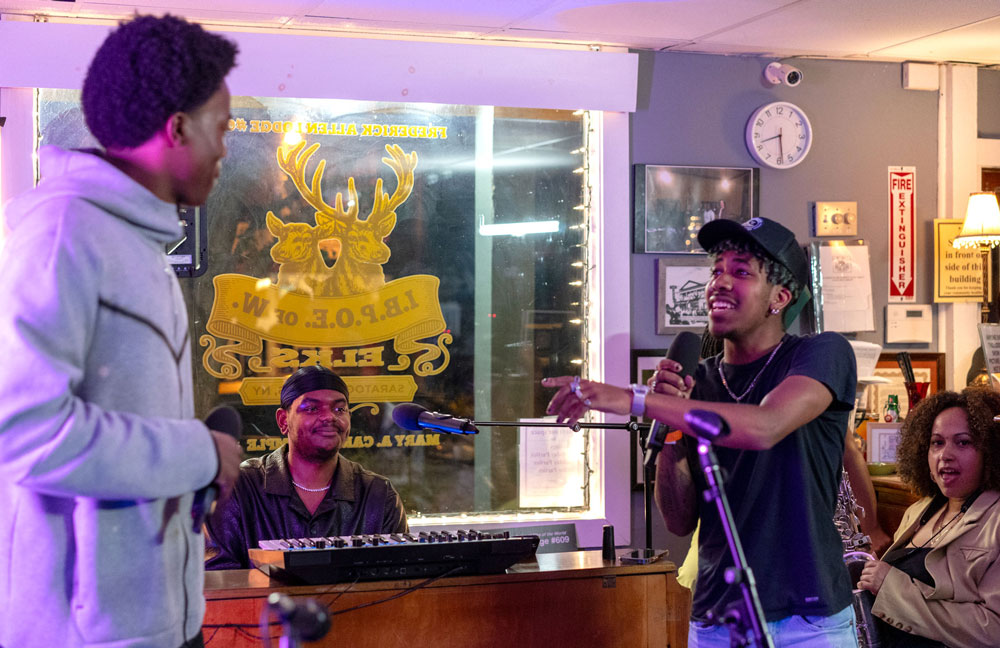
Back on campus, Charles and her collaborators led workshops, class visits, mentorships, and jam sessions. A Jazz and Gender Justice Town Hall moderated by Charles and her podcast co-host Yunie Mojica featuring acclaimed drummer Terri Lyne Carrington asked students and the public to examine gender equity and the structures shaping opportunities in jazz and the music industry at large.
It all culminated in a free public performance of the world premiere of “Trill 101,” a multidisciplinary production featuring Charles and her band alongside Skidmore singers, instrumentalists, and dancers.
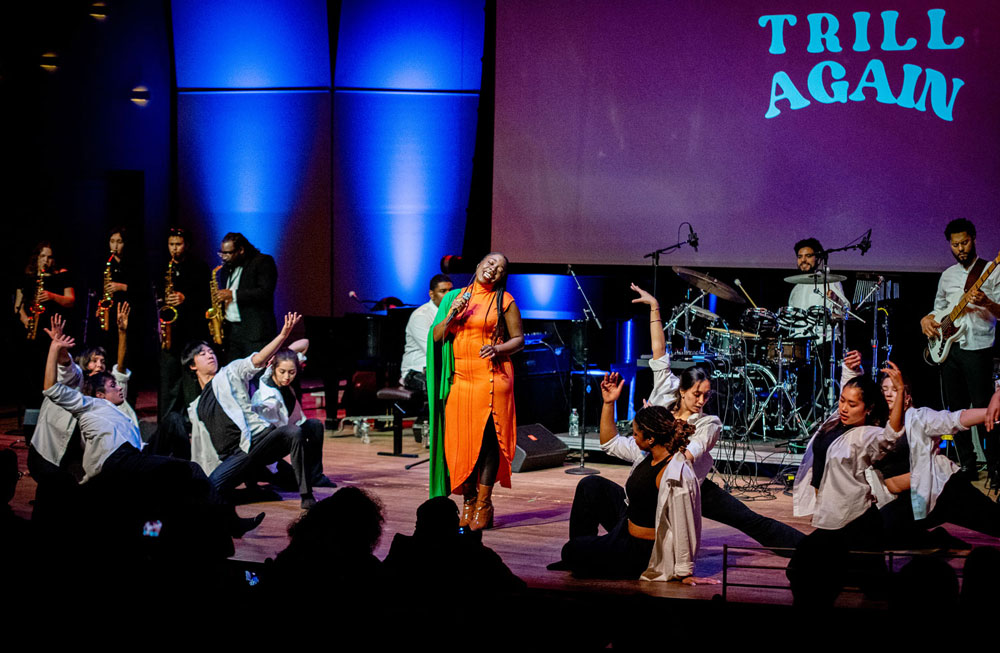
For LeBel, the commission reflected Zankel's growing role as a place for artistic experimentation and exchange.
“When we commissioned Melanie to bring MJTA to Skidmore, we created so much more than a powerful performance together — we built a community,” she said.
Another collaboration took shape with the world premiere of “Be the Sky,” a work by Tibetan artist Tenzin Choegyal and celebrated American composer Philip Glass.
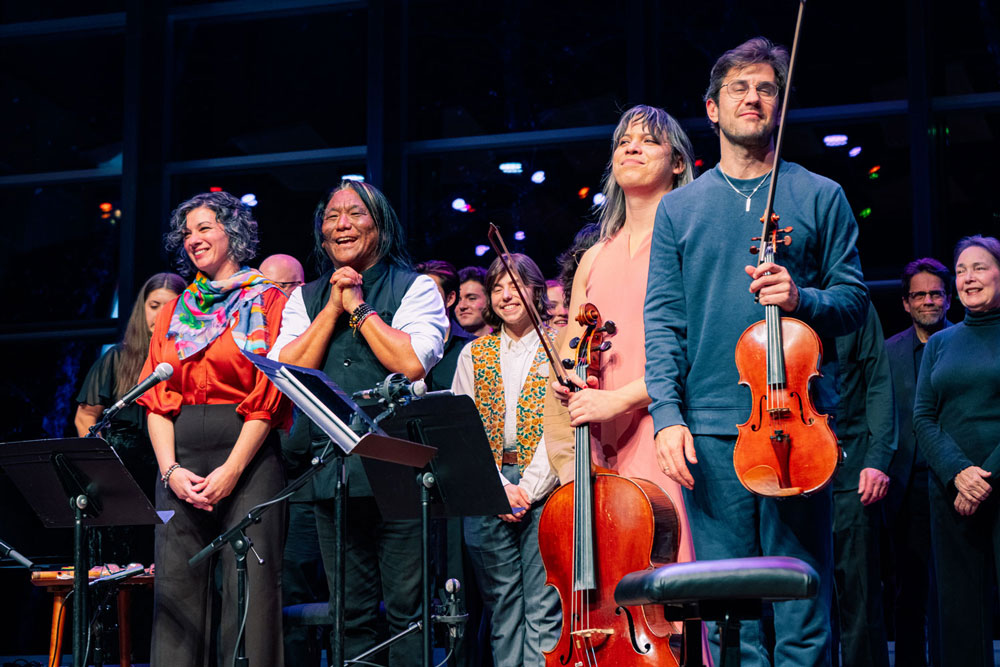
More than 30 Skidmore student musicians prepared to perform alongside Choegyal, composer and multi-instrumentalist Alex Ring Gray, the Grammy Award-winning Attacca Quartet, and local children in a celebration of Tibetan music and cultural traditions.
Partnerships with Saratoga Waldorf School and Caffe Lena School of Music helped assemble a choir of more than 20 local children, who performed "Snowy Mountains" (Gangri), a composition created as a gift for the His Holiness the 14th Dalai Lama on the occasion of his 90th birthday. The production also brought together traditional Tibetan Black Hat dance, performed by Tsering Dorjee Bawa, and a ballet interpretation by Skidmore student Siena Yannotti ’26.
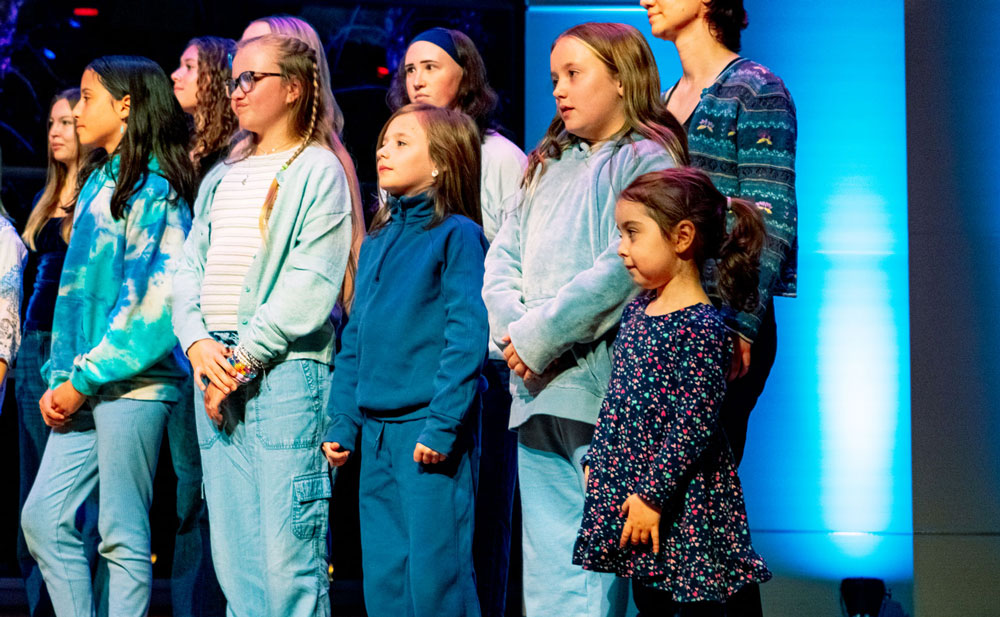
For the students and young singers who participated, the project offered the rare opportunity to work with internationally recognized artists while exploring a musical tradition, language, and culture beyond their own experience.
For the audience, it was the kind of evening that made a case for Zankel as a destination — work of international scope, created in Saratoga Springs through the particular resources of a liberal arts college and its community.
The projects are different in scale, sound, and purpose, but each shows what Zankel can make possible. Students learn beside working artists. Community partners help shape the experience. Audiences encounter music, ideas, and traditions they may not find elsewhere nearby.
Near the end of Somi’s Well-Being Concert, she offered the room a simple wish: “May your heart be open wide.”
It felt right for an afternoon built around listening, and for a music center still discovering what can happen when artists, students, and community members come together around the music.
Programs at the Arthur Zankel Music Center are presented in collaboration with Skidmore College’s Department of Music, Office of Special Programs, and community partners. Select programs featured in this story were made possible in part by support from the Zankel Music Fund, the McCormack Artist-Scholar Residency Fund, the New York State Council on the Arts with the support of the Office of the Governor and the New York State Legislature, and the family of Elisabeth Luce Moore.