Grant News
August 7, 2026
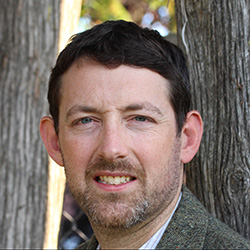
Christopher G. Vecsey (Neuroscience) Awarded NIH R15 Grant
Christopher G. Vecsey, professor of neuroscience, received his third 3-year Academic Research Enhancement Award (R15) from the National Institutes of Health. This new award, entitled "Investigation of Neuropeptide Signaling Mechanisms that Control Sleep," and totaling $538,641, will allow Dr. Vecsey and his team to establish how sNPF neurons function within distinct sleep regulatory networks in the nervous system, expanding our understanding of the mechanisms that control sleep and wakefulness at the molecular and circuit levels. In turn, this knowledge will provide a basis for the design of more effective treatments of human sleep abnormalities. This new award will support one half-time research technician and three undergraduates to conduct summer research project for 10 weeks each year in Dr. Vecsey's lab.
~~~~~~~~~~~~~~~~~~~~~~~~~~~~~~~~~~~~~~~~~~~~~~~~~~~~~~~~~~~~~~~~~~~~~~~~~~~~~~~~~~~~~~~~~~~~~~~
August 7, 2026
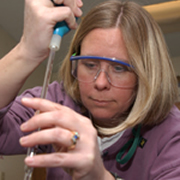
Kimberley A. Frederick (Chemistry) Awarded NSF Grant
Kimberley A. Frederick, professor of chemistry, received a 3-year collaborative research award from the National Science Foundation (NSF). This new award under NSF’s Improving Undergraduate STEM Education: Directorate for STEM Education (IUSE: EDU) and entitled “Collaborative Research: A Differentiated Support Model for Scaling Networked Course-Based Undergraduate Research Experiences Across Institution Types” totals $36,115 and is part of a larger project totaling $399,684 involving The College of New Jersey (lead institution), Drake University, and the University of Illinois at Chicago. The project “aims to scale the first networked course-based undergraduate research experience in analytical chemistry (the μCURE project) across institution types using a novel, individualized approach to professional development” and “introduces the μCURE as a scalable model aimed at democratizing access to authentic research, impacting approximately 1,500 undergraduate students and nearly 20 graduate teaching assistants (GTAs).”