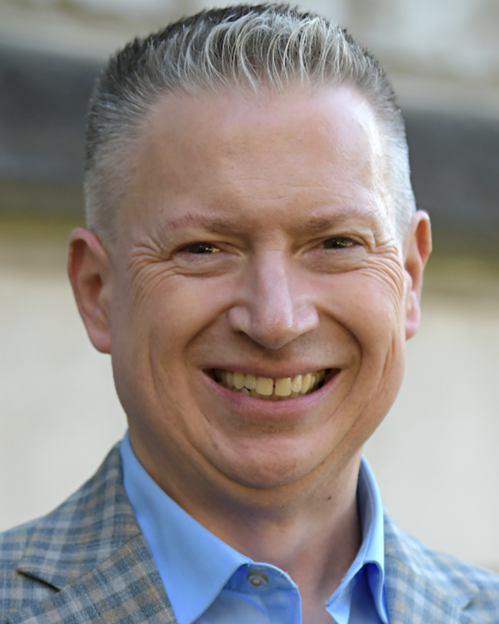
meet our periclean faculty leader
David C. Howson
David Howson is charged with leading the Arts Administration Program at Skidmore College. Launched in 2011, the academic program combines artistic sensibility with business acumen by examining the foundations of non-profit arts organizations. He teaches courses in arts management, philanthropy, non-profit leadership, engages guest-lecturers and community arts leaders, and advises students on curriculum, internship and career matters. David’s research focuses on non-profit arts organizations in the Adirondack region.
Before joining the faculty of Skidmore in 2010, David was the interim executive director of the Modlin Center for the Arts at the University of Richmond, a multi-venue performing arts complex, where he had been the associate director and a faculty member in the theatre department since 2004. While at Richmond, David was appointed a President’s College Fellow and led the inaugral cohort of the Sophomore Scholars-in-Residence. Prior to joining the faculty of Richmond, David was associate managing director at Yale Repertory Theatre in New Haven, Conn. Previously, he worked at the University of Richmond as a development officer and as assistant registrar for academic history and compliance.
David is the secretary and trustee of the Emma Willard School, an independent boarding and day school for girls in Troy, N.Y. He also serves on the board of the Charles R. Wood Foundation, a private philanthropic foundation that supports arts, children’s health and welfare, education, and community enrichment initiatives primarily in New York’s Capital Region and Adirondacks. David recently joined the board of the Essex County Fair.
Previously, David served as a trustee of The Hyde Collection Art Museum and Historic House for 11 years (2 years as chair). In the Adirondacks, he was a six-year trustee and president of the Depot Theatre in Westport, N.Y., on Lake Champlain, successfully ushering the 45 year old organization through a leadership turnaround and financial recovery. He has also served on the boards of Saratoga Arts and Saratoga Shakespeare Company in Saratoga Springs.
David is a graduate of Leadership Saratoga and regularly speaks and advises organizations on non-profit governance, leadership and accessibility.
In 2024, David was honored with the Skidmore College President’s Award for Leadership and Service.
Course Description