Credible news, credible information: Protecting elections in an age of misinformation
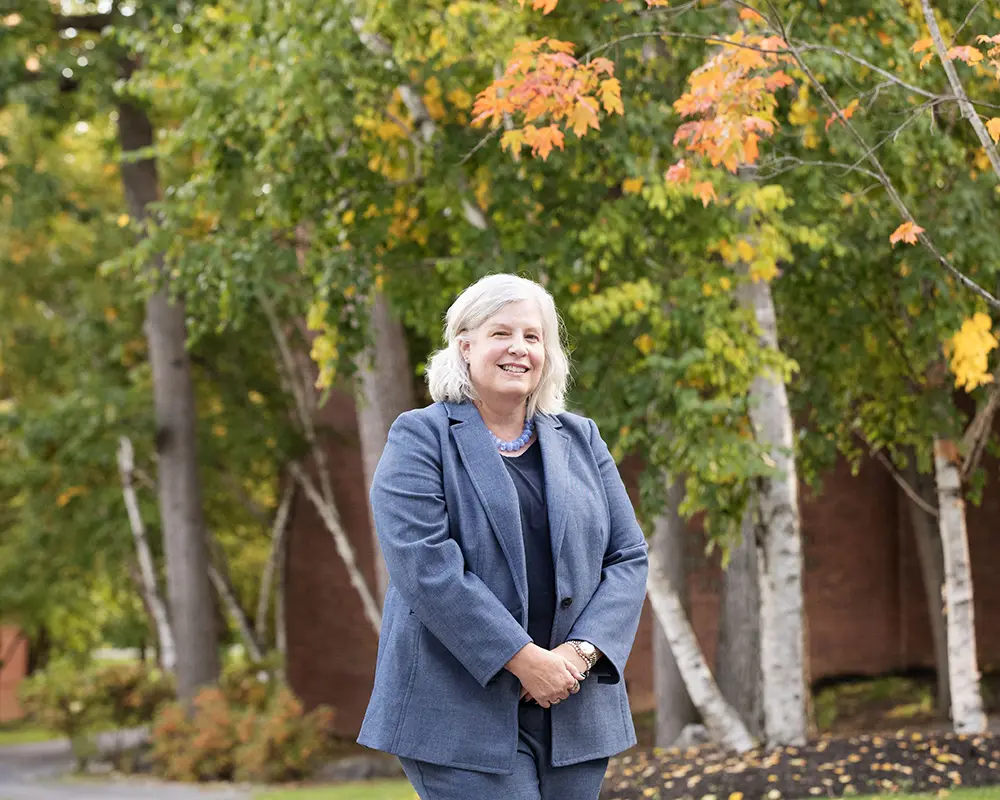
According to Kristen Zebrowski Stavisky ’92, chief election official and Democratic co-executive director of the New York State Board of Elections, election officials today not only ensure that elections are safer and more secure than ever, but they also work to educate the public about the extensive bipartisan safeguards that protect the voting process.
Stavisky returned to her alma mater, Skidmore College, for “Protecting the Elective Franchise: How the New York State Board of Elections Delivers Safe, Secure, and Accurate Elections,” a public talk presented with support from the Department of Political Science.
Speaking ahead of the Nov. 3 midterm elections, her message was clear: New York’s elections remain secure, with multiple layers of bipartisan oversight and safeguards.
At the same time, election officials are increasingly working to counter false or misleading information about voting, including content generated by artificial intelligence. Stavisky emphasized the importance of providing accurate information to the public before misinformation, disinformation, or malinformation can gain traction.
“We try to provide the information in advance so that the misinformation is not the first part of the story,” Stavisky told a Skidmore audience Wednesday, Sept. 30.
Much of Stavisky’s talk was devoted to explaining the safeguards already in place. New York elections operate through a bipartisan system, with Democratic and Republican officials working together at every stage of the election process. Voting systems undergo certification and testing, paper ballots create a verifiable record, and post-election audits check results. Voting machines are never connected to the internet.
“The main thing about elections is that we want to be as transparent as possible and everything we have needs to be open to scrutiny,” she said.
Stavisky also discussed how election officials are working to ensure that other challenges, including cyberattacks, harassment, intimidation, and physical threats against election workers, do not undermine a safe and secure electoral system.
The issues Stavisky raised echo President Marc C. Conner’s emphasis on credible information as essential to democratic citizenship. Earlier this year, he launched Skidmore’s “Credible News, Credible Information” initiative to help students navigate today’s complex media landscape. The project is part of his involvement in the College Presidents for Civic Preparedness initiative, which promotes thoughtful and informed democratic engagement — a priority for Skidmore.
Recent campus speakers, including author Geraldine Brooks and IRS official Jarod Koopman, as well as former U.S. Reps. John Yarmuth, a Democrat, and Ann Marie Buerkle, a Republican, have similarly encouraged students to learn how government works, engage across political differences, and participate in civic life.
Stavisky has a long career rooted in public service. Before joining the state Board of Elections, she served as an election commissioner in Rockland County, where she discovered a passion for election administration and ensuring that every eligible voter has the opportunity to vote.
An anthropology major and art history minor at Skidmore, Stavisky later earned a law degree from Pace University and a master’s degree in education administration from Columbia University.
Skidmore, she told the audience, remains “one of my favorite places in this world.”
With multiple layers of bipartisan oversight, rigorous testing, and paper ballots that allow results to be independently verified, Stavisky emphasized the importance of keeping the public informed about the safeguards that keep New York’s elections secure.
“If we explain what we do and we educate people,” she said, “it’ll go a long way to making sure that we get rid of some of that misinformation.”
Explore more content in the "Credible news, credible information" series, including Professor of Sociology Andrew Lindner's formula for navigating toward credible news sources and Associate Professor of Political Science Christopher Mann's article on why informed participation is essential to a healthy democracy.