Credible news, credible information: A recipe for credibility in your love and civic life
Let’s start with a hack to be seen as sexier, smarter, nicer, and more trustworthy: Your dating app profile should say you are interested in politics, but that you want to make informed decisions and don’t like partisanship.
Unlike most dating advice, this advice is backed by rigorous behavioral science research. Whereas 86% of Americans say hyper-partisanship is taking over politics, Americans believe informed engagementin civic life indicates you are a good person.
 If your dating app profile says you are informed and engaged, you need to be able
to back it up on the date by being informed and engaged in civic life. After all,
lying on your dating profile isn’t likely to bode well for a budding relationship.
But being informed and engaged is about a lot more than just presenting credibility;
making informed decisions also has consequences for outcomes in your own life.
If your dating app profile says you are informed and engaged, you need to be able
to back it up on the date by being informed and engaged in civic life. After all,
lying on your dating profile isn’t likely to bode well for a budding relationship.
But being informed and engaged is about a lot more than just presenting credibility;
making informed decisions also has consequences for outcomes in your own life.
Imagine a very different Skidmore where someone else signed you up for classes: Would you enjoy your classes? Would you like your professors? Would you be doing well in those courses? Would your future look the same?
The reasons for informed engagement in your educational life are obvious. You would not make uninformed choices when registering for classes. And you would never let a random stranger choose courses for you.
The reasons for informed engagement in civic life are identical. In civic life, your choices have consequences for you, your loved ones, and many people you will never meet.Your choices in civic life will shape health, wealth, and happiness for the short term and long term. When you engage in civic life, you can shape the direction of public policy, culture, and society. But engaging in civic life without being informed is like driving a car with your eyes closed.
We live in an age of misinformation and disbelief, as Professor of Sociology Andrew Lindner has explained. Misinformation and disbelief are corrosive to civic life in the United States and around the globe. Professor Lindner’s recommendations "to read real news, not too much, mostly local" is great advice for improving your information diet. We can also apply similar ideas to informed engagement in civic life.
Read real news … from multiple perspectives.
Start by reading real news about the world around you from credible news sources. Then read perspectives you are likely to disagree with.
If you like a candidate, read why other people dislike that candidate. If you dislike a politician, read why other people like that politician.
Social media is designed to reinforce what you already like and dislike — whether music, movies, candidates or public policy. For music and movies, the consequences are trivial. For candidates and public policy, only hearing what you already know is an echo chamber of ignorance that leads to poor choices with large consequences for you and society.
Not too much … hysteria.
If something seems like it is “a bit too much,” be very skeptical.
Civic institutions in the United States (and around the world) are under attack more broadly than any time in modern history. Deep partisan polarization and the incentives of an “attention economy” have created a perfect storm.
If voter fraud is “rampant,” why are there more people who report observing alien abduction than report observing voter fraud in U.S. elections?
If there are problems with how elections are run, why did dozens of court cases turn up zero evidence in 2016, 2020, and 2024 — even when different parties won these elections for president?
Mostly local … engagement.
As we are experiencing now with a war in the Middle East impacting prices at the local store, international and national politics directly impact our lives. But informed engagement in civic life is entirely local.
To participate in elections, go to the website for the election office in the county or town where you live to understand how to register and vote. Fights over voting practices in jurisdictions across the country may make headlines, but they won’t tell you anything about how to vote in the place where you vote."
You only get to vote for candidates running where you live, but few are the politicians in the headlines. However, the members of Congress, the state legislators, the county officials, city councilors, and school board members whom you vote for have as much — and often more — influence on policy. You need to know these candidates. What are their values and policy positions? What is their work ethic, character, and judgment? Will they represent you and your neighbors or special interests and lobbyists?
Don’t be fooled by the “easy” path of not engaging in civic life. In civic life, inaction is a choice with consequences. Choosing not to make the effort to be informed means making bad choices. Choosing not to speak up means other voices will dominate the conversation. Choosing not to vote means other people will turn policy, culture, and society in the directions preferred by other people.
A liberal arts education at Skidmore prepares you for informed engagement in civic life. The debates about competing theories in classes in every department are practice for considering multiple perspectives in civic life. The critical thinking about arguments and evidence taught in courses is practice for identifying and rejecting misinformation and disinformation in civic life. Learning to navigate the college procedures for course registration and room draw is practice for learning procedures to register and vote in your community. Selecting professors, classes, and majors is practice for assessing candidates and policies.
Informed engagement in civic life means applying what you do every day at Skidmore.
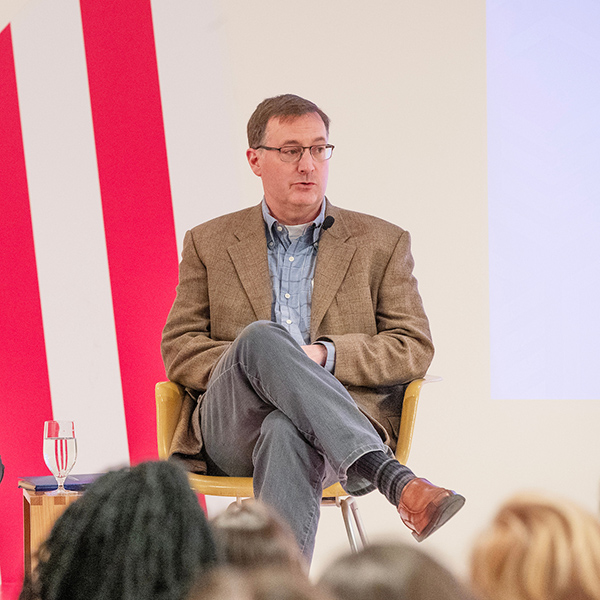
Christopher B. Mann is associate professor of political science at Skidmore College. His research, focusing on political communication about voting and elections in the United States, has been published in the Journal of Politics, Political Analysis, Political Research Quarterly, Political Behavior, Public Opinion Quarterly, American Politics Research, and other publications.