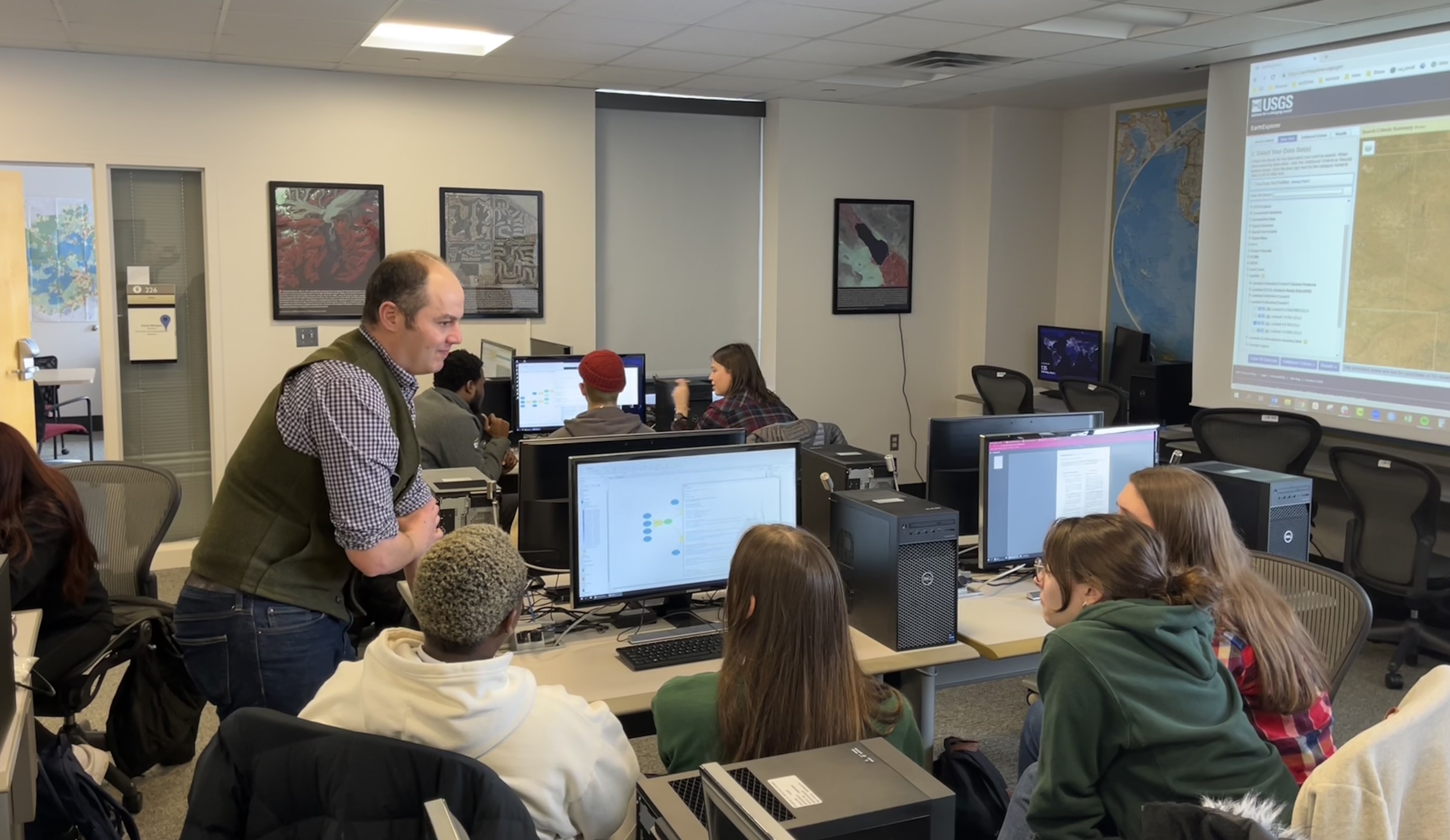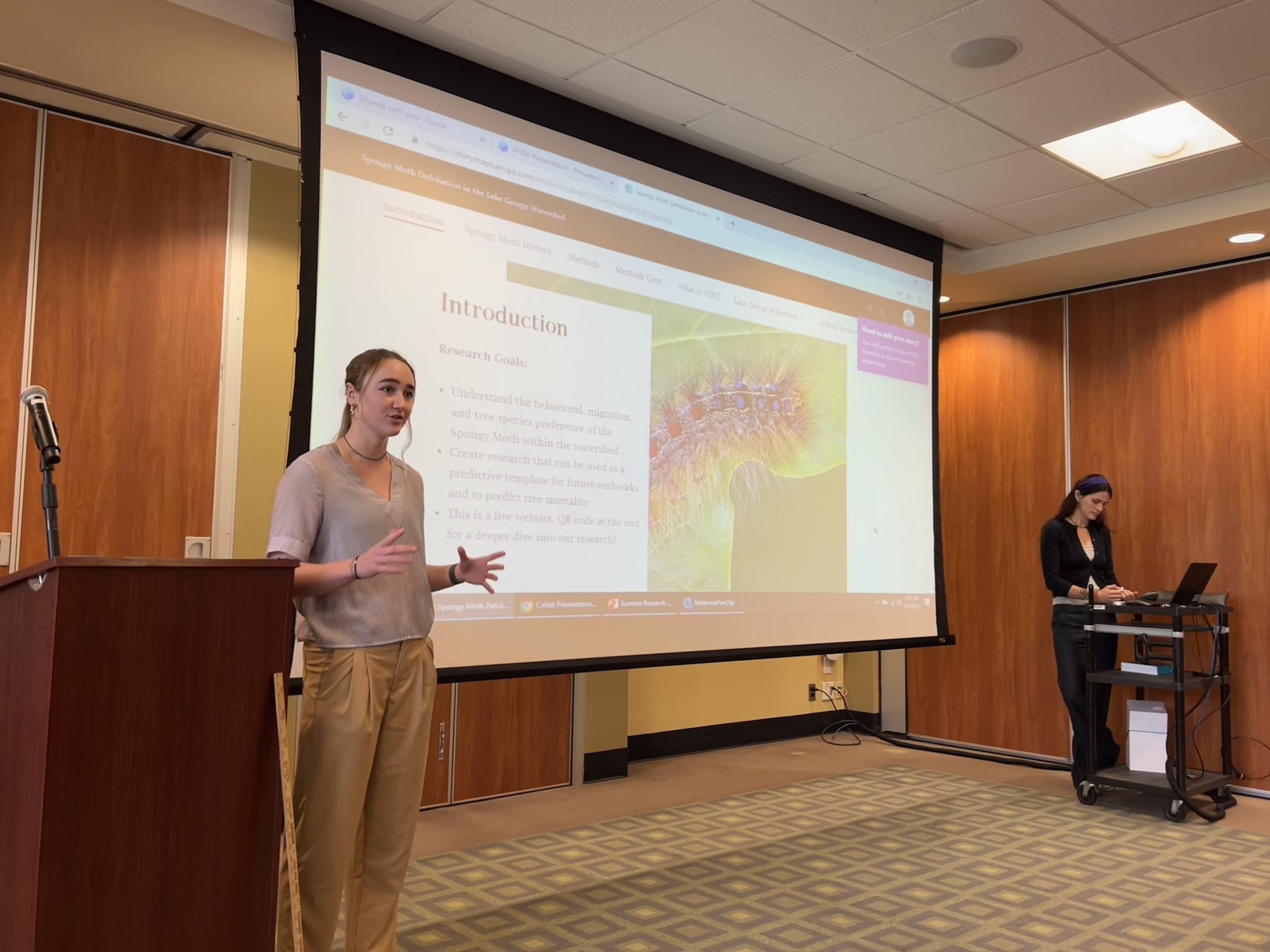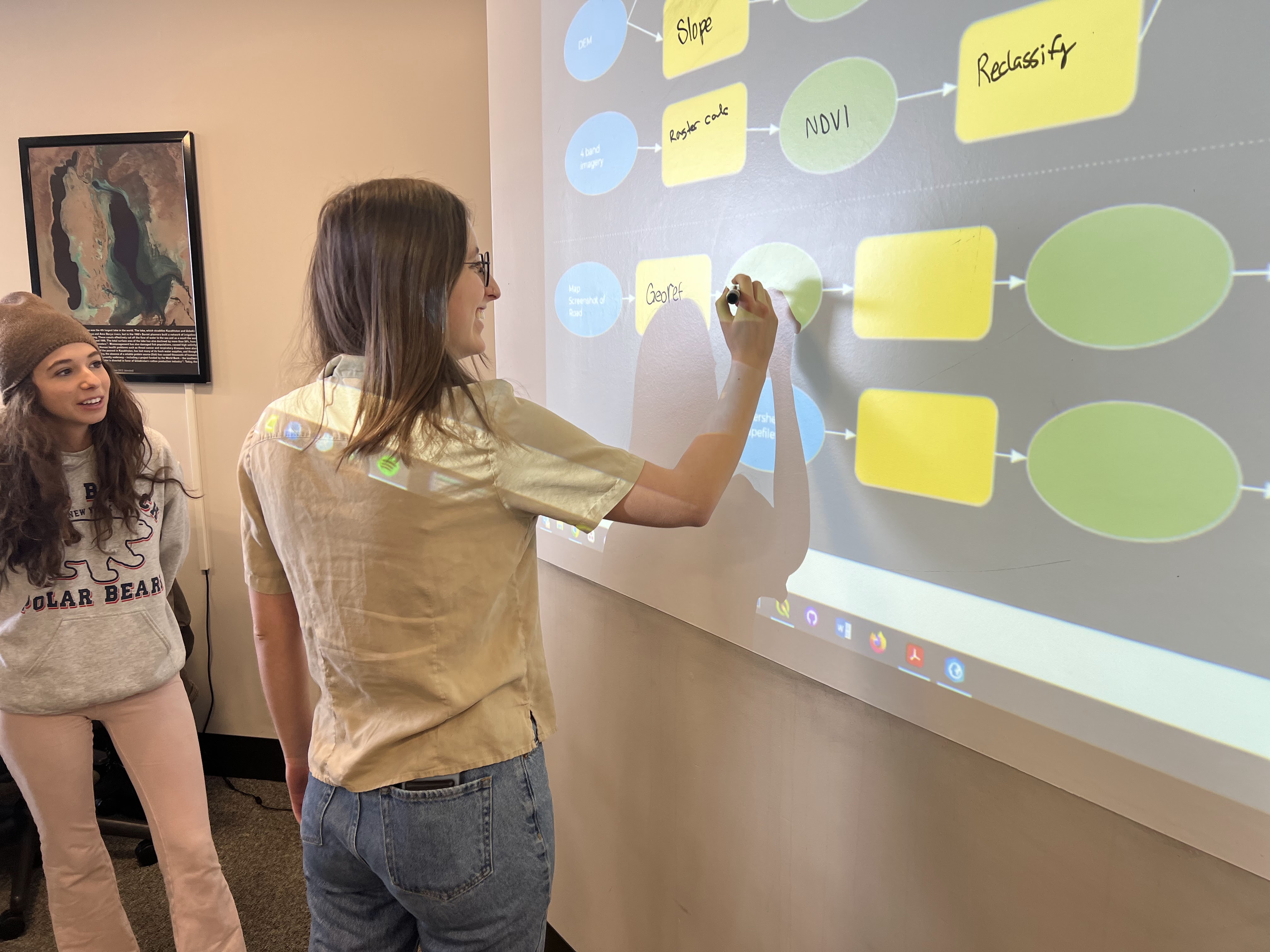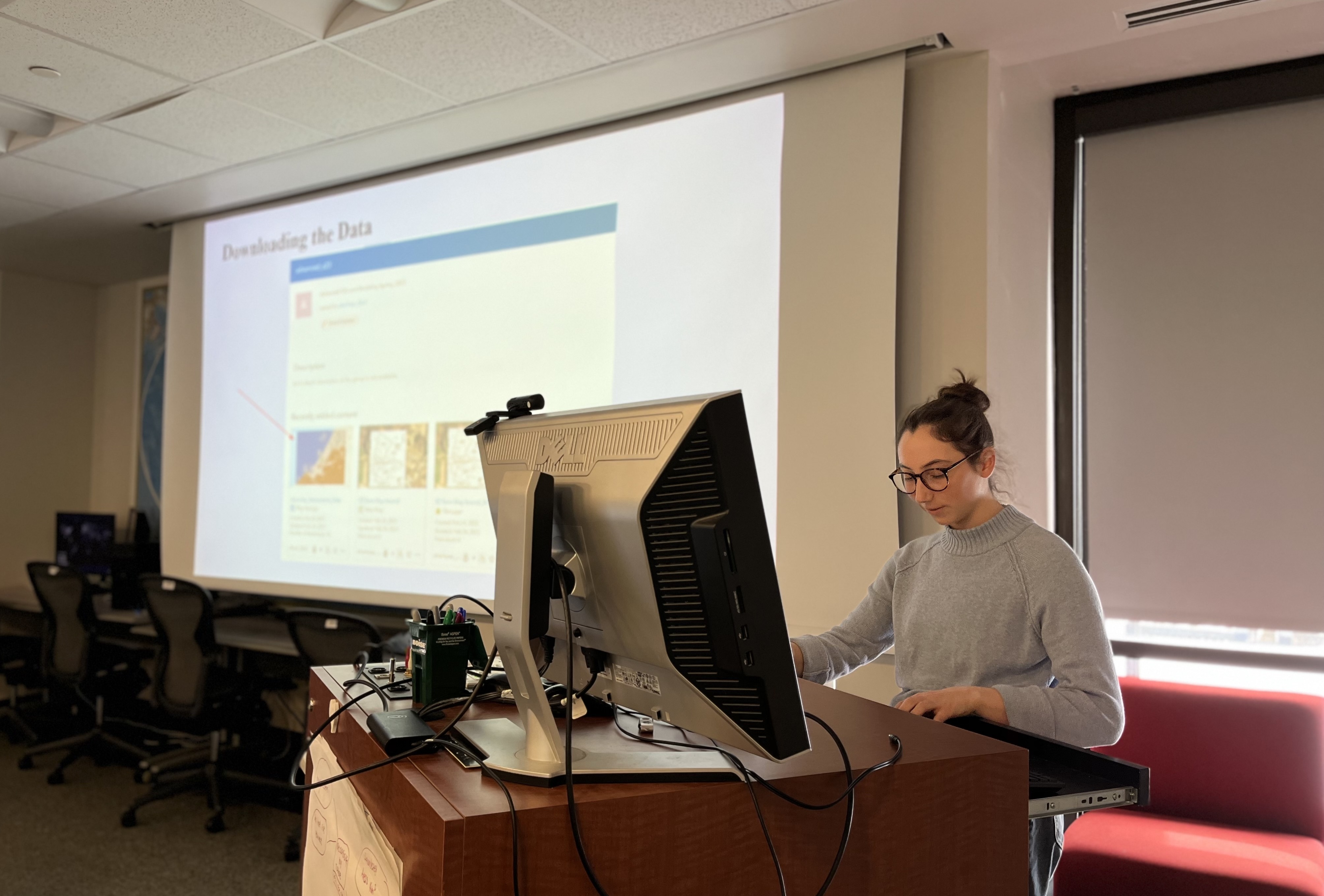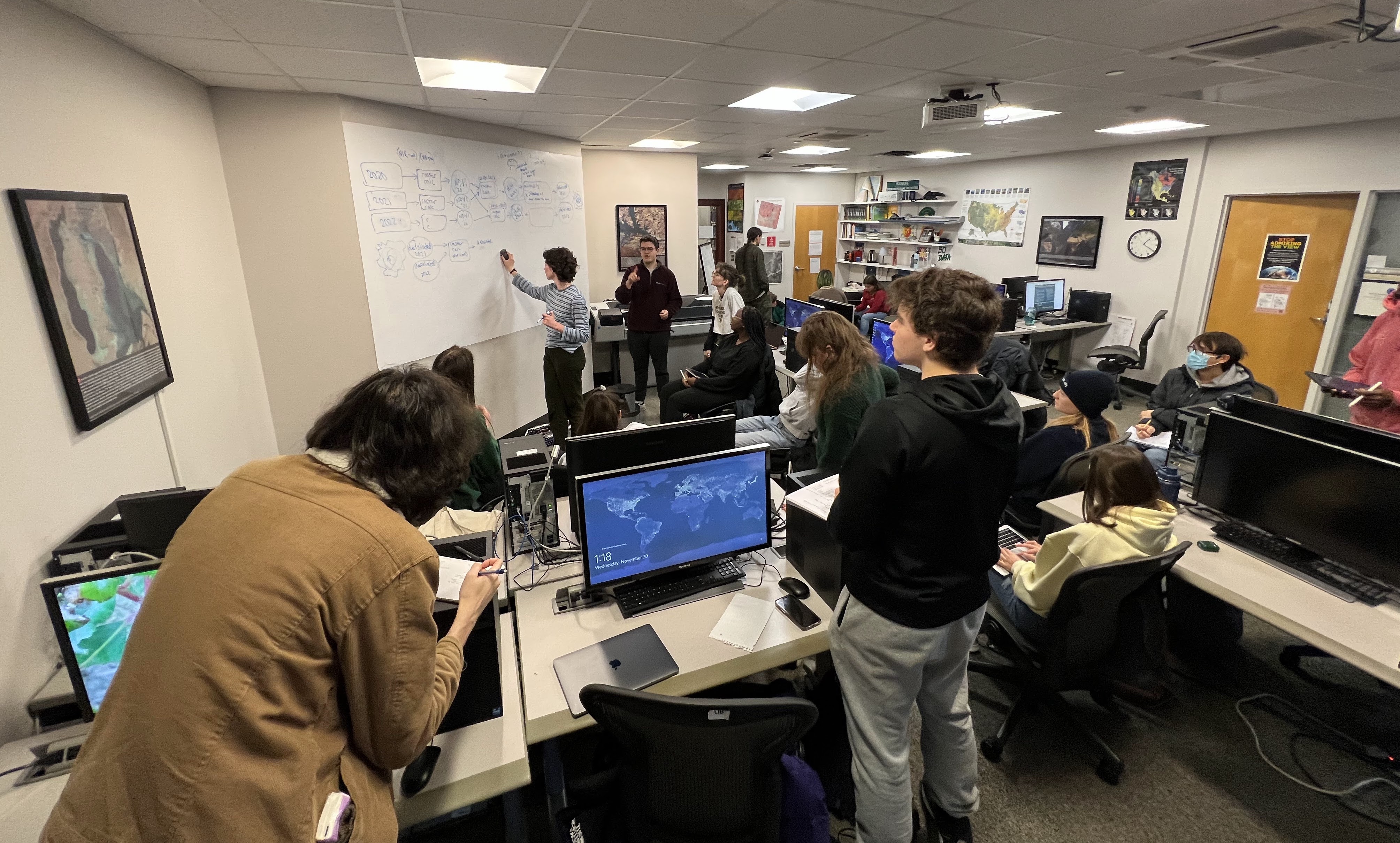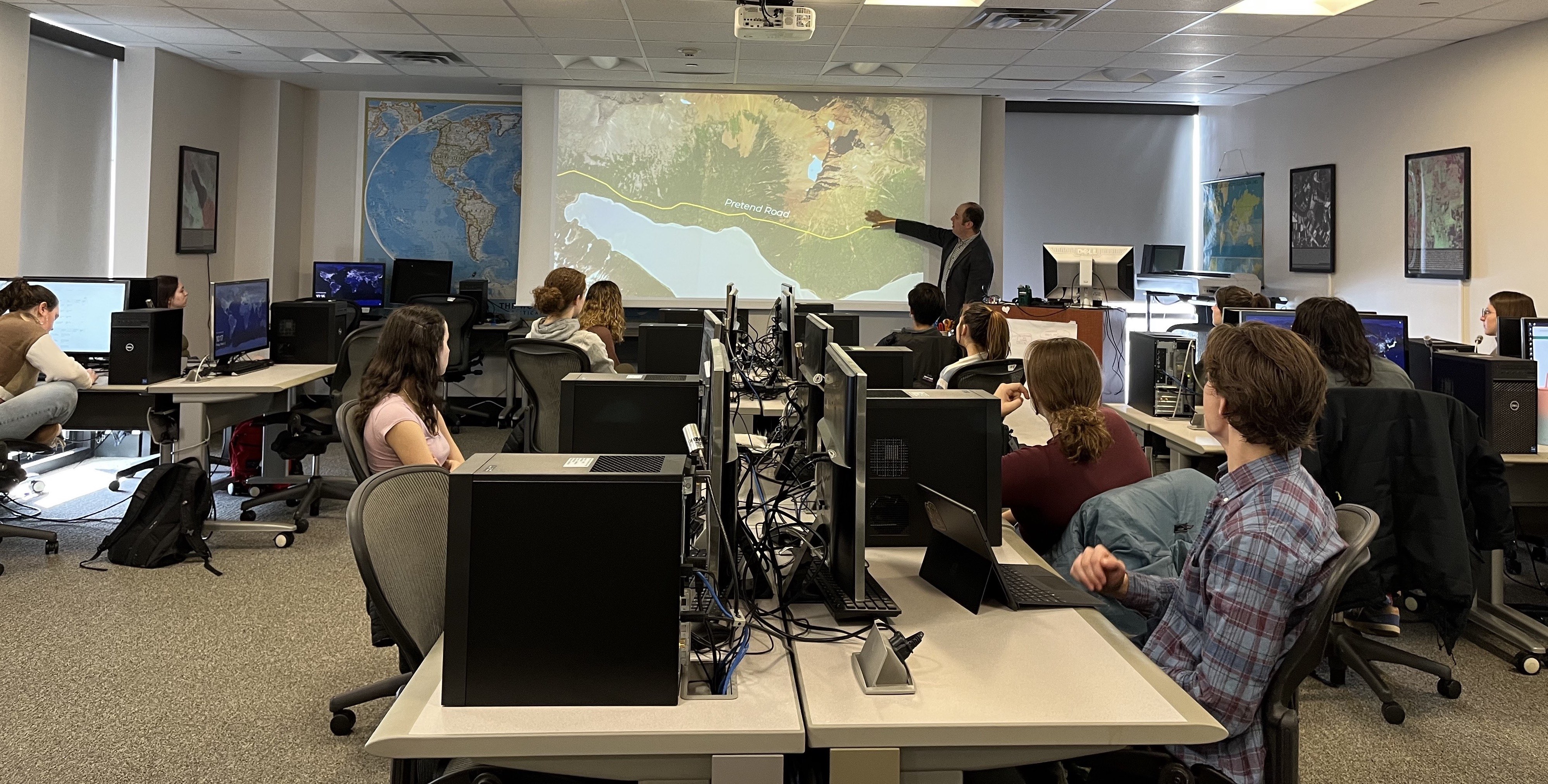


The Skidmore GIS Center for Interdisciplinary Research provides students and faculty with the resources and expertise to incorporate GIS and related geospaital technology into course offerings and research across academic disciplines. The Center is also a resource for local governments, environmental and social non-profit organizations, and historic societies with its extensive catalog of Saratoga County socio-economic, historic, and natural resource data.
The Center supports ESRI ArcGIS 9.3.1 and ArcGIS 10 software for primary GIS use, as well as related hardware (large-format scanning, printing, and GPS)and associated software packages.
*It is recommended to make an appointment for assistance (use form to left in sidebar)
On Location
Mapping Local History With GIS in Saratoga County, NY
Imagine what we could individually learn about local cities by using maps to understand their histories. Connecting history and place through GIS technology has the possibility to activate awareness and independent research initiatives in local communities. On Thursday, February 21st, a Historians Meeting took place in Skidmore’s new GIS Center, featuring Ron Feulner, the town of Greenfield Historian, Rick Bishop, a volunteer at the Historian’s Office in Greenfield, and Dr. Robert Jones, a Professor of Economics at Skidmore. At the meeting, a presentation was given on their mapping project of the town of Greenfield. The project included multiple layers of historical maps of Greenfield with air photos and the location of small cemeteries and burial grounds from hundreds of years ago. Many Historians of the cities and towns of Saratoga County also attended the presentation. This semester’s students of Skidmore’s interdisciplinary class “Introduction to Geographic Information Systems,” taught by Robert Jones, are taking on mapping projects similar to the Greenfield project. Skidmore’s largest scanner located in the GIS center has been utilized in the process to upload high resolution images of historical print maps, and will continue to be utilized in the process. Each student in the GIS class is [...]
Getting Started With Digital Map Storytelling
So, today I was sitting with a student working on a sustainability project. Her goal is to connect local farms in upstate NY with institutional distributors in upstate NY. One key for this project was having an online interface that could be adopted statewide.We had met a couple times and had begun to do some geocoding of address that had been collected through a surveymonkey survey. I had originally showed the student BatchGeo as a simple solution for quick geocoding. Oftentimes, this is what someone wants to see; points on a map. But I could tell that this was not sufficient for this project. Recently I had come across the ESRI Storymaps. I have liked the visual impact built into these maps, and I had a feeling that the student would also. So I started showing some Storymap examples. Since this is a food related project, I went right toward the Thanksgiving Dinner Map. The student was impressed. We also talked about doing a Sustainability Tour on campus (as I have discussed in a previous post) We thought that the Treasures of Redlands could prove to be a possible prototype if we could get it up and running. As we [...]
Breathing Earth
Earth Day is coming!
Use Iphone or Android GPS For Classroom Field Data Collection: Fulcrum App Review
Student projects at Skidmore are extensive. However, the use of field mapping tools to enhance these endeavors is limited. In this review, we investigate whether the “cloud-based mobile data collection tool” Fulcrum can pave the way for field based projects here at Skidmore. Instead of arbitrarily prodding through the app’s features, we’ll put Fulcrum to test by putting it into the context of a pressing issue in environmental studies: the management of green spaces. Green spaces are socially and ecologically important but are threatened by increasing land development plans – even at Skidmore (cough cough new housing). Anyone hoping to preserve these spaces may ask the following questions: where are these green spaces? how are they used? what are the students’ perceptions of these spaces? But before we delve into exactly how to address these questions using Fulcrum, we’ll need a brief overview of the app itself. As stated earlier, Fulcrum is a data collection tool that allows you to create field collection forms and conduct field work both on your computer and Android, iPhone, or iPad device (we used the iPad). The form builder allows you to add picklists, checkboxes, texts fields, and several other data types. These forms [...]