
Working Here
Why work at Skidmore?
Because the work matters — and so do the people who do it. Guided by the College motto, Creative Thought Matters, Skidmore employees help support a creative, curious, caring, and respectful college community. Here, you’ll find meaningful roles, comprehensive benefits, opportunities to grow, and a shared commitment to the people who make Skidmore special for everyone who experiences it.
Our shared ethos
A recent community-wide effort — including surveys, interviews, and conversations — helped us reflect on, define, and articulate these workplace values and aspirations.
- Creativity: Our passion for creative thinking elevates all we do.
- Curiosity: We ask, “Why?” “Why not?” and “What if?” to better understand our world and ourselves.
- Caring: Our connections to one another support and sustain our individual and collective success.
- Diversity: We cultivate inclusion, accessibility, acceptance, understanding, and belonging.
- Respect: When necessary, we agree to disagree, but integrity, civility, and kindness are always expected.
- Sustainability: We are stewards of our institution and of the social and physical environments we inhabit and benefit from.
Our approach to total compensation
Skidmore’s approach to total compensation reflects the value of each employee’s contributions to the College’s mission. Our framework considers direct pay and benefits alongside market competitiveness, internal equity, professional growth, career development, and overall work satisfaction. It also explains how salary ranges are developed and used for non-union staff positions.
Explore Skidmore’s total compensation framework and staff salary ranges.
We think you'll like it here

Your career

Your benefits

Your workplace

Our community
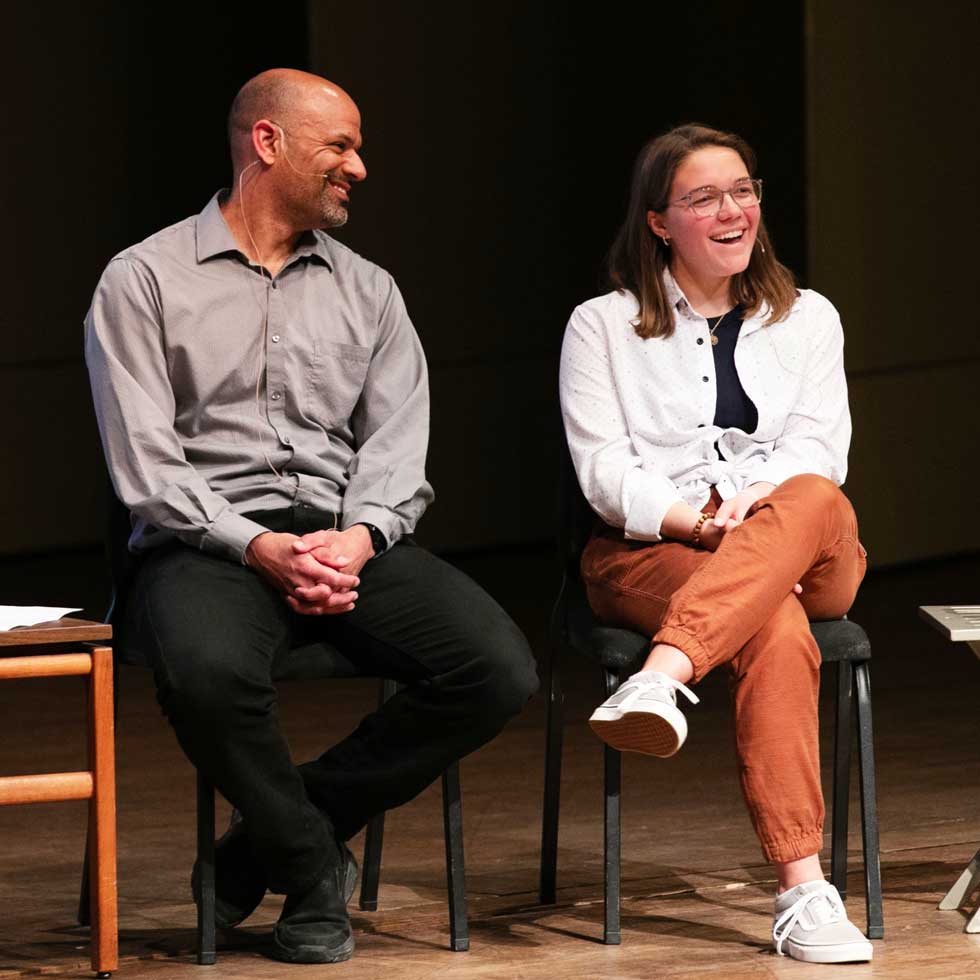
Our students

Our location
Information for job candidates
Hiring process
While each search may vary by position type, department, and timeline, candidates can generally expect the following steps:
- Position posting and application: Open positions are posted online, and candidates submit their materials through Skidmore’s application system.
- Application review: After the application period begins, the hiring team reviews submitted materials to identify candidates whose experience and qualifications align with the position.
- Initial interviews: Selected candidates may be invited to participate in an initial interview, which may take place by phone or online.
- Finalist interviews or campus visit: Finalists may be invited for additional interviews, which may include meetings with the hiring supervisor, search committee, department or program representatives, Human Resources, students, or other members of the campus community, depending on the role.
- Hiring recommendation and offer: After interviews are completed, feedback is reviewed and a hiring decision is made. The selected candidate may receive a verbal or written offer outlining the position and compensation.
- Background check and final steps: Offers are typically contingent on successful completion of a background check. After the remaining steps are completed, the selected candidate receives confirmation of the appointment, and other candidates are notified that the search has concluded.
Timelines may vary depending on the position, search process, and availability of candidates and committee members. Skidmore is an Equal Opportunity Employer. Hiring and employment policies are outlined in detail in the Skidmore Employee Handbook.
Understanding position types
Skidmore offers a range of employment opportunities, and each posting includes details about the position type, schedule, appointment length, compensation structure, and eligibility requirements. Candidates are encouraged to review each posting carefully, as these details may vary by role.
Faculty and staff positions: Opportunities at Skidmore generally fall into two broad categories: faculty positions and staff positions. Faculty positions may include tenure-track, non-tenure-track, visiting, lecturer, instructor, library faculty, or artist- and writer-in-residence appointments. Staff positions include administrative/professional, support staff, union, non-union, regular, temporary, full-time, and part-time roles. Some positions at Skidmore are represented by a collective bargaining unit. When applicable, the job posting or offer materials will identify whether a position is union-represented and provide information about the relevant terms and conditions of employment.
Full-time, part-time, and temporary roles: Some positions are full-time, while others are part-time or temporary. Certain roles may be tied to a specific academic year, semester, season, project, or appointment period. Job postings will indicate whether a position is ongoing, temporary, visiting, contract-based, or otherwise limited in duration.
Work year and schedule: Some positions follow a 12-month schedule, while others may be structured around the academic year or a shorter appointment period, such as 9-, 10-, or 11-month schedules. The posting will include information about the expected schedule, work year, and any role-specific requirements.
Applying for a summer position? Procedures are different for these short-term roles. Please review our summer employment information.
Exempt and nonexempt classifications and salary bands: Staff positions may be classified as exempt or nonexempt. Exempt positions are generally salaried, while nonexempt positions are generally hourly and eligible for overtime in accordance with applicable law. Non-union staff positions are assigned to salary bands, which help determine the compensation range for the role. Union position wages are determined through the applicable collective bargaining agreement.
What to look for in a posting: When reviewing an opening, candidates should look for the position title, department, full-time or part-time status, appointment length, work schedule, salary or salary range, required qualifications, and application materials.