Summer 2002
- - - - - - - - - -
Contents
Features
Observations
Letters
On campus
Faculty focus
Sports
Arts on view
Alumni affairs
and development
Class notes
|
|
|
|
Keys to a mystery
Refurbishing Skidmores most ornate, and beloved, piano
by Barbara A. Melville
 |
| Rand Reeves refurbishes the workings of the Skidmore piano. |
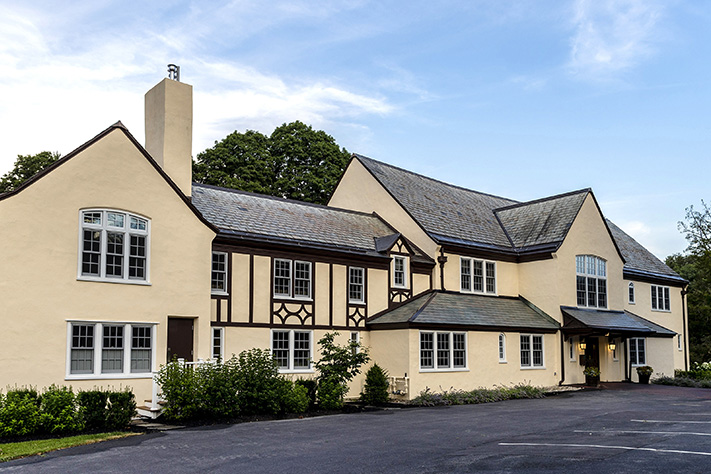
No doubt about it, the 1904 Steinway piano that may once have belonged to Lucy Skidmore Scribner is a thing of beauty. Inlaid with elaborate musical, artistic, and floral scenes and lavishly trimmed with gilded bronze moldings and mounts, the piano seemed perfectly at home for the past several years in its sunny piano alcove in Skidmores 1918 Surrey Williamson Inn.
But old houses hold perils for pianos. Subjected to summer humidity, dry winter heating, and, at one time, a leaky roof, the pianos top cracked in half, pieces of inlay fell out, and one leg went dangerously wobbly. It was a sight that Skidmore trustee emerita Jean Poskanzer Rudnick 44 couldnt abide, so she donated funds to rehab the piano.
The piano was originally purchased at the Steinway showroom in New York City by a Mr. and Mrs. Song of Saratoga Springs, reports Joseph Sims, the Skidmore financial officer who arranged for the repairs. It may have been a gift to Mrs. Scribner, he says, or a donation to the college, or it may have been purchased secondhand. With little else known of its historybeyond a twenty-five-year stint as Skidmore Halls parlor pianothe Steinway left its Surrey alcove in spring 2000 for the Ballston Spa, N.Y., workshop of Rand Reeves.
 |
| Walter Burr refinishes the lavishly decorated Steinway case. |
Reevess clean, bright workshop could be any three-car garagepainted cement floor, fluorescent lights, workbenchesexcept for a couple of baby grands and stacks of tool-cabinet drawers marked agraffes, tuning pins, and damper bars. Skidmores piano is a Steinway Model B Art Case, one of a number of decorator art pianos Steinway makes each year. People snap them up off the showroom floor, says Reeves, a pianist, chorister, and rebuilder of fine grand pianos. Over several months, he cleaned and rebronzed the cast-iron internal harp, repaired the original wooden soundboard (the part that resonates when the strings are struck), and replaced all the musical mechanisms, from keys to strings. (The chipped keys were replaced with used ivories, hoarded by piano suppliers since the 1988 worldwide ban on the sale of ivory.)
Its musical workings repaired, the Skidmore Steinway was forwarded to the Hoosick, N.Y., woodworking studio of Walter Burr, an object restorer and maker of harpsichords, and his wife, Berta, a painter and gilder specializing in finish restoration. In the front parlor of the couples 1821 house stand two exquisite examples of Burr-built harpsichords, while a sunlit back parlor serves as their workshop, its walls hung with antique tools, chisels, and planes.
Walter Burr glued together the pianos split top and replaced the lost inlayswhich were made of exotic tropical hardwoods such as boxwood, he says. He even replicated the inlays fine cross-hatched wear pattern by delicately scratching the surface and then rubbing dark wax into the scratches. The pianos finish (golden satinwood veneer over chestnut core stock, according to Walter) was polished and brightened, and Berta cleaned the gilt moldings using dental picks, Q-tips, ammonia, and commercial polish. To resolve the wobbly-leg issue, Walter retrofitted all four legs with larger, heavier brass screws.
It was Walter who pointed out a yellowed price label inside the piano, wondering if it were possible that the piano had cost $6,000 new, at a time when a modest country house could be had for $300. When Reeves inquired at Steinway, he learned that the refurbished piano could now fetch as much as $150,000. Given that refurbishing costs about $25,000, thats a terrific return on investment, but what about the future? Youd be surprised how many old pieces stand in hard sunlight or near a steam pipe, and we restore them, and then they go right back to where they were, frets Walter. Happily, not this piano. Upon its return to campus, it was placed in Skidmores climate-controlled Tang Museum, a stopover on its way to a permanent home in a planned new music building. The Skidmore piano, always a thing of beauty, now has a shot at being a joy forever.
Barbara Melvilles potential as a child pianist was cut short when moths ate the felt from under the keys of her familys piano, completely silencing middle C.
Remembering Lucys piano
If musical instruments came with autobiographies, the Skidmore Steinway would have quite a story to tell.
Some who knew Lucy Skidmore Scribner recall seeing this very pianowith that golden veneer so unusual in an era when dark plum mahogany was all the ragein her home. According to Jean Poskanzer Rudnick 44, emeritus music professor Stanley Saxton remembered playing hymns on the piano for Mrs. Scribner in her home. Piano teacher Vivian Rowe Blanchard 29 recalls seeing that piano when we had to go to Mrs. Scribners home for tea, wearing our white gloves. But three othersmusic professors emeriti Isabelle Williams, Ruth Lakeway, and Edward Hausmancant swear to that.
The Steinway was a prominent presence in the lounge at Skidmore Hall as early as the 1940s. Anne Palamountain, Skidmores first lady from 1965 to 1987, says that when she moved it to Wilson House (the presidents home on North Broadway) in 1965, she understood that it had been Mrs. Scribners. Yet Helen Porter, first lady from 1987 to 1999 and an avid local historian, tirelessly consulted old college yearbooks, Saratoga city directories, and the wills of Mrs. Scribner, her father, and her husband, without nailing down proof positive of provenance or ownership.
The college would welcome any information, whether hard fact or fond memory, from readers who might know more about this Skidmore piano. Mail in care of Scope, call 518-580-5747, or e-mail bmelvill@skidmore.edu. BAM
|
|
|