Geothermal energy
Skidmore College has two decades of geothermal design and development experience.
47% of the campus is heated and cooled by geothermal systems
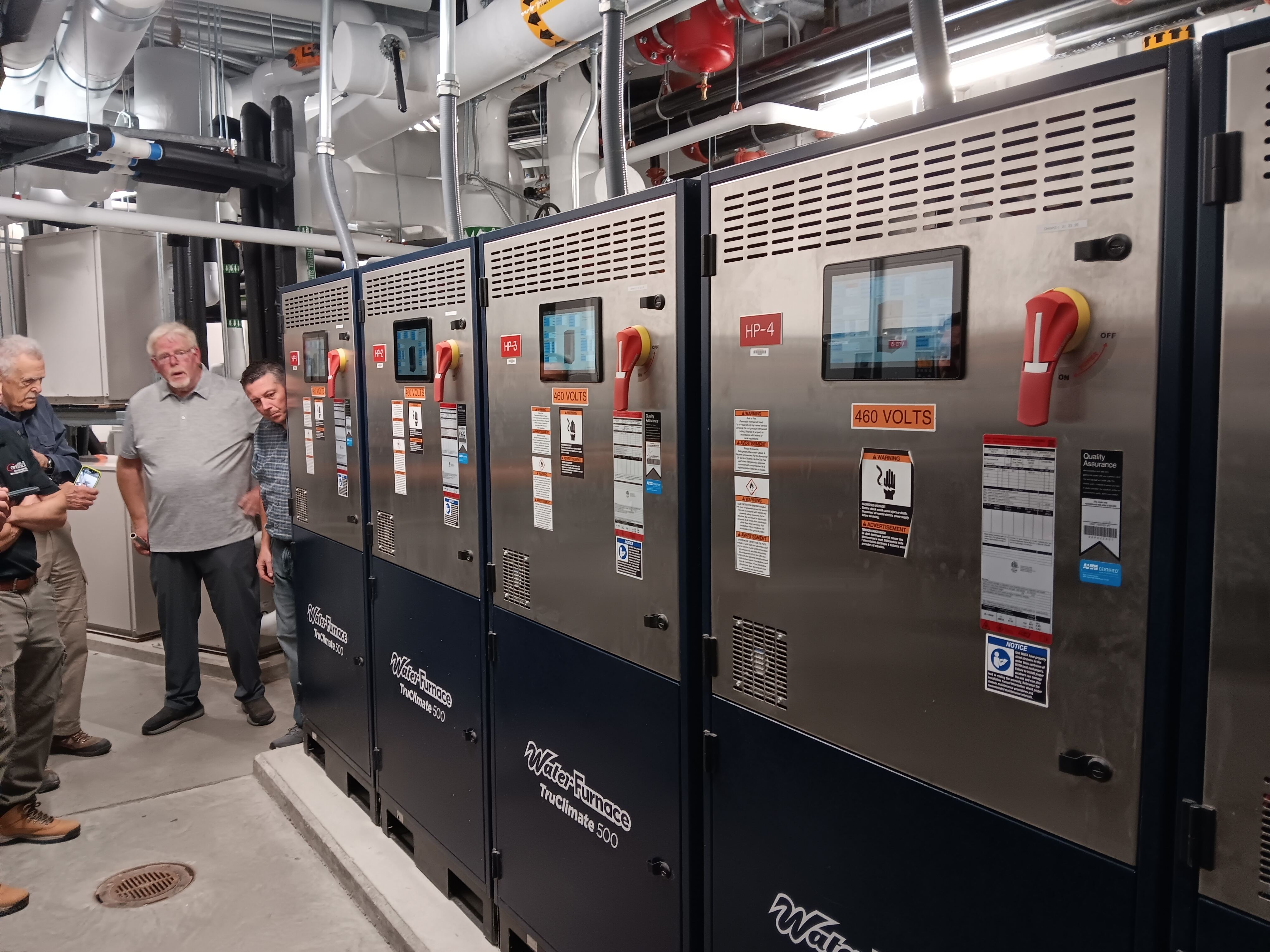 |
Skidmore's Geothermal by the numbers 3 district systems 23 stand-alone systems 33 buildings 700 bores 955,000 s.f. |
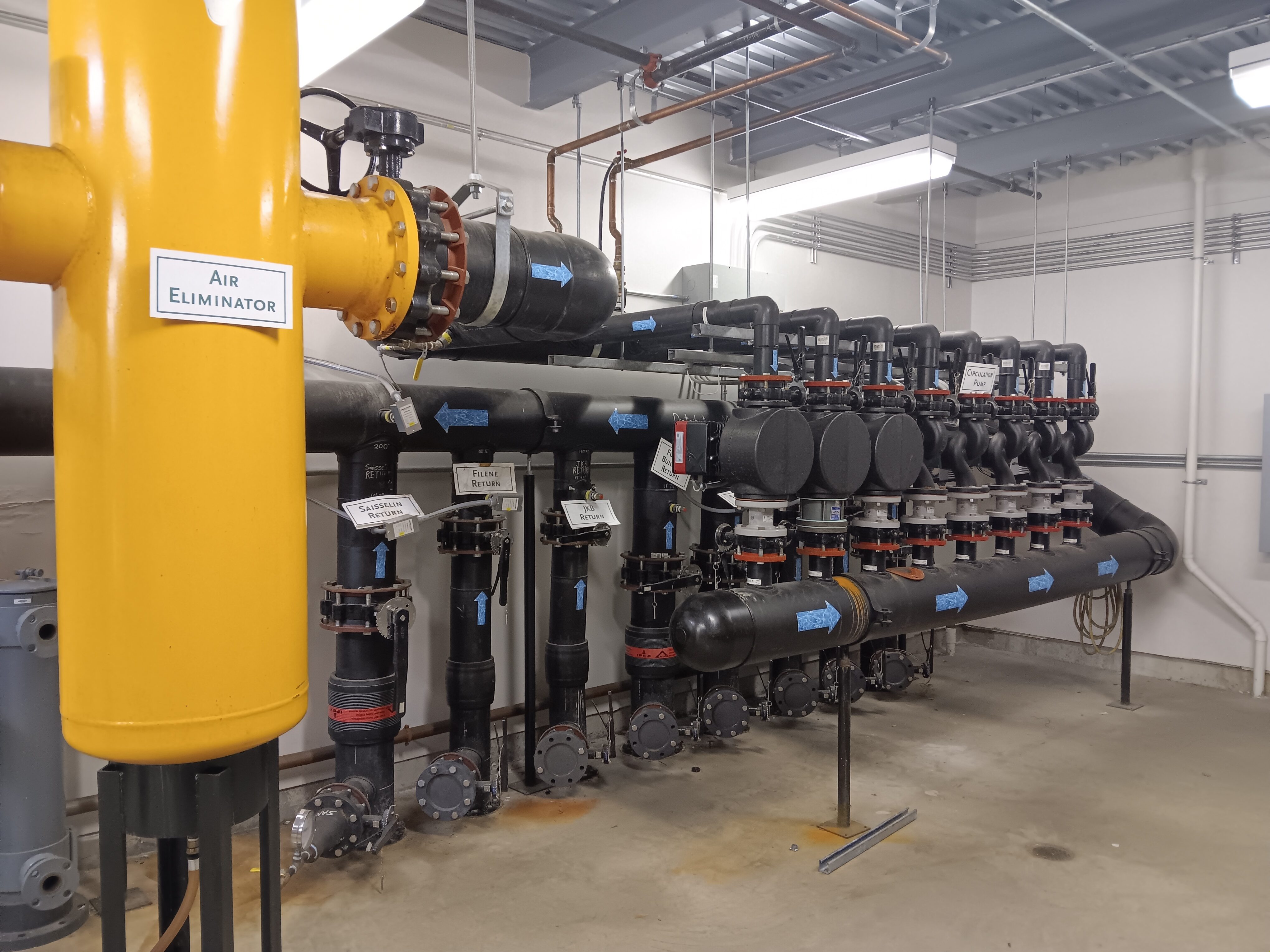 |
Buildings on geothermal
Stand-alone systems: Murray-Aikins Dining Hall and the Northwoods and Sussman Village Apartments
North District: Billie Tisch Center for Integrated Sciences
Arts District: Arthur Zankel Music Center, Filene Hall, Saisselin Art Center
South District: Wiecking Hall, Tang Teaching Museum, Dance Center, McCaffery-Wagman Tennis and Wellness Center
The North and Arts district borefields have unused/existing capacity to add buildings to their systems.
For more information on geothermal energy check out this geothermal basics resource.
District Geothermal Systems
In 2012, Skidmore College won the Best Campus Sustainability Case Study Award from the Association for the Advancement of Sustainability in Higher Education (AASHE) for its innovative district geothermal system. A district field is one that supplies heating and cooling energy to multiple buildings, unlike standalone systems that provide energy to a single building. By designing district systems, Skidmore reduced the total number of bores required to support campus buildings and the amount of associated infrastructure. Skidmore has installed three district systems.
In 2012, the Arts District's 119 bores (84 for the Janet Kinghorn Bernhard Theater field plus 35 from the Zankel field) that supply heating and cooling energy to Zankel, Filene, and Saisselin came online. Buildings in the Arts Quad can also exchange energy with each other. The ability to exchange heating and cooling loads increases the efficiency of the system and decreases the demand on the borefield.
In 2014, Skidmore installed its second district borefield under Wiecking Green. This South District field has 62 bores from the original construction and an additional 40 with the addition of the Tennis and Wellness Center in 2024.
In 2015, approximately 100 engineers, policymakers and students visited Skidmore for the annual New York Geothermal Energy Organization (NY-GEO) conference. Skidmore was selected to host the conference, dubbed “Geopalooza,” because it has implemented numerous sustainability initiatives that align with the NY-GEO agenda, including expansive geothermal systems.
In 2016, the borefield for the North District was drilled. This is Skidmore's largest field, with 240 bores, and currently serves the Billie Tisch Center for Integreated Sciences, which came online in three phases (2020, 2022, and 2024).
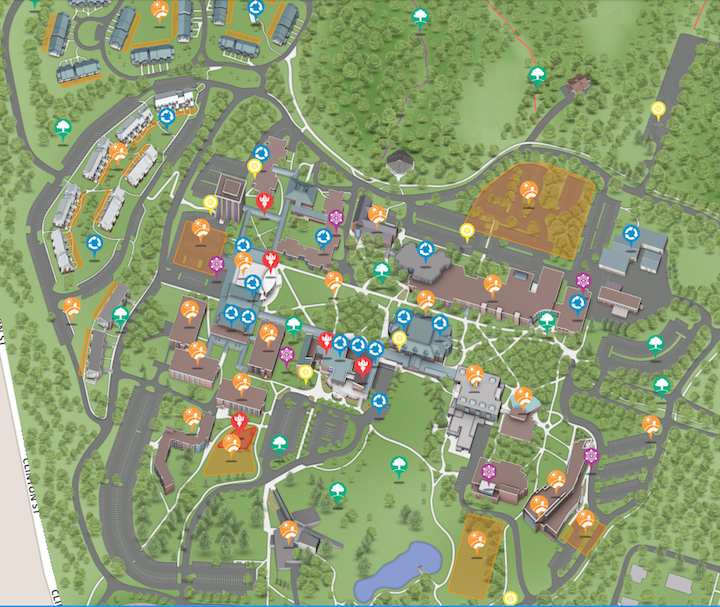
Skidmore's geothermal borefields are highlighted in orange below.
Geo Trees Project
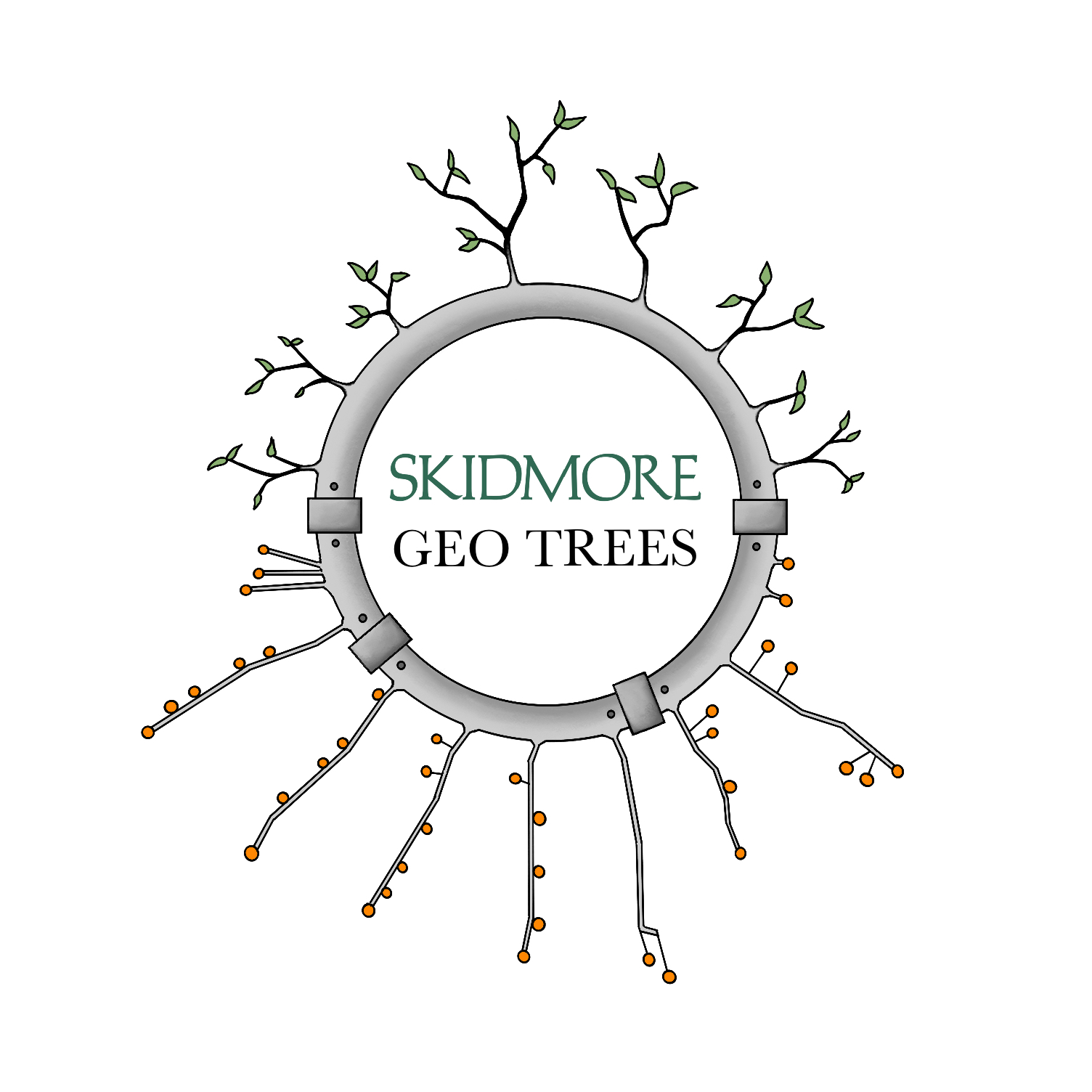 The Geo Trees Project, a collaboration between the Sustainability Office and Sculpture Studio, involves creating and installing five small-scale “geo tree” sculptures. The sculptures are intended to represent the geothermal bore field at each system location.
This project follows the mantra of “Creative Thought Matters” and seeks to combine science, art, and communications in service to our educational mission and environmental values with the primary goal to increase the visibility and awareness of Skidmore’s geothermal heating and cooling systems. The project supports our sustainability literacy goals and celebrates the environmentally responsible operations that Skidmore has been pursuing forover two decades.