


Can literature save the environment?


Inspirational texts
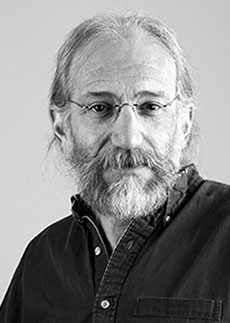
Professor Michael Marx
This past fall, English professor and environmental-studies director Michael Marx
wanted his first-year Scribner Seminar to include a community project, so he lined up six Saratoga residents to be interviewed about the seminar’s very
title: “Can Literature Save the Environment?” As he’d hoped, the face-to-face conversations
about books that had influenced the Saratogians’ careers and attitudes also made a
strong impression on the students.
To begin—as the class read and discussed Rachel Carson’s Silent Spring, Edward Abbey’s
Monkey Wrench Gang, John Muir’s writings, and even Dr. Seuss’s The Lorax—students
formed teams of two or three, chose their interviewees, and learned software to create
multimedia Web presentations. Marx got them started thinking about interview techniques, from researching their
people in advance to framing follow-up questions, and fostered critiques and idea-sharing
throughout the project.
The interview subjects were Karen Totino, owner of the Green Conscience home-improvement store; Suzanne
Carreker-Voigt, formerly a coordinator for Saratoga’s Farmers’ Market; Linda Motzkin,
campus and community rabbi; Jeff Olson, principal at Alta Planning and Design; Margo
Olson, director of the Wilton Wildlife Preserve; and Joanne Yepsen, Saratoga County
supervisor.
When asked about writing that had shaped their sensibilities and choices regarding
sustainability issues, several cited upstate New York author Bill McKibben as inspiring,
or as provocative of disagreement but still intriguing. Jeff Olson suggested that
“fiction is more effective than nonfiction in sparking people to get creative about
helping the environment,” according to his questioners Anna Sand ’16 and Alina Williams
’16. But Margo Olson was “more drawn toward the scientific” and the geological writings
of journalist John McPhee; she told Olivia McKee ’16 and Maile Sackler ’16 that McPhee’s
“wonderful use of language and great curiosity” made her enjoy his books.
In their own reflections on the project, the students came to further insights. For
Sukie Emerson ’16, the process made her ask, “What does it take to effectively run
a farmers’ market? How will this generation continue farming, for better or for worse?
These questions and more popped into my head.”
Marx says the experience “helped acclimate new students to parts of the Saratoga community
that they might not have on their radar screens.” Perhaps most important, “It made
a big impact to see how ‘real world’ people were inspired and influenced by what they
read. The project reinforced for the students the value of reading texts.”