


Ancient, sacred bloodsport to be focus of Anthropology talk


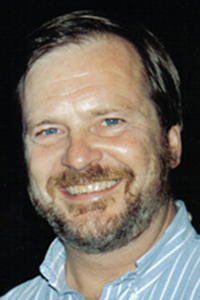
Karl Taube
“Of Jaguars and Men: The Ballgame, Boxing and Sacred Bloodsport in Ancient Mesomerica”
is the title of a lecture to be presented by Karl Taube of the University of California,
Riverside on Tuesday, Oct. 7. Scheduled to begin at 7 p.m. in Davis Auditorium, Palamountain
Hall, the event is sponsored by the Department of Anthropology, with support from
the Latin American Studies Program. The public is invited.
One of the more frequently noted aspects of the rubber ballgame in Mesoamerica is
its close relation to human sacrifice, especially in terms of decapitation. However,
there tends to be little discussion of the underlying motivations and meanings of
this ritual act. In this presentation, Taube will discuss how human sacrifice and
the ballgame relates to agricultural fertility and abundance, including the ritual
flooding of ball courts to denote them as sources of fertility growth. He will trace
this symbolic complex to the early Olmec (ca. 1200-500 B.C.) who offered rubber balls
to the sacred spring at El Manatí and portrayed the feline Olmec rain god as a ballplayer.
The Olmec also related their "were-jaguar" rain deity to ritual boxing, a widespread
but little studied sport in ancient Mesoamerica. The early Zapotec site of Dainzu
features many monumental reliefs of ritual boxers wearing jaguar helmet masks, at
times with the facial features of Cocijo, the Zapotec rain god. In addition, the Zapotec
hand held stone manoplas often used in boxing often portray jaguar faces. The tradition
of ritual boxing continues to this day in highland Guerrero, where youths dressed
as jaguars engage in combat atop mountains, with their falling blood symbolizing fertile
rain.
In addition to extensive archaeological and linguistic fieldwork in Yucatan, Taube has participated on archaeological projects in Chiapas, Mexico, coastal Ecuador, highland Peru, Copan, Honduras and in the Motagua Valley of Guatemala. Taube is currently serving as the project iconographer for the San Bartolo Project in the Peten of Guatemala. His broad interests in the archaeology and ethnology of Mesoamerica and the American Southwest include the development of agricultural symbolism in pre-Hispanic Mesoamerica and the American Southwest, and the relation of Teotihuacan to the Classic Maya. Much of his recent research and publications center upon the writing and religious systems of ancient Mesoamerica.
Taube’s publications include the following books and monographs: The Murals of San Bartolo, El Peten, Guatemala, Part 1: The North Wall (2005) with William Saturno and David Stuart); Olmec Art at Dumbarton Oaks (2004); The Writing System of Ancient Teotihuacan (2000); The View from Yalahau: 1993 Archaeological Investigations in Northern Quintana Roo, Mexico (1995, editor with Scott Fedick); Gods and Symbols of Ancient Mexico and the Maya (1993, with M.E. Miller); Aztec and Maya Myths (1993); The Major Gods of Ancient Yucatan (1992).